Art in the Desert: The Savitsky Collection at Nukus

I love museums and they are an integral part of all my travels. The trip to Uzbekistan was no different and I visited quite a few museums there. In the case of one museum, I took it one step further — I added one destination to my Uzbekistan itinerary, only because of that museum.

The destination? Nukus, in the remote Karakalpakstan region of Uzbekistan.

The museum? The Karakalpak Museum of Arts, which houses the Savitsky Collection.
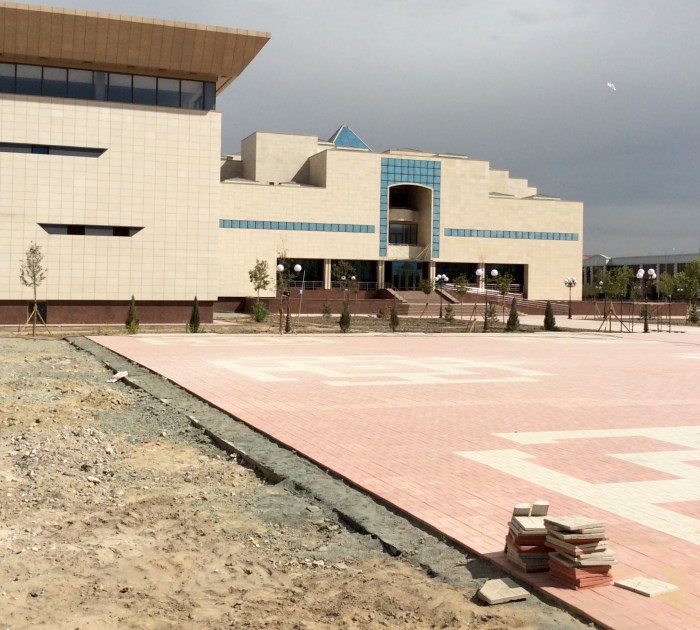
Karakalpakstan Museum of Art Savitsky Museum Nukus
The Karakalpakstan Museum / Nukus Museum, which houses the Savitsky Collection

The story of how this museum (known locally as the Nukus or Savitsky Museum) came to be is straight out of a “believe it or not”. Like most stories, it has:.

A protagonist: Igor Savitsky, an artist
An antagonist: the Communist Soviet government
A supporting cast: Several artists from Uzbekistan and Russia
A location: Karakalpakstan

Our story begins in 1950, when Igor Savitsky (1915–1984) joined the “Khorezm Archaeological and Ethnographic Expedition led by the world-famous scientist, Sergei P. Tolstov” as the artist for the expedition. Continue reading “Art in the Desert: The Savitsky Collection at Nukus”

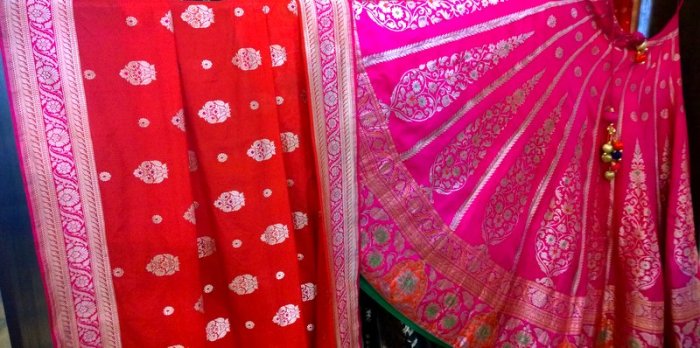
Woven Wonders of Varanasi , Make in India, Shaina NC, Bhau Daji Lad Museum, Mubai, Soecial Exhibition, Benarasi Weaves, Handlooms and Textiles

Woven Wonders of Varanasi: A ‘beautiful’ disappointment

I love museums. Regular readers of this blog will know that museums have played a very important part in developing and furthering my interests and knowledge in art, culture, history and sometimes, even deciding where to travel to next. Though not all museums have been uniformly good, I have never left one without having learnt something new there, something that has added to my knowledge. Till recently, that is.

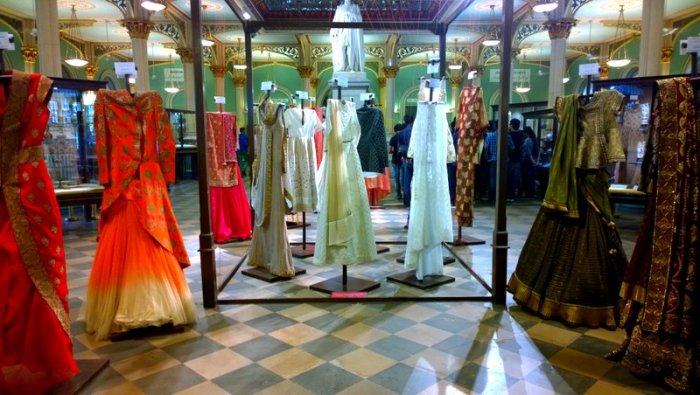
About 10 days back, I went to see an exhibition titled “Wonder Weaves of Varanasi” at the Dr. Bhau Daji Lad Museum in Mumbai. The aim of the exhibition was to showcase textiles and weaves from Benares / Varanasi as part of the larger ‘Make in India‘ campaign. It had been curated by Shaina NC, and was organised in association with the Ministry of Textiles of Government of India, and supported by Lakmé Fashion Week.

Prior to my visit, I had seen tantalising pictures of the exhibits on social media and then came across this newspaper report, which got me all intrigued about the exhibition. Since I knew next to nothing about weaves from Benares / Varanasi, this seemed like the perfect opportunity to get acquainted with them.

So, it was with great excitement that I arrived at the Museum, and my very first view of the exhibits justified that excitement.

Woven Wonders of Varanasi , Make in India, Shaina NC, Bhau Daji Lad Museum, Mubai, Soecial Exhibition, Benarasi Weaves, Handlooms and Textiles

However, when I left the Museum after viewing the exhibition, my mood was very different — puzzled, disappointed and a little angry as well.

Let me elaborate.

Continue reading “Woven Wonders of Varanasi: A ‘beautiful’ disappointment”

St+Art at Dharavi: Murals, water tank art and more

The conversation is not going the way I wanted.

“And why should I give the keys of the building terrace to you?”

“We want to see the art painted on the terrace of your building?”

“The terrace is not safe. You could fall over.”

“We’ll be very careful. We only want to see the art work there.”

“That is what everyone says.” The office bearer of the Nabi Nagar Co-op. Housing Society at Dharavi (Mumbai) glares at my friends and me and launches into a tirade about people pestering him for keys to the terrace all the time, how it was no longer safe for the building children as they wanted to go to the terrace, how it was a nuisance, etc.

We listen to him and commiserate with him and promise to be very careful and not allow any children up on the terrace with us. But he isn’t done ranting and after what seemed like a long time, he runs out of steam and grudgingly hands over the keys to us.

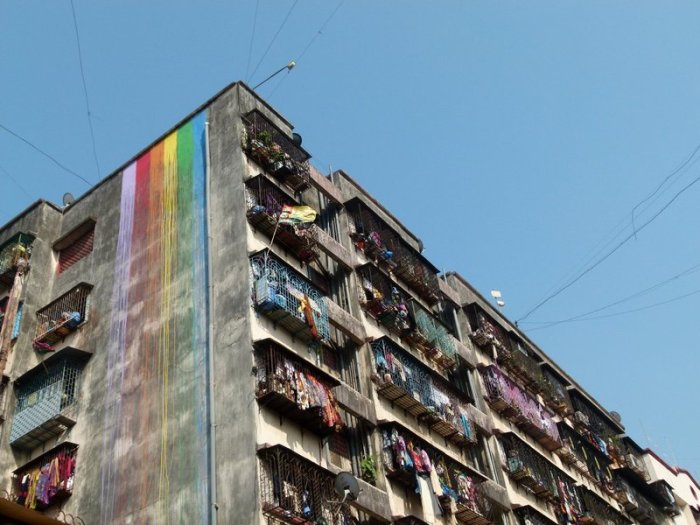
As we thank him, he says with a sly smile, “The lift doesn’t work. You’ll have to take the stairs all the way up to the terrace on the 9th floor.”

Dharavi St+Art, Mumbai. Street Art
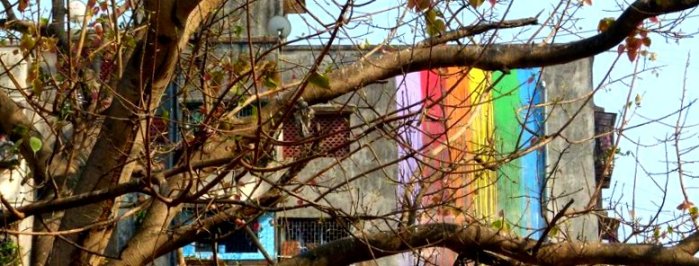
Rainbow Art

Continue reading “St+Art at Dharavi: Murals, water tank art and more”

The St+art invasion of Bandra and a curated walk

On a Saturday morning in November 2014, I participated in a special, curated walk — perhaps the first of its kind — on street art. Organised by the St+art India Foundation, the walk was to showcase the culmination of almost three weeks of work done by 20 renowned artists from India and abroad in and around Bandra in Mumbai.

I had closely followed the progress of the various artworks on my Facebook and Twitter feeds. And each time an artwork was “unveiled”, the itch to go and see them for myself only intensified. So when the announcement of a curated and guided street art walk popped up on my Facebook feed, I immediately signed up for it. But then, the excitement gave way to scepticism.

Let me elaborate. I love street art — it’s vibrancy, its uniqueness, its colourfulness, and the fact that they don’t follow any set rules. But most of all I love how all the street art I have seen have been serendipitous and delightful finds. Something, I thought that a curated walk would not be able to give.

Bandra St+Art, Mumbai. Street Art
Location: Pali Village | Artist: Fomas

Still, the lure of seeing the St+Art in Bandra prevailed over my scepticism and I made it for the walk, as did 10 other people.

Continue reading “The St+art invasion of Bandra and a curated walk”

Messages on the wall: The graffiti of Nawalgarh

When I arrived in Nawalgarh, the first work of ‘art’ I noticed was not its famed frescoes or even its grand havelis — it was a piece of graffiti.

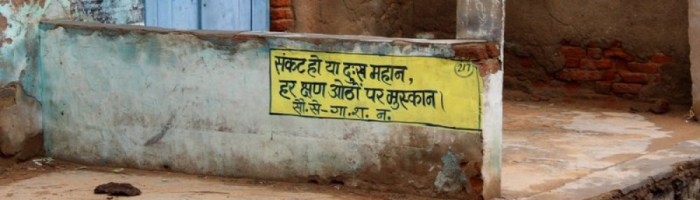
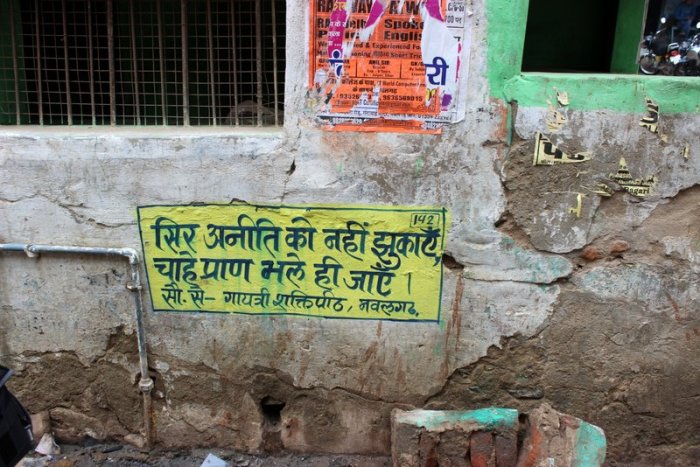
I was looking out of the window of the car I was travelling in, hoping to catch a glimpse of a fresco, when the car suddenly braked to let a cow pass. That’s when I saw the graffiti — a yellow rectangular patch with blue lettering on a cracked and patched surface. It was the contrast of the freshness of the graffiti against a dull and old surface that attracted me and I took a picture of it for that reason. The words (for those who can’t read the Devanagari script or understand Hindi) can be roughly translated to:

Even if it means losing your life, don’t give in to anything improper or immoral.

Graffiti, Nawalgarh, New Art, Morals, Gayatri Shaktipeeth

As the car moved ahead, I dismissed the graffiti as a one-off and resumed my search for the frescoes. Little did I know at that time that along with the frescoes and the havelis, I would be seeing other graffiti all over Nawalgarh.

Continue reading “Messages on the wall: The graffiti of Nawalgarh”

The painter of murals

Every traveller has a story or two or maybe more about chance happenings that led to something more, something interesting. This is one such story. 🙂


I had just finished my tour of the Dr. Ramnath A. Podar Haveli Museum at Nawalgarh and had walked out of the main door. Unlike other havelis, the entrance to the Podar Haveli Museum is not level with the road and is situated about 15-20 feet above ground. From where I stood, I had the advantage of height and could look around and into the compounds of neighbouring havelis.

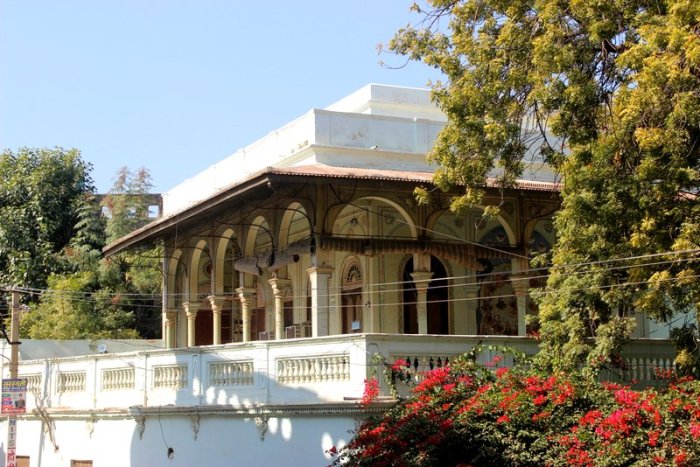
One such pastel-coloured haveli caught my attention. Located opposite the Podar Haveli Museum, its architecture exhibited colonial influences. It also had a large painting on one of its walls which, from where I stood, looked pretty interesting. But the high walls, closed gate and the freshly painted look of the haveli indicated that it was perhaps inhabited. I decided to check with the Museum staff if they knew anything about that haveli and if it would be possible for me to visit it.

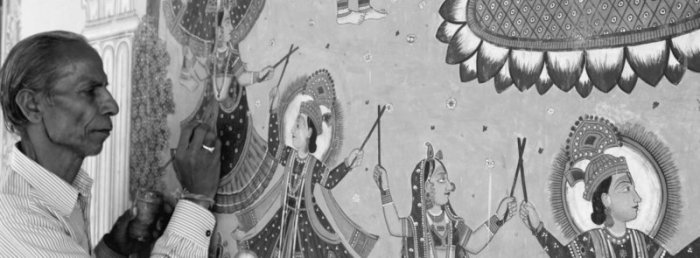
Podar Haveli, Private House, Nawalgarh, Painter of Murals, SwarnkarTurned out that the Museum staff knew quite a bit. The haveli was the private residence of the Podars, the very family that owned the Museum. This was where the family members and their friends stayed whenever they visited Nawalgarh. Currently, the haveli was undergoing repairs and renovation and was, therefore, unoccupied. And yes, I could go and see the haveli if I wished to.

Of course I wished to ! I didn’t need any further encouragement and off I went. 🙂

Continue reading “The painter of murals”