Shakespeare in doubt !

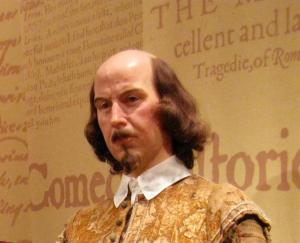
William Shakespeare at Madam Tussaud’s

Willm Shaksp. William Shakespe. Wm Shakspe. Willm Shakspere. William Shakspeare.

These are the different ways in which the world’s (arguably) best known dramatist’s name has been spelt in documents dating from the 16th and 17th centuries. Funnily, the one spelling that has not been used is the one currently used today — William Shakespeare (1564–1616). One can also not be reasonably sure as to how the name was pronounced either. In fact, one cannot be reasonably sure about many things about William Shakespeare — what he looked like, what was the order in which his plays were written, did he ever travel outside England, his sexuality, his likes or dislikes… or even when he was born. It is quite ironical that while most of Shakespeare’s own works have survived, nothing about Shakespeare himself survives. It is almost as if he did not exist !

Although he left nearly a million words of text, we have just 14 words in his own hand… Not a single note or letter or page of manuscript survives… We can only know what came out of his work, not what went into it… It is because we have so much of Shakespeare’s work that we can appreciate how little we know of him as a person.

All this information and more form the basis of a biography on William Shakespeare by Bill Bryson. Simply titled Shakespeare, this book is based on information gathered from many sources, as well as previously published work and is presented in trademark Bill Bryson style. The book is not just about Shakespeare, his life and works, but is also about Elizabethan England, Protestantism, 16th century London and more.

Continue reading “Shakespeare in doubt !”

Face to face with a living legend: An evening with Homai Vyarawalla

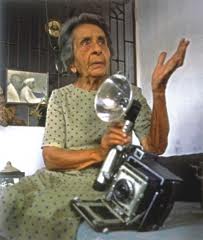
I got interested in photography about 3 years back and as it often happens with a new interest, related things also come into the focus of that interest—in this case it was photographers and their works. One photographer, whose name kept cropping up was that of Homai Vyarawalla, India’s first woman photojournalist. While I was curious about her work, I must admit that I didn’t really go out of my way to know more about her apart from reading the mandatory Wikipedia article and the stray media reports and photographs that would appear now and then.

Homai Vyarawalla

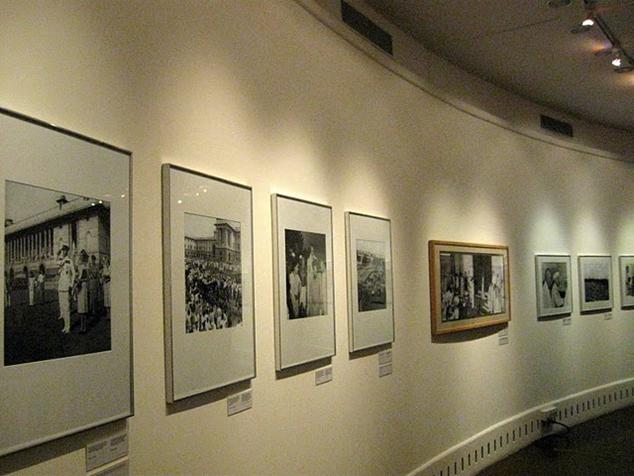
Therefore, it was serendipity when I noticed an invite for the inauguration of a retrospective of Homai Vyarawalla’s photographs on February 25, 2011. Curated by Sabeena Gadihoke, “Homai Vyarawalla: A Retrospective” was being held at the National Gallery of Modern Art (NGMA), Mumbai, in collaboration with the Alkazi Foundation for the Arts, New Delhi.

It was even more serendipitous that I had meetings near the NGMA that day and could attend the inauguration without taking time off from work. 🙂 I arrived early at the NGMA and as I was debating whether to go in or try to grab a quick cup of coffee, a car drew up to the entrance. I knew it had to be someone important, as the NGMA does not allow cars to come in. Two women stepped out, one of whom was Sabeena Gadihoke (as I found out later), and the other was Homai Vyarawalla herself. I had very obviously only noticed the invite, and not read it, as I wasn’t aware that Homai would be present for her retrospective! Since I was standing at the entrance, I found myself face to face with her. As I gaped at her, she smiled at me and said a warm hello as she was helped up the stairs. And what was my response? I continued gaping at her and just about managed to nod my head in acknowledgement !

Some of Homai Vyarawalla’s photographs at the NGMA

Continue reading “Face to face with a living legend: An evening with Homai Vyarawalla”

Pallankuzhi: An inheritance of love

I had been in my first school for just about 10 days or so, when my teacher sent a note home for my mother to meet her. My mother was so worried about the note that she was at my school the next day at the crack of dawn much before the appointed time.

She needn’t have worried. My teacher had only called to rave about my excellent motor skills, my excellent hand-to-eye coordination, and the fact that I could do some simple addition as well as some mental maths. All this at the age of 5 years, 6 months, and some days ! I was apparently way ahead of the rest of my class. Was I some budding genius, she asked my mother hopefully? My mother, after the first reaction of relief, immediately squashed my teacher’s hopes. No, her daughter was no budding genius. She was just a little girl with an inordinate amount of interest in playing Pallankuzhi with her grandmother, which had led to the development of these skills. What is Pallankuzhi, my puzzled teacher asked?

Pallankuzhi game all laid out and ready to play. I inherited this set from my maternal grandmother

Continue reading “Pallankuzhi: An inheritance of love”

Kahat Kabir suno bhai saadho …

Every Indian child, at least the ones who learn Hindi, knows about Kabir—the mystic poet, saint, and philosopher. Kabir ke dohe or Kabir’s couplets were a part of my school life too. Not only did I read his poetry in my Hindi textbooks, I was also exposed to his philosophy through the Government of India initiated “National Integration Campaign” during my school years in the eighties as Kabir’s philosophy and background—which appealed to Hindus, Muslims and Sikhs alike—made him the perfect symbol of national integration.

Kahat Kabir suno bhai saadho…, which appears like a signature line in most of Kabir’s compositions, was probably the most recognised phrase during my school days. Yet, once I left school, I also left Kabir behind. Over the years, I had fleeting encounters with Kabir through a occassional article in a newspaper or magazine or through snatches of a song heard on TV or the radio.

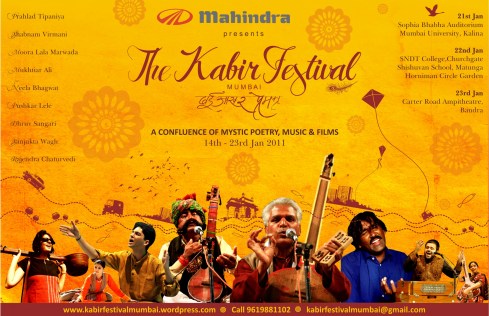
So, when I heard about the Kabir Festival being organised in Mumbai, I knew that this was a chance to renew my acquaintance with Kabir. According to the Festival’s twitter page, “The aim of The Kabir Festival Mumbai is to introduce Mumbai to the message of Kabir which is perhaps even more relevant today than it was in his time.” The Kabir Festival Mumbai is a “confluence of mystic poetry, music, dance and films”, with the main festival being held from 21–23 January, and the run-up events from 14–20 January 2011.

Continue reading “Kahat Kabir suno bhai saadho …”

To Rachel teacher, with love

By the time I finished 12 years of formal schooling, I had studied in 8 schools spread over 6 towns/cities of India. I did not attend nursery or kindergarten having been home-schooled by my mother, father, and older brothers till I joined Uttari Bharat Sabha’s (UBS) English High School in Bhandup, Mumbai. UBS was my first school and also the school that I studied for the maximum number of years in.

I was 5-and-a-half when joined UBS in the middle of first term after a painless admission process where neither I nor my parents were interviewed. I was asked for my name, date of birth, and home address, and once satisfied that I could communicate verbally, I was deemed admitted to the school and escorted to my class by the school principal. My parents were asked to take care of mundane formalities like paying the fees, getting my uniform, books, etc., etc.

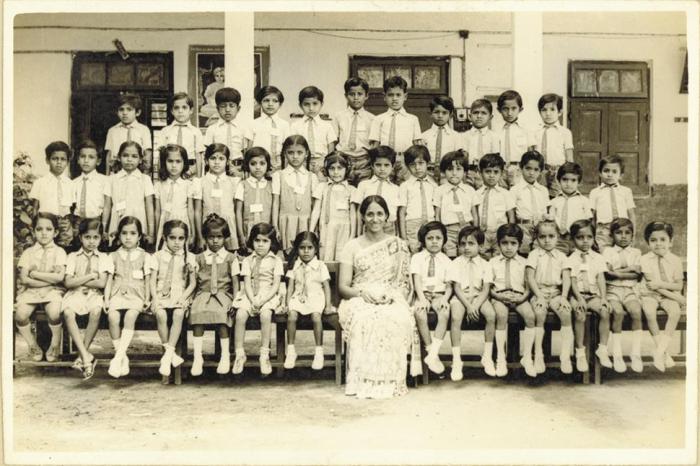
An English class was in progress when we arrived. I must have been introduced to the class, the teacher, and shown to my seat, but I don’t remember any of this. All I remember now is the teacher’s warm welcoming smile. The teacher was Rachel Kurien. Even after all these years, when I think of Rachel Kurien or Rachel teacher as we kids called her, it is her smile that instantly comes to my mind.

Class I A. I am the pouty, sulky looking girl seated extreme left in the first row, all because I wasn't seated next to Rachel Kurien (centre) 😉

Continue reading “To Rachel teacher, with love”

132 steps to Vaikuntha

I was introduced to board games as a child by my maternal paati (grandmother in Tamil), Meenakshi R. She loved them and could spend the whole day playing different games with her grandchildren or whoever was free and willing. I wasn’t always free, but I was always willing 🙂

We played games like pallankuzhi (a traditional game played with shells and cowries), ludo, snakes and ladders, etc. If I ever got bored playing the same games, she would quickly improvise games on the floor with some pieces of chalk, some string, and other odds and ends that would magically appear from her cupboard. The games were never just games—they were also stories, anecdotes, strategies, wins and losses, all delivered while playing.

Paati died when I was 8, and after her death, playing board games was never the same again—none of my family members or friends could match her enthusiasm and delight for the games. Besides, with school and other growing up activities, playing board games took a back seat.

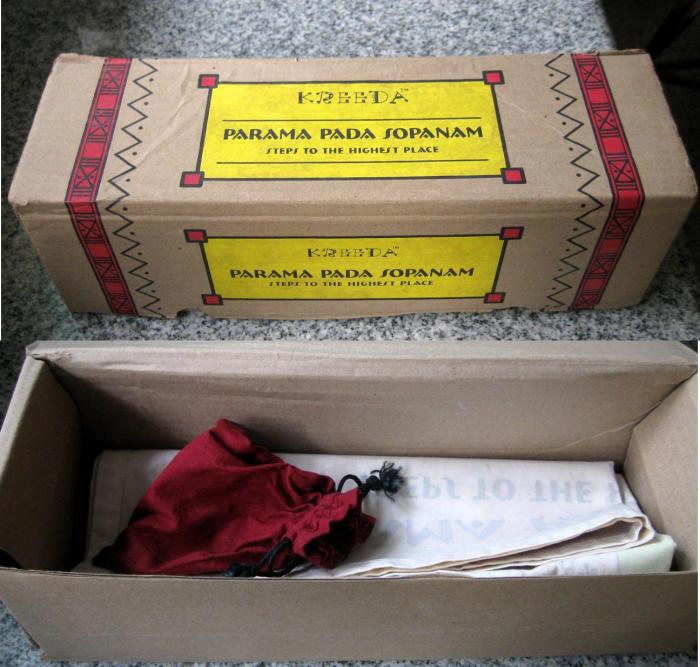
I resumed my love affair with board games some years back after a chance visit to The Design Store in Bangalore. Tucked away amongst all their furniture and furnishings and knickknacks, was a shelf displaying traditional games from Kreeda. One of the games was Parama Pada Sopanam. Intrigued by the name, I opened the display pack.

Top: The "boxed" game. Bottom: The box opens to reveal a little cloth pouch containing little wooden counters, two elongated metal dies, and an information booklet (not in picture)
Top: The “boxed” game. Bottom: The box opens to reveal a little cloth pouch containing little wooden counters, two elongated metal dies, and an information booklet (not in picture)

Continue reading “132 steps to Vaikuntha”