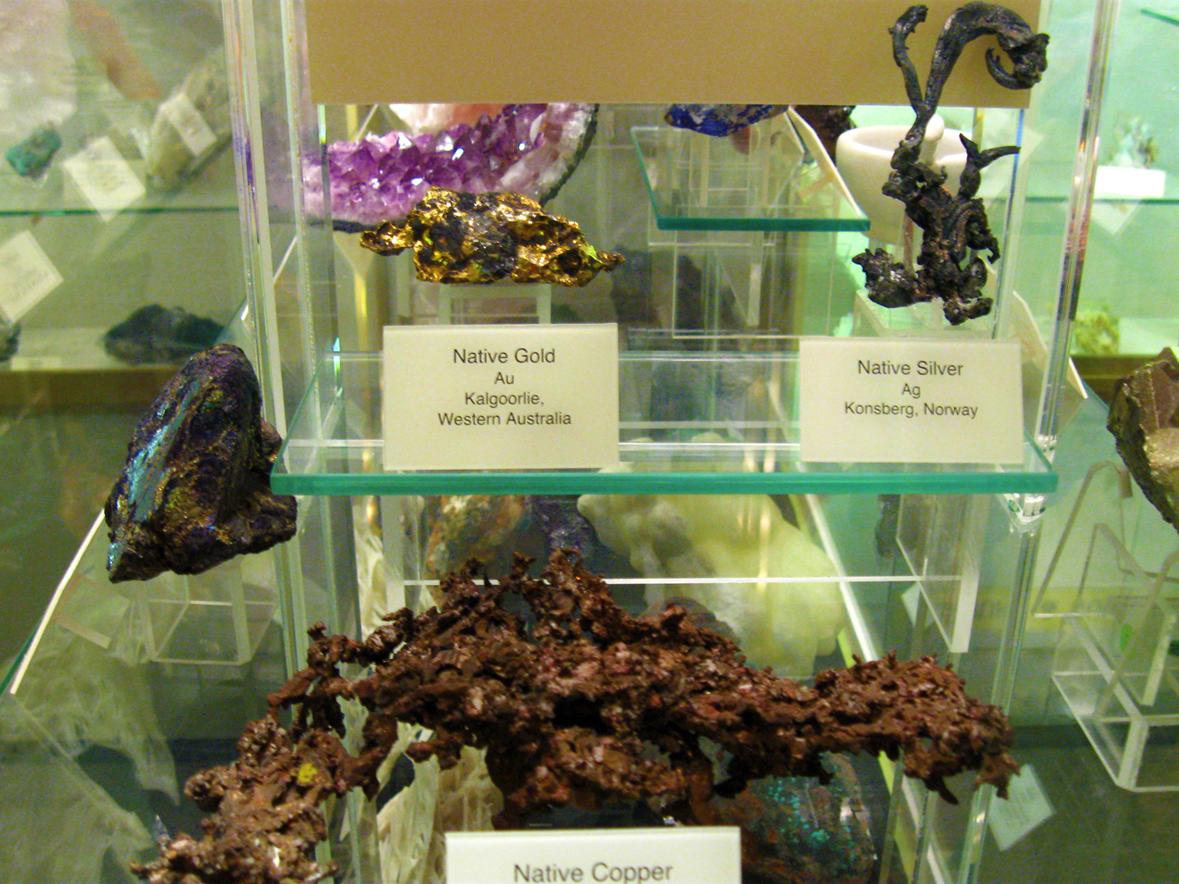
The Sedgwick Museum of Geology in the university town of Cambridge (UK) is, to put it mildly, a fascinating place. It has a fantastic collection of fossils, rock specimens from all over the world, as well as a large collection of minerals and metals. On a visit to Cambridge, this was one of the places I chose to explore. I loved their unique collection, but what really caught my attention was a display of the natural or native forms of gold, silver and copper, as well as a natural “solitaire” as found in its host rock, Kimberlite.
Gold, silver and copper as they appear in their natural state
I love museums. I love museums that are interactive even more. And if a museum allows me to photograph their exhibits, particularly their more unusual ones, then they become my best friends. The Victoria and Albert (V&A) Museum in London, is one such museum, with a lot of beautiful and rare exhibits, including many from India.
But what caught my eye on my visit there, was an exhibit I had never seen before, and for that matter never even heard of before—a minbar.
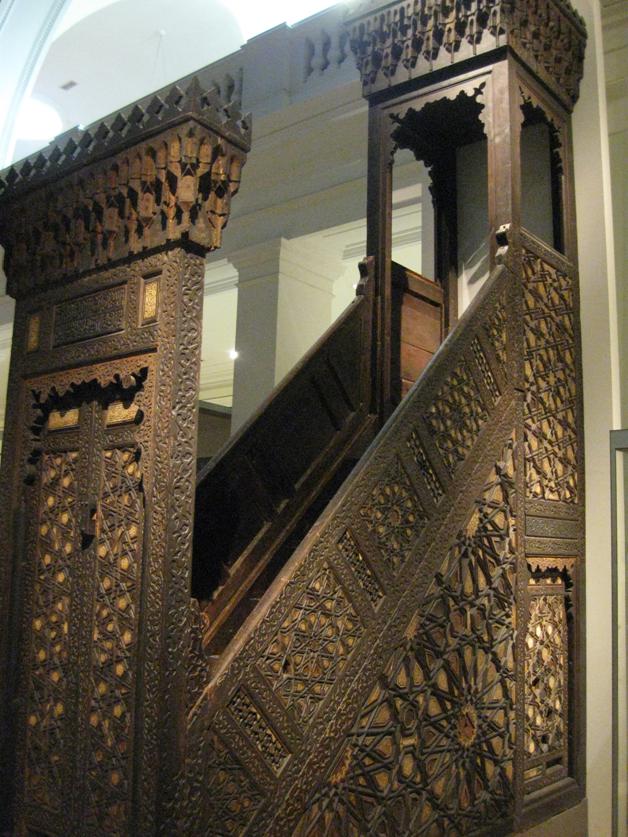
The Minbar for Sultan Qa’itbay of Egypt at V&A Museum, London
A minbar is a prayer pulpit used for the midday service on Fridays. This magnificent minbar is made of panels of cedar wood with delicate inlay of ivory and wood, enhancing its intricate geometrical patterns. The minbar also has traces paint and gliding work. According to the information plaque, the minbar was made for Sultan Qa’itbay, who ruled Egypt from 1468-1496.
Another view of the minbar of Sultan Qa’itbay of Egypt at the V&A Museum
The holy month of Ramadan is underway, a month of fasting, prayer and piety. I could think of no better way to wish everyone Ramadan Kareem than by sharing this museum treasure with you.
The Museum Treasure Series is all about artifacts found in museums with an interesting history and story attached to them. You can read more from this serieshere.



 My Favourite Things