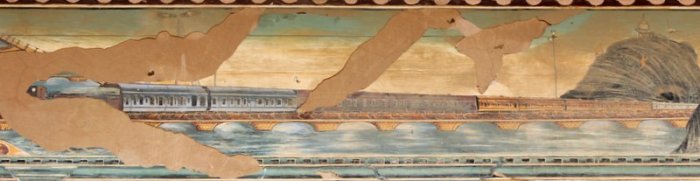
Mandawa, Painted Towns of Shekhawati, Fresco, Art Gallery, Painting, Heritage, Travel, Rajasthan

The painted towns of Shekhawati-4: Laxmangarh

Ilay Cooper’s book on Shekhawati set me off on an extraordinary trip to an extraordinary place in January this year. I had to wait for nearly 6 months, though, before I felt ready to write about it — so overwhelming were my thoughts and emotions. This post on Laxmangarh is the fifth of 8 posts in the series on “The Painted Towns of Shekhawati”. If you haven’t read the introduction to Shekhawati’s history (and the series), I recommend that you do so now, before proceeding further. If you have already done so, then dive straight into the post. 🙂


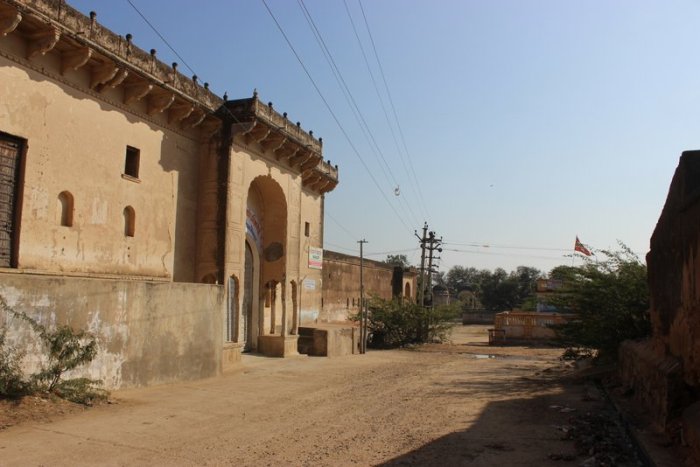
When I arrived at Laxmangarh on that bitterly cold January morning, it had just stopped raining and the sun was playing hide-and-seek with the clouds. Thankful that the rains would not play spoilsport, I headed straight for the Fort, which is built on a hillock overlooking the town.

Laxmangarh Fort dates back to the early 1800s when the town was founded by Laxman Singh, the Raja of Sikar, to take advantage of the rise in caravan trade at that time. He built the Fort and a walled fortification with nine gates to protect the town. Today, only the Fort remains.
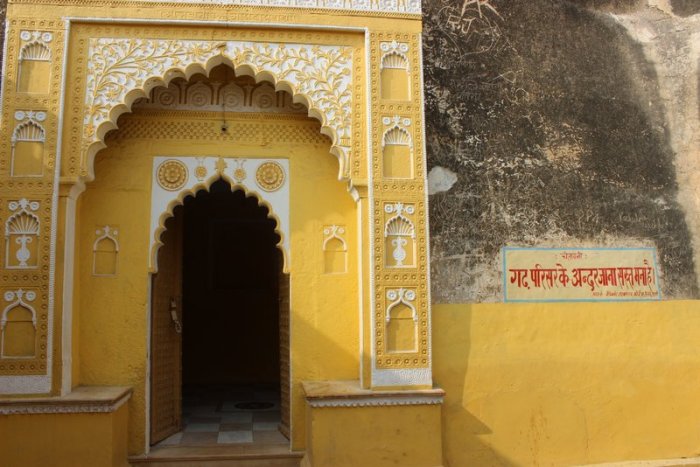
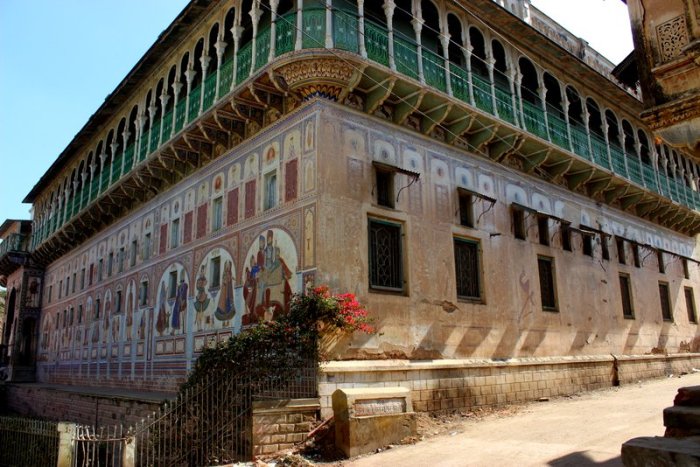
Laxmangarh, Painted Towns of Shekhawati, Fresco, Art Gallery, Painting, Heritage, Travel, Rajasthan
The entrance to the Lakshmangarh Fort and the sign warning people not to enter it.

To my surprise, I found that the Fort was now private property having been bought by a trader in Delhi, who had, in turn, leased it to a telecommunications company to construct cell towers. There is a temple inside the Fort and visitors are allowed only till that point in the Fort. I tried to look inside the door leading up to the top of the Fort and almost got told off by the priest of the temple for daring to do so !

Disappointed with not being able to see a Fort the second time around in Shekhawati, I  set off to explore the town instead.

Continue reading “The painted towns of Shekhawati-4: Laxmangarh”

The painted towns of Shekhawati-3: Mandawa

Ilay Cooper’s book on Shekhawati set me off on an extraordinary trip to an extraordinary place in January this year. I had to wait for nearly 6 months before I felt ready to write about it — so overwhelming were my thoughts and emotions. This post on Mandawa is the fourth of 8 posts in the series on “The Painted Towns of Shekhawati”. If you haven’t read the introduction to Shekhawati’s history (and the series), I recommend that you do so now, before proceeding further. If you have already done so, then get ready to visit Mandawa. 🙂


Prior to my Shekhawati trip, Mandawa popped up everywhere that I looked around on the Internet. Whether it was looking for hotels to stay or making a list of havelis to see, or probable itineraries, or traveller tips and suggestions, or even blog posts — Mandawa was the Shekhawati town that featured prominently.

But historical records say that Mandawa wasn’t always like this. It used to be a sleepy, nondescript little village till it came under the rule of Nawal Singh, who inherited it. Yes, the same Nawal Singh who founded Nawalgarh. He laid the foundation for a fort in Mandawa in 1756 and also extended invitations to traders to settle down there. His grandsons, Padam Singh and Gyan Singh, moved to Mandawa at the end of the 18th century and continued with the work that Nawal Singh had started.

The 19th century saw Mandawa growing in size, economy and importance. Some of the prominent trader families in Mandawa were the Dhandhanias, Harlalkas, Ladias, Chokhanis, Sonthalias, Sarafs and the Goenkas. Mandawa became so prosperous that in 1828, the joint forces of Amer (Jaipur) and Sikar besieged it. However, the combined forces of Mandawa and Nawalgarh managed to hold out and the threat was overcome.

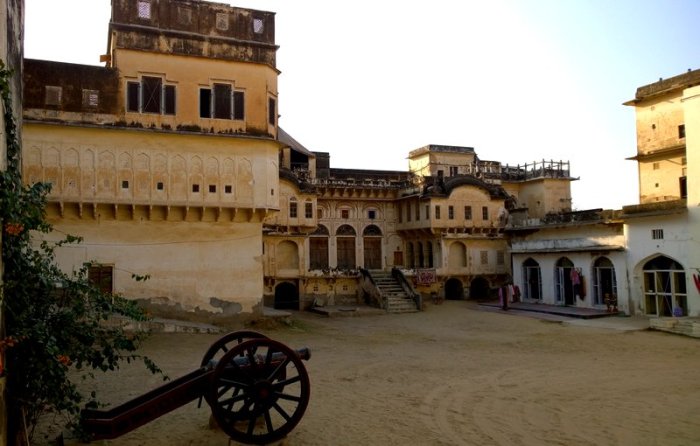
When I arrived at Mandawa from Dundlod at around 3.30 in the afternoon, it was to the fort that I headed towards.

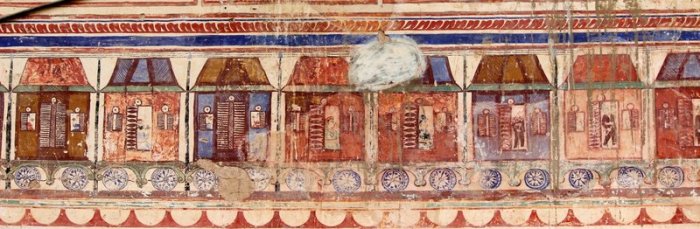
Mandawa, Painted Towns of Shekhawati, Fresco, Art Gallery, Painting, Heritage, Travel, Rajasthan

Continue reading “The painted towns of Shekhawati-3: Mandawa”

The painted towns of Shekhawati-2: Dundlod

Ilay Cooper’s book on Shekhawati set me off on an extraordinary trip to an extraordinary place, and I had to wait for nearly six months before I felt ready to write about it — so overwhelming were my thoughts and emotions. This post on Dundlod is the third of eight posts in the series on “The Painted Towns of Shekhawati”. If you haven’t read this introduction to Shekhawati’s history (and the series), I recommend that you do so now, before proceeding further.


The gates to the Dundlod Fort are locked when I arrive at 2.30 in the afternoon from Nawalgarh.

“How can a Fort be locked at this time of the day?” I grumble, looking around for some information on the Fort timings. I don’t find any and instead start looking around for someone who can help me, but there is no one around and all the shops are shut — Dundlod appears to be practically deserted.

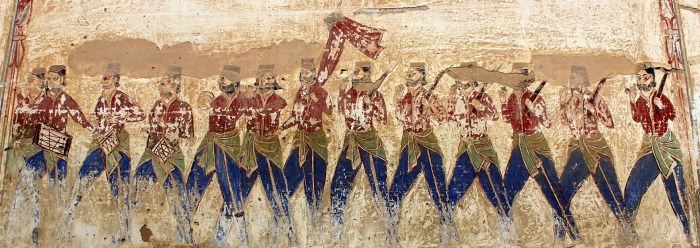
Dundlod, Painted Towns of Shekhawati, Fresco, Art Gallery, Painting, Heritage, Travel, Rajasthan, Goenka

I see a tea stall that is open and walk towards it. The tea stall owner guesses what I’m going to ask him and says: “The Fort is shut. They have gone horse riding.”

“Who are ‘they’?” I ask.

“The owners of the Fort and their foreign guests. You come after some time,” is the reply.

I decide to explore the town instead and as I’m wondering which direction to head towards, the tea stall owner points me towards a haveli (mansion) and says that the caretaker-cum-watchman will open it for me to see.

That’s how I end up at the Shubhnarayan Anandram Goenka Haveli. Continue reading “The painted towns of Shekhawati-2: Dundlod”

The painted towns of Shekhawati-1: Nawalgarh

Ilay Cooper’s book on Shekhawati set me off on an extraordinary trip to an extraordinary place, and I had to wait for nearly six months before I felt ready to write about it — so overwhelming were my thoughts and emotions. This post on Nawalgarh is the second of eight posts in the series on “The Painted Towns of Shekhawati”. If you haven’t read this introduction to Shekhawati’s history (and the series), I recommend that you do so now, before proceeding further.


Nawalgarh was my base for exploring the Shekhawati region and also the first of the towns I visited. Named after Nawal Singh, its founder, Nawalgarh was built in 1737 on the site of an earlier settlement.

Nawal Singh followed an active policy of encouraging traders and merchants from Jaipur to settle down in Nawalgarh. The Patodia and Murarka families were the first to arrive on his invitation and seeing them grow and prosper, other merchants soon followed. By the mid-1800s, Nawalgarh had become a large and prosperous town with three forts, city walls, bastions and four gates to protect it.

I arrived in Nawalgarh on a cold and rainy winter’s day in January, in time for a late lunch at my hotel before heading off to explore the town. It was a leisurely stroll through the town’s markets, lanes and bylanes with the purpose to get a feel of what had brought me to Nawalgarh (and for that matter the Shekhawati region) in the first place — the painted havelis or mansions.

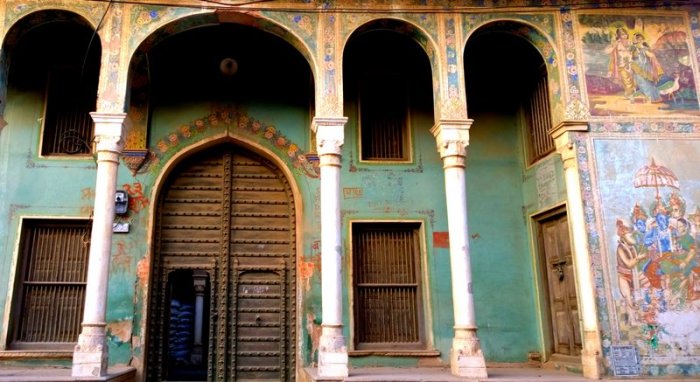
Nawalgarh, Painted Towns of Shekhawati, Fresco, Art Gallery, Painting, Heritage, Travel, Rajasthan
Entrance to the Sheth Anandram Jaipuria Haveli. Unlike other havelis where the background colour is beige, the walls of this haveli are green

Continue reading “The painted towns of Shekhawati-1: Nawalgarh”

The painted towns of Shekhawati: Past and present

Ilay Cooper’s book on Shekhawati set me off on an extraordinary trip to an extraordinary place, and I had to wait for nearly six months before I felt ready to write about it — so overwhelming were my thoughts and emotions.

Presenting the first of eight posts on the painted towns of Shekhawati. It is a brief account of the region’s history (an introduction to the series really), in order to understand the region’s past and present, in the context of the Shekhawati Series.


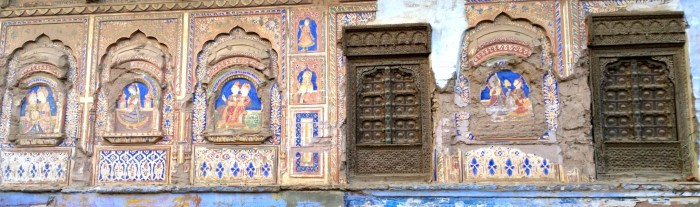
Shekhawati is one of the four regions of Rajasthan, the others being Mewar, Marwar and Hadoti). Spread over Sikar, Jhunjhunu and Churu districts of Rajasthan, it is best known for its grand and palatial havelis (mansions). It is also known for being home to many of India’s well-known business families — Birla, Poddar, Bajaj, Jhunjhunwala, Khaitan, Oswal, Piramal, Ruia, Singhania, and Goenka, among others are from this region.

One would think that this would automatically mean a lot of visibility and tourist footfall in the region, but this is not the case — compared to the other regions of Rajasthan, Shekhawati is less visible. Which, in my opinion, is really surprising as the history of the region is quite unique and distinct from the rest of the State (at least in the context of the series that I’m writing).

Take the famous painted havelis of Shekhawati, for example, and how they came to be built. Painted Towns of Shekhawati, Nawalgarh, Poddar Haveli, Continue reading “The painted towns of Shekhawati: Past and present”

The incredible music of Salim Khan and Sikander Langha

It has been almost 3 weeks since my Suryagarh trip, a trip that will go down as one of those trips of a lifetime. Being able to see the incredible monsoon desertscape, to visiting lesser known and popular sights in Jaisalmer, to the food feast laid out for us, to the pampering … everything was special.

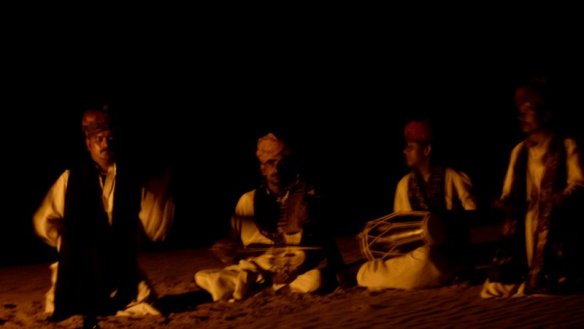
But the reason that makes Suryagarh really special was an experience that stood over and above everything else and one that remains with me even today — the incredible music I heard at Suryagarh. Right from the Padhaaro Mhaaro Desh (please click on the song to hear it being rendered by Meelu Khan and Maqsood Khan) that welcomed me to the hotel or the performance of Manganiar musicians during dinner on the first day or the Langha musicians performing during dinner on the second day or hearing Algoza for the first time or discussing Rajasthani folk music…it was music, music and more music all the way.

Langha folk artistes, Kahnoi sand dunes, Jaisalmer, Suryagarh
Langha musicians performing at the Kahnoi sand dunes

Music is a quiet passion for me. While I enjoy hearing new kinds of music and am always open to hearing different kinds of music, I rarely seek music, local or pre-recorded, during my travels and Suryagarh was no different. But music was everywhere at Suryagarh and one that enveloped me in its melodious magic. While all the music I heard was truly incredible, two performances stood out for the sheer quality and for the interaction I was able to have with the musicians concerned.

I’ll introduce them to you a little later but for now let us call them the singer at the sand dunes and the musician at the window. Because that is how I first saw them and heard their magical music. My interactions with both of them left me feeling truly blessed and like the chosen one 🙂

Continue reading “The incredible music of Salim Khan and Sikander Langha”