The SoBo art trail: Exploring Mumbai’s art district

It never ceases to amaze me how much I unconsciously internalise popular perceptions without even realising it. Take for instance, Mumbai’s art scene.

Till about 3 weeks back, if somebody had asked me about Mumbai’s art scene, I would have said how it was not very vibrant, unlike Delhi. Or Bangalore. Or Chennai. I might have cited the absence of good art galleries, beyond the couple of famous ones that I knew. I  would have also said something about the Kala Ghoda Arts Festival, and then probably ended by mumbling something about not knowing much about my city’s artscape.

All I can say of the above para is that only the last line is correct — I really don’t know anything about my city’s art scene. As for the rest, I was only repeating the general impression about Mumbai’s art scene based on what I read and discussions with like-minded people.

I realised how misplaced my knowledge was when I received an invitation from Pia of Good Homes India to participate in a blogger art trail (essentially a guided tour of 5 of South Bombay’s prominent art galleries) as part of their Public Art Week initiative. The invite was intriguing enough, but what caught my attention were these lines:

The galleries we are looking at covering are Gallery7, Sakshi art gallery, Gallery Maskara, 1/29 Studio Gallery and Art Musings. The mix is interesting and so is the art.

With the exception of Sakshi Gallery (which I had never been to), I hadn’t even heard of the other art galleries. And to think all these galleries were concentrated in South Bombay (SoBo), also known as the city’s art district. This I had to see for myself !

I had no hesitation in accepting the invitation even though it was at such short notice necessitating taking half-a-day off from work. So, on November 28th, a mixed group of 10 odd design, food, art and travel bloggers gathered at The Pantry for high tea before setting out on the art trail.
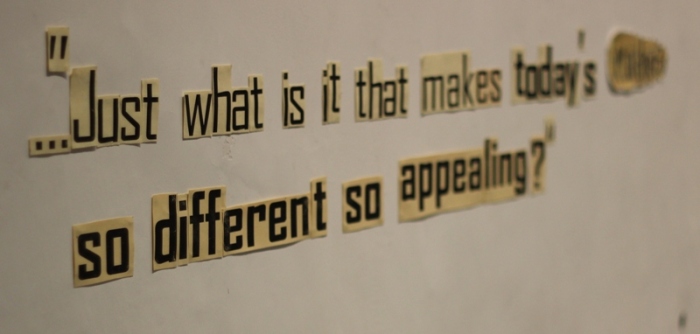
Art Trail, Gallery Maskara, Mumbai

Continue reading “The SoBo art trail: Exploring Mumbai’s art district”

Dear Himachal Pradesh…

I dreamt about you yesterday.

It was a lovely dream where my 10-day trip to Fagu, Sarahan, Kalpa, Sangla, Narkhanda and Chail in September was relived all over again. I usually don’t remember my dreams when I wake up, but this one was so crystal clear and real that I’m pretty sure that I must have spoken in my sleep !

I dreamt of the trip of many firsts — the first time I visited your state, the first time I saw the mighty Himalayas, the first time my under-graduate and post-graduate classes on Himalayan Geology came alive, the first time I saw apples on trees, the first time I tasted a yellow plum, the first time I saw the confluence of two rivers … and so much more.

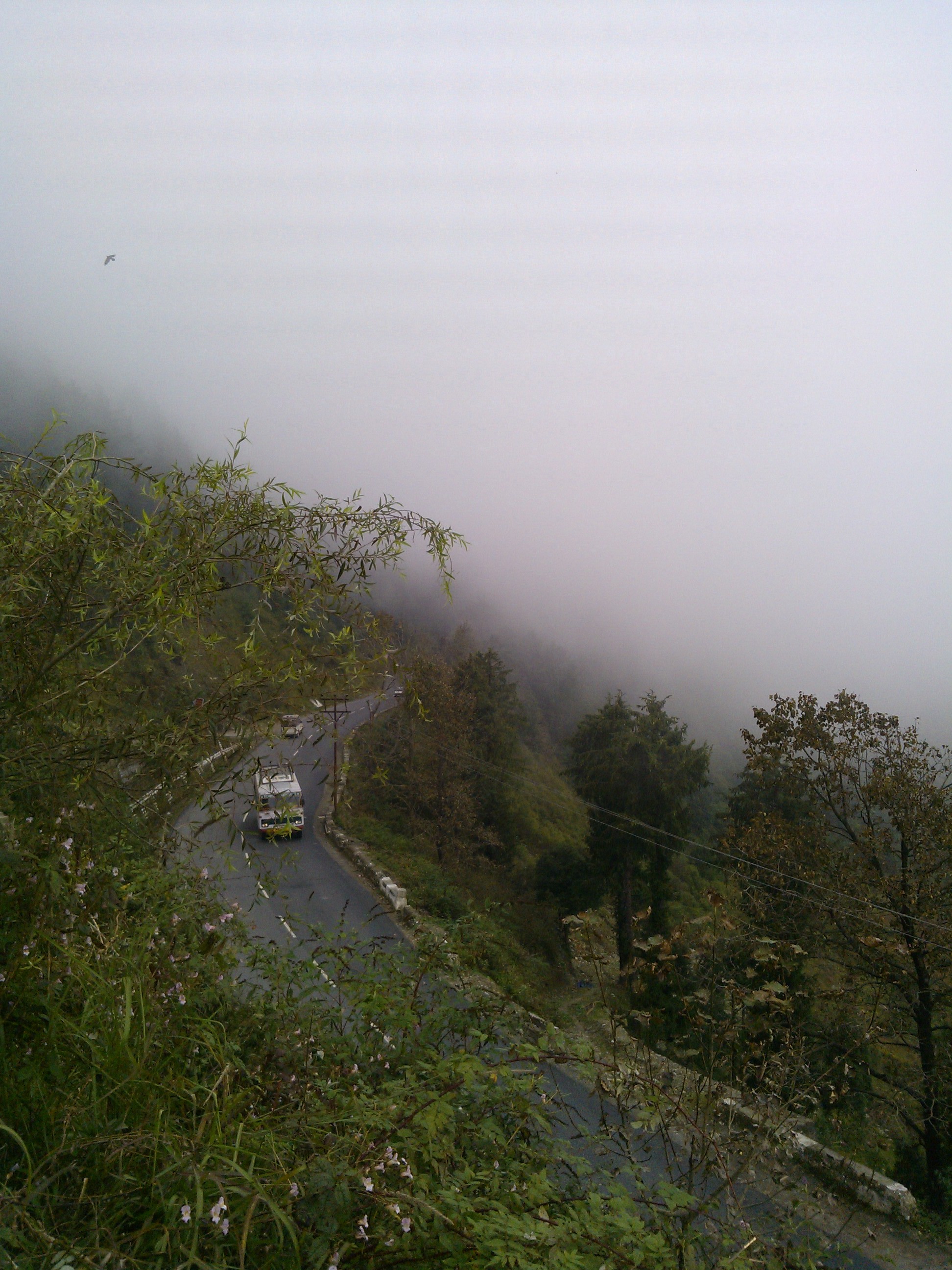
Himachal Pradesh, FaguI dreamt about the rainstorm you welcomed me and the group I was travelling with. And how in the space of a few hours, we went from hot and humid Mumbai to cold, almost freezing, weather in Fagu. That night, I slept under two blankets and had a heater in the room.

I dreamt of that first morning I woke up to in Fagu. Clouds had covered the entire valley and I delighted in watching the clouds vanish like wisps of vapour as the sun rose in the sky to reveal the distant snow-clad peaks of the Himalayas. And closer, much closer, was the vegetation associated with the Himalayan ecosystem. Not that I could identify any, but still… 🙂

Continue reading “Dear Himachal Pradesh…”

Museum Treasure: The Holy Family

In a quiet bylane of Old Goa is The Museum of Christian Art. Perhaps the only one of its kind in Asia, the Museum showcases Indo-Portuguese art from the 16th to the 20th century.The Museum’s collection includes furniture, sculptures, ivory and metal artefacts, textiles, paintings and books from the 16th to the 20th century. On a visit to Goa last month, an afternoon spent at the Museum turned out to be the highlight of my entire trip.

The Museum’s collection is extremely well curated and presented. While it is difficult to choose a favourite among the ones I saw at the Museum, I had no hesitation in choosing one for today’s post on Christmas Eve.

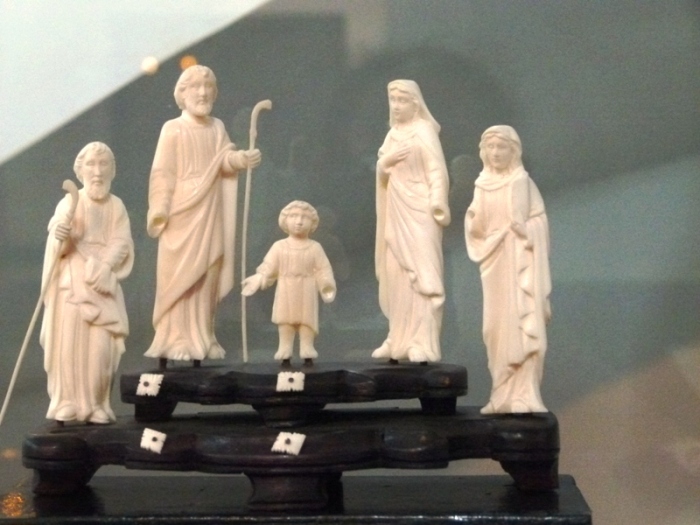
“The Holy Family”, a 20th century set of ivory figurines mounted on wood, was donated to the Museum by the Albuquerques from Anjuna in Goa.

The Holy Family, Ivory, Jesus, Mary and Joseph
The Holy Family. Ivory and Wood. 2oth Century

While the 3 figures in the centre are very clearly Joseph, Mary and the child Jesus, I’m not sure who the two figures on the extreme right and left are. Maybe St. Anne and St. Joachim, Mary’s parents? I loved the delicate details of the figurines: the expression on both the women’s faces and drape of the robes, the look of wonder on Jesus’ face.

As always, whenever I see such exquisite works of art, I wonder who the artist was and what went through his/her mind while creating “The Holy Family”?

Dear reader, did you like these figurines as much as I did?

Wish you a very Happy Christmas 🙂

The Museum Treasure Series is all about artifacts found in museums with an interesting history and story attached to them. You can read more from this series here.

Travel Shot: The paper pile at the police station

Colva Police Station, GoaFor me, police stations and hospitals are places that are to be seen only when needed and ignored when not needed. Such places are good to have nearby, but not too close, if you know what I mean.
It’s not like I’m scared of them; just that I’d like to keep my distance from them. Most of the times I pretend like they don’t exist !

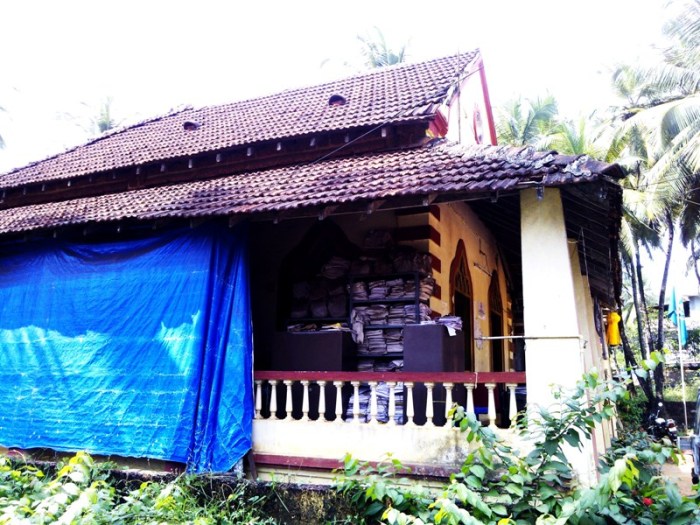
Last week was one of the times that I didn’t ignore the presence of a police station. I was in Colva (Goa) and the local police station was close to where I was staying. Housed in an old and traditional house that looked really quaint and cute, the Colva Police Station was a landmark in the area. But what caught my attention was a huge pile of papers stacked on an open shelf in the station’s verandah and clearly visible from the road.

Colva Police Station

Continue reading “Travel Shot: The paper pile at the police station”

Discovering Outsider Art

Outsider Art, Museum Dr. Guislain
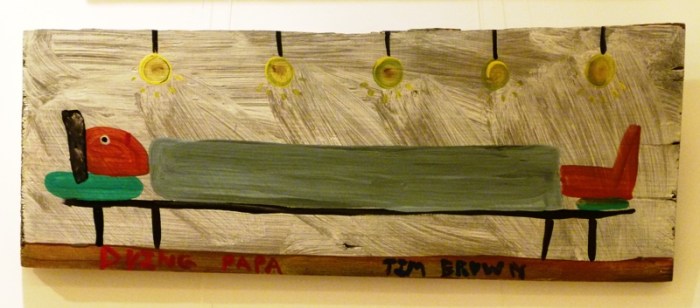
“Dying Papa”, by Tim Brown. Oil on Wood

The man lies rigid on a bed. Or is it a bench? There is no mattress on the bed/bench, but there’s a pillow under his head and another, flatter and smaller one, under his feet. The sheet covering him is too small and his feet stick out. The lights above the bed/bench cast sickly grey shadows on the walls, that appear to hover over the man. Are the shadows angels of death, I wonder?

I am drawn to this compelling artwork titled “Dying Papa” by Tim Brown, one of the many artworks on display at the exhibition on “Breaking the Chains of Stigma“, at the Institute for Contemporary Indian Art, Mumbai. This first-of-its-kind exhibition in India, which presents a global overview of mental health and a selection of “Outsider Art“, has been conceptualised by the Museum Dr. Guislain of Ghent in Belgium (and brought to India in collaboration with the Tata Institute of Social Sciences and Janssen Pharmaceuticals).

The information given along with the above artwork says that Brown (b.1923) is an African-American who grew up poor in the religious, rural and segregated South of the United States and worked in menial jobs. Brown started painting when he realised that he had no visuals from his childhood to share with his children. An untrained artist, Brown painted from his childhood memories on rough wooden boards or planks. After Brown’s wife died and his children left home, he withdrew from society at large and preferred to communicate with the outside world only through his paintings.

As I read this information, I realise that I have just been introduced an unknown and new genre of art (for me, that is) — “Outsider Art” — and one that sounds exciting ! But what  exactly is this Outsider Art? A walk through the exhibition acquaints me with this genre and how it has developed over the years.

Continue reading “Discovering Outsider Art”

Museum Treasure: Rama’s coronation

In India, popular perception in religious art largely spread through calendars, posters and periodicals. These colourful works of art were important in reinforcing images that we instantly recognise today. For instance, if we were to try to imagine Rama’s coronation in Ayodhya, it would be something like this — Rama and Sita seated on the royal throne with Hanuman bowing at their feet. Rama’s brothers, Lakshmana, Bharata and Shatrughna are in attendance, as is the Vanar king Sugreeva. The royal priest, Vashishta, is busy conducting the ceremony.

It is a gloriously celebratory image, but uni dimensional, and oh-so-safe-and-recognisable, if you know what I mean. And frankly, quite boring as the expressions on all the faces are fixed and beatific.

But then, sometimes, one comes across depictions that shakes you out of the boredom and makes you look at the same thing all over again, but with delight this time.

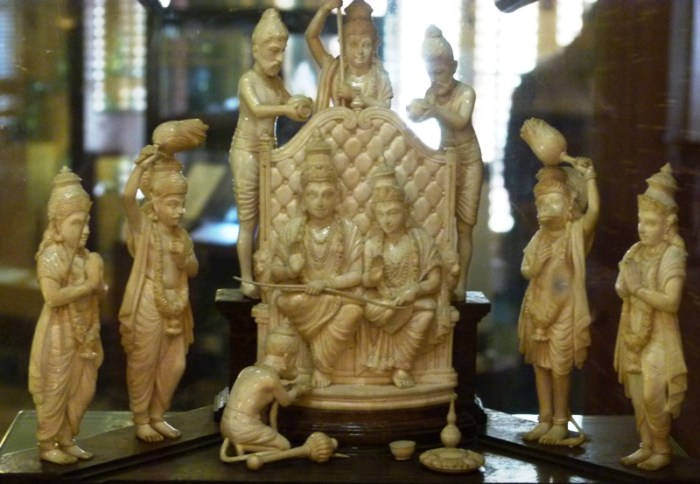
I came across two artifacts/tableaus on Rama’s coronation at at Mumbai’s Bhau Daji Lad Museum. Though both were instantly recognisable for what they depicted, they had more than an element of surprise on offer. Here is the first one:

Rama's coronation. Ivory, Mid-18th Century
Rama’s coronation. Ivory, Mid-18th Century

Continue reading “Museum Treasure: Rama’s coronation”