Do you ever have a song, an idea, a storyline, or an image stuck in your head? And it just refuses to go away? For some time at least? I have this with music—it could be a song, an instrumental piece, a jingle, etc. This becomes my “now’”song, and the “nowness” (pardon my English here) could be for any length of time.
I am in a sentimental mood these days. My niece spent a few days with us last week. This stay was very significant as she begins college next week and won’t be able to spend time with us for some time. We had a lovely time together — saw a movie, shopped for some “college wear” clothes for her, ate ice cream and donuts, watched silly TV serials and laughed ourselves sillier … We also talked a lot about everything and nothing in particular.
One of the things we spoke about was the angaai (the Marathi word for a lullaby). And I was reminded of “Nimbonichya zadamage…”, a very popular angaai or lullaby from the Marathi film Bala gau kashi angaai. Sung by Suman Kalyanpur, this lullaby is picturised on Asha Kale, as she sings it to her niece in the film.
I used to sing this lullaby to my niece, especially when she would stubbornly refuse to go to sleep. I can’t say that the angaai succeeded, but I would like to believe that my she liked it then. Even after all these years, my dear niece still does not sleep easily, and definitely would not appreciate an angaai today. But she did not mind when I sang a few lines of that song to her last week !
It’s a song that reminds me, that she’s all grown up (well, almost !), and entering an exciting phase of her life. It’s a song that has a lot of sentiments attached to it. And it’s a song that I’m still singing, as it has become my “now” song. 🙂



 I lived in London for a year (2008–2009) and though walking was my preferred mode of getting around the city, it wasn’t always possible to walk to my destination. So that’s where the Tube or the London Underground came in as the fastest, though not necessarily the cheapest, mode of travel. Travelling by the Tube made me re-look at perceiving public transport as only a means to get from point A to point B. It showed me that it could also be a place to showcase art, make a design statement, and a place that reflected the ethos/culture of the area it serviced.

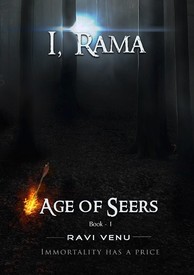 Now, how do I write a review of a book that is yet another retelling of the beloved Hindu legend, the Ramayana?

 My Favourite Things