Museum Treasure: The painted Vedas

When I stepped into the paintings gallery of the Government Museum at the Gadh Mahal in Jhalawar, a depressing sight greeted me — flickering fluorescent lights, dusty glass-fronted cabinets, and a general air of neglect. All this combined to ensure that the visibility of the exhibits was poor. The saving grace was the pops of colour on the walls from where the paintings were mounted.

I must admit that I was tempted to turn back without seeing the paintings, but then decided to do a quick round of the gallery — there was always the chance that there would something interesting lurking in the room somewhere. The first set of paintings I saw was a Baramasa, or a set of 12 paintings that depicted a mood and emotion for each month of the year. They were nice, but not particularly exceptional, and I moved on to the next display, a set of four paintings.

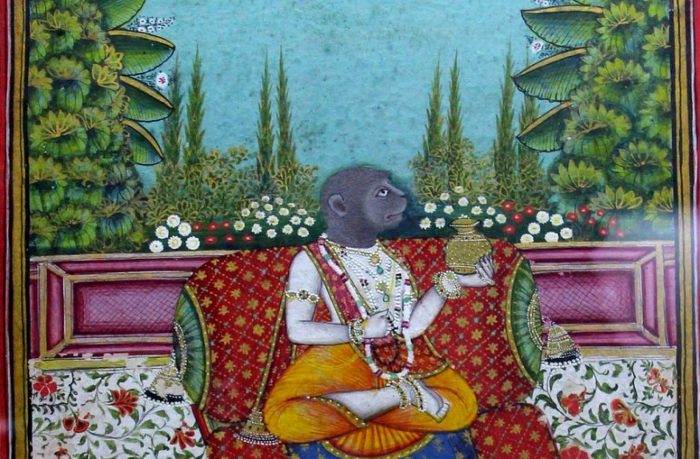
And realised immediately that I was seeing something extraordinary and unusual. So much so that I read and re-read the labels accompanying the paintings to reassure myself that the paintings were indeed a pictorial representation of the VedasRig, Sama, Yajur and Atharva — in (zoo) anthropomorphic forms.
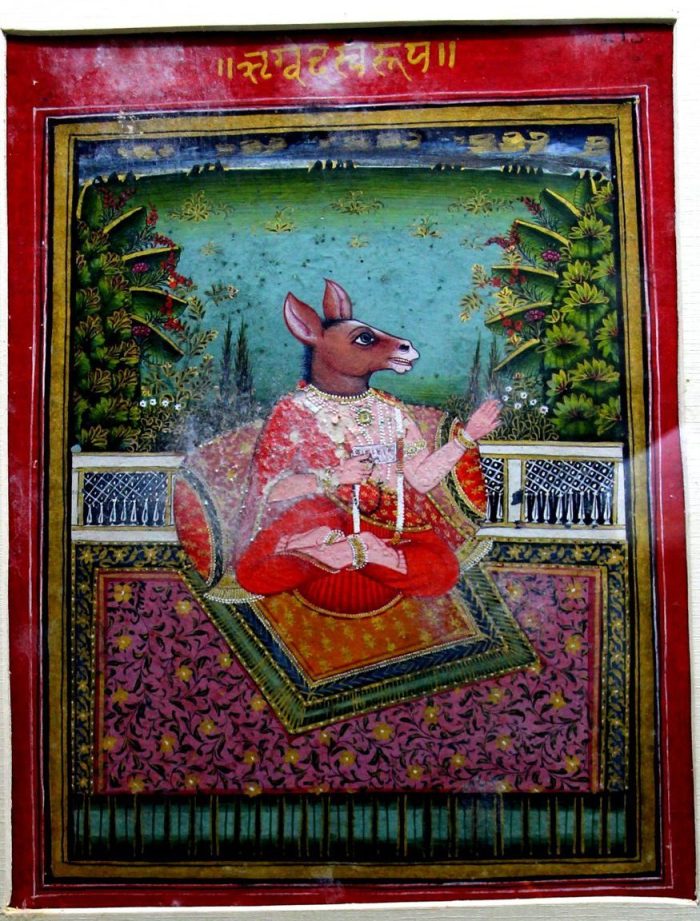
Painted Vedas, Government Museum, Jhalawar, Travel, Museum Treasure, Rajasthan
RIG VEDA: The information card accompanying this painting says “Donkey faced God seated in padmasana, he holds veda and rosary in a hand and shown in meaningful posture”. [sic]
Continue reading “Museum Treasure: The painted Vedas”

Bhawani Natyashala, Jhalawar, Opera House, Theatre, Rajasthan, Travel, Architecture

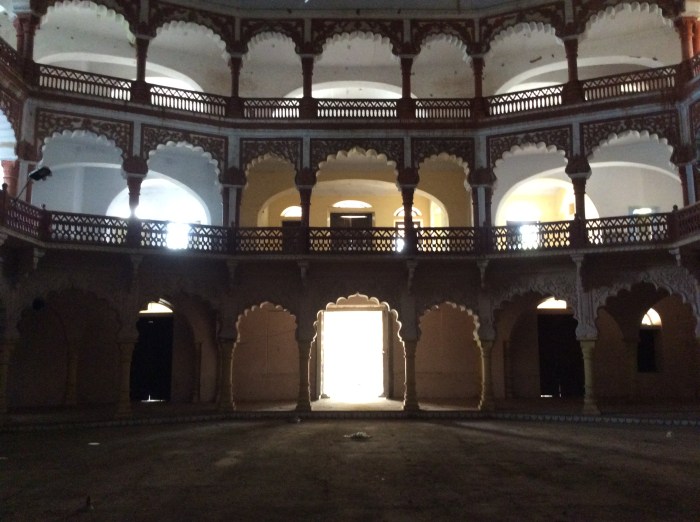
Bhawani Natyashala: The opera house at Jhalawar

One of the two things that repeatedly came up during background research on Jhalawar, before my Hadoti trip in November 2016, was the nearly 100-year old Bhawani Natyashala (the other was the Government Museum at the Gadh Mahal or Palace). The brief descriptions of the Natyashala was varied — it was a theatre, dance hall, performance hall, royal audience hall, etc. Even though the descriptions didn’t agree on what the Natyashala was, they all agreed upon one thing — that it was beautiful, one of its kind, and worth a visit.

But once in Jhalawar, I found out that the Bhawani Natyashala was closed and out-of-bounds to the public — something that none of the websites that touted it as a must-see bothered to mention ! Mahijit ji, my host in Jhalawar, told me that I could still see it from the outside and that’s what I decided to do. But luck had other plans for me.

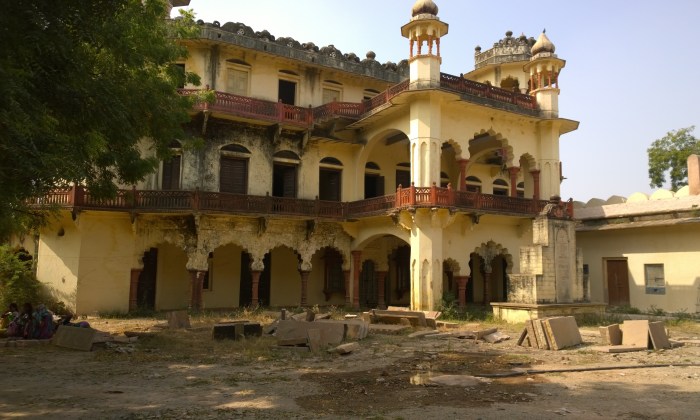
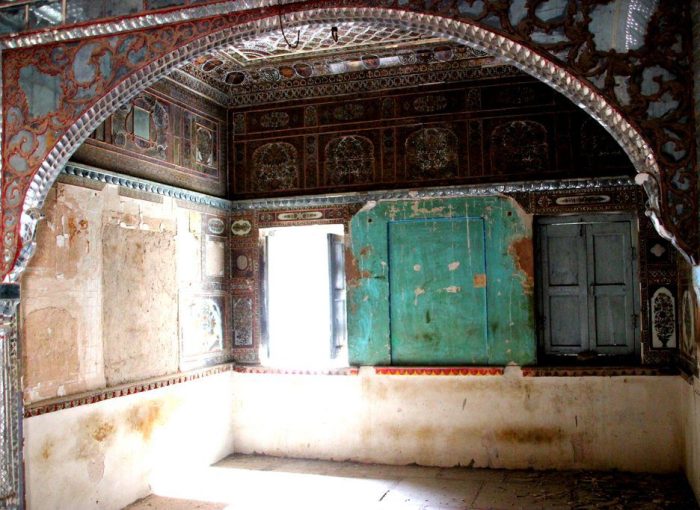
The Bhawani Natyashala is located in the premises of the Gadh Mahal, and after my friend and I finished the tour of the museum and the painted rooms, we asked the museum attendant who was taking us around, for directions to the theatre. He offered to not only take us there, but also open it up and show it to us since he had the keys with him. A short walk later, we were in front of the Bhawani Natyashala.

Continue reading “Bhawani Natyashala: The opera house at Jhalawar”

Discovering Jhalawar

When I started planning for the Hadoti Trip last year, I wasn’t aware of Jhalawar’s existence at all. I feel rather sheepish admitting this, but its the truth. Located about 80 km from Kota, Jhalawar cropped up as a suggestion for a pit stop to explore Gagron Fort, Jhalarapatan and the Kolvi Caves.

The information available on Jhalawar, which was sketchy to say the least with the same information being circulated on various sites — it was a former princely state, it had a palace, a theatre, a Fort (Gagron), had the highest amount of rainfall in the state, etc. But then I read about bad road conditions between the Kota and Jhalawar, I decided to shift my base from the former city to the latter since these sites were closer to Jhalawar than Kota.

Once that was decided, all I had to do was to find a hotel to stay and wait for the trip to get underway. Here, Jayanti of One Life To Travel connected me with Mahijit ji of Virendra Bhawan, and that too got finalised, and the trip countdown began. 🙂

When I got off the train at Bhawani Mandi Station on that cold November morning in 2016, I had no idea that this was the beginning of an epic trip. I had no idea that I was going to fall in love with Jhalawar, so much so that it was going to be the highlight of my Hadoti Trip.

Travel, Jhalawar, Princely State, Hadoti Trip, Royal Trip, Rajasthan, Heritage and History

Continue reading “Discovering Jhalawar”

Museum Treasure: Vaikuntha Kamalaja

The Dr. Ramnath A. Podar Haveli Museum at Nawalgarh in the Shekhawati region of Rajasthan was built in 1902. Originally a residence and known as Podar Haveli, it was converted into a museum after major renovation and restoration works were undertaken of the frescoes and murals that cover every inch of its exterior and interior walls.

The Haveli Museum, which is over 100 feet long, is supposed to have 750 frescoes on its outer walls, passages, two courtyards and all the rooms in the lower level. Every fresco/mural is detailed and covers themes from mythology to local folk tales to whimsical depictions of everyday life.

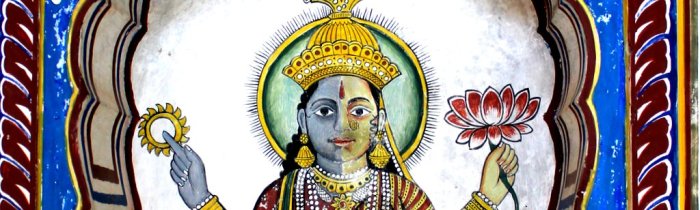
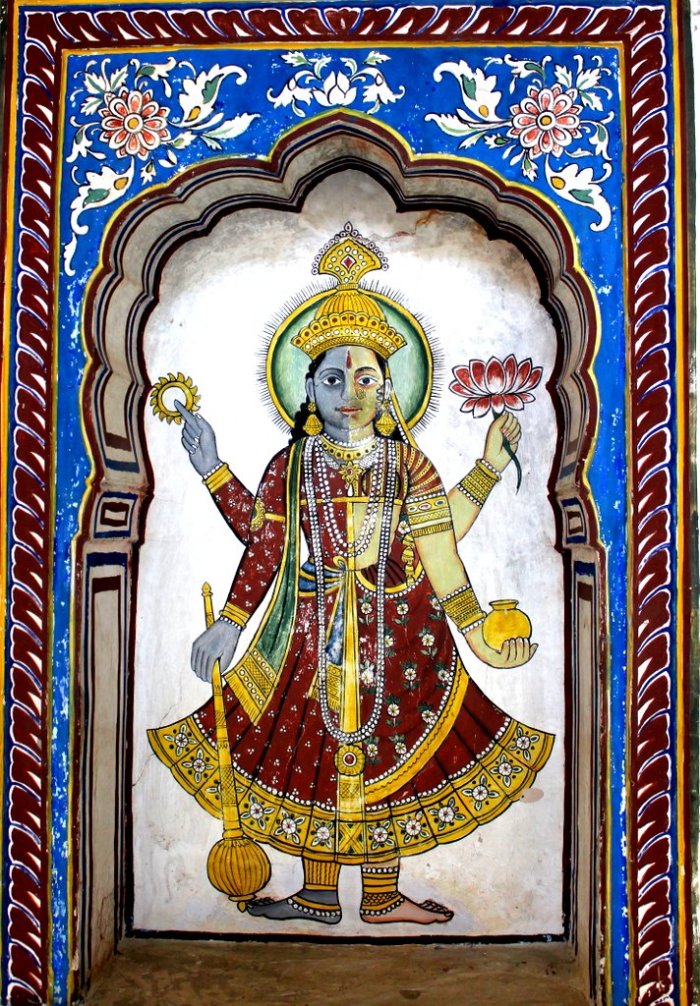
Though there were many stunning works of art at the Haveli Museum, there was one that caught my eye — more for the unusual subject than for the quality of art. It was like an Ardhanareeshwara, but instead of the composite image of Shiva and Parvati, it was one of Vishnu and Lakshmi.

Vaikuntha Kamalaja, Vasudeva Kamalaja, Vasudeva Lakshmi, Composite form of Vishnu and Lakshmi Ramnath Poddar Haceli Museum

Continue reading “Museum Treasure: Vaikuntha Kamalaja”

The temples of Kiradu

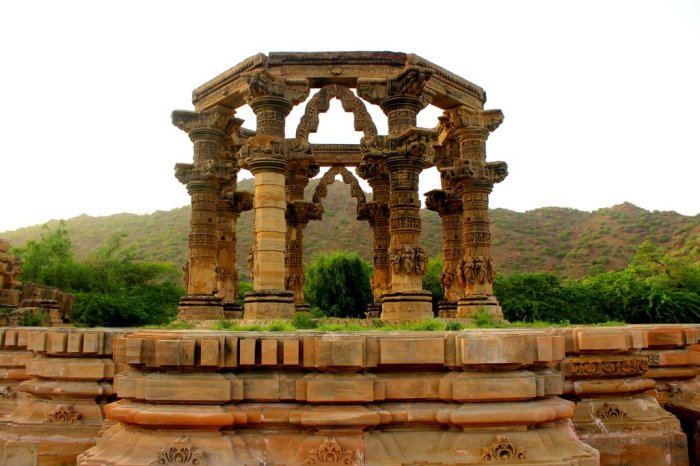
About 180 km south-west of Jaisalmer, where the Thar Desert meets some isolated outcrops of the Aravalli mountain ranges, lie the ruins of the temples of Kiradu. It is believed that there were around 108 temples on this site, but today only 5 temples remain — 4 of those are dedicated to Shiva and 1 temple is believed to have been dedicated to to Vishnu.

I first heard about the temples at Kiradu when I received an invitation from Suryagarh. The itinerary attached with the mail included a visit to these temples. I was intrigued enough to look up for more information on the internet immediately — even before I accepted the invitation. To my surprise, I found little substantive information online. This only made the temples more intriguing and mysterious for me and I couldn’t wait to see them for myself when I visited Suryagarh in July 2016.

And after lunch on my last day at Suryagarh, we set off to see the Kiradu temples. It was a beautiful, but long, drive through the Thar, through dramatic changes in the landscape from desert to hilly.

It was around 6 pm when we arrived at the Kiradu temples, which meant I had an hour or so before sunset and before the light faded. The next hour saw me racing from temple to temple, pumped with adrenaline, trying to take in as much of the details as I could and photographing whatever I thought was interesting or significant.

Temples of Kiradu, Kiradu Temples, Cursed Temples, Barmer, Heritage, Rajasthan, History,
A nritya (?) mandapa with elaborately carved toranas and pillars. One of the pillars has been reconstructed as part of the restoration work undertaken by the ASI at Kiradu

Continue reading “The temples of Kiradu”

Travel Shot: After the film shoot…

It was around noon when our blogger group we reached Khaba Village near Jaisalmer city after a morning spent exploring the Thar as part of the Desert Exploration Trail organised by our hosts Suryagarh. The sight of cool drinks and light refreshments laid out for us at the village was a welcome sight in the heat.

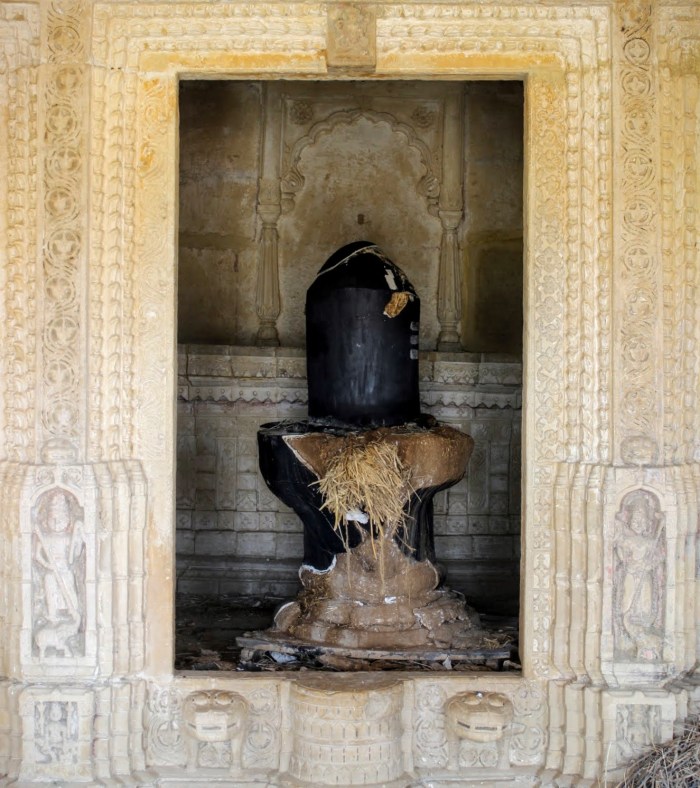
I picked up some juice and walked over to explore what looked like an old temple nearby. It seemed to be an ordinary looking temple and not in use. At least that is what it seemed like until I peeked into the garbha griha of the temple where I saw the strangest-looking shiva lingam I have ever seen — one with its innards spilling out !

Khaba, Shiva lingam, Khaba village, Jaisalmer, Rajasthan, this happens only in India
A shiva lingam with its “innards” spilling out !

The shiva lingam appeared to have been fashioned out of mud and hay, covered with some kind of a plaster or clay layer and then painted over to give the finishing touches of a lingam. It may have looked like the real thing when ‘freshly made’, but looked like something out of a horror show then.

The ‘what’, how’, ‘where’, etc. of the strange lingam would have remained a mystery, if not for the Suryagarh staff who told me how this came to be.

Continue reading “Travel Shot: After the film shoot…”