Bijapur: A hidden heritage

I visited Bijapur as part of an organised tour of heritage places in North Karnataka in the first week of September. When our tour group stepped outside Bijapur railway station, there was no indication that we were in a place of any significance—no rickshaws or tour guides trying to hard sell a “good deal” to the sites in the town. There were only some tongas and a few people wandering about here and there. It was so quiet and peaceful that I wondered if we were in the right place at all !

Bijapur was the seat of power for the Adil Shahi dynasty which ruled from 1490 to 1686. The town was established in the 1oth–11th century by the Chalukyas, though it was then known as Vijaypura or the “city of victory”. Though the Chalukyas were renowned for their temple architecture, there is nothing to show for their presence in the town today. What it has to offer is some stunning examples of Islāmic architectureGol Gumbaz, Ibrahim Rouza, Jama Masjid, Darbar Hall, etc. Indeed, Bijapur is one of the few places in South India, where you get to see Islāmic architecture.

Bijapur is identified with and is almost synonymous with the Gol Gumbaz, the mausoleum of Muhammad Adil Shah II, who is buried here along with his two wives, his son, his daughter, and his mistress. That is perhaps the only reason all tourists gravitate towards the Gumbaz and for our group too, this was the first stop.

My first impression of the Gumbaz was not very favourable—its rather squat proportions of a plain dome atop a cube with slender seven-storeyed towers at each corner seemed too symmetrical and boring. Its size, though, was impressive, and why not—the dome is reportedly the second largest dome in the world, next only to St. Peter’s Basilica at Vatican City.
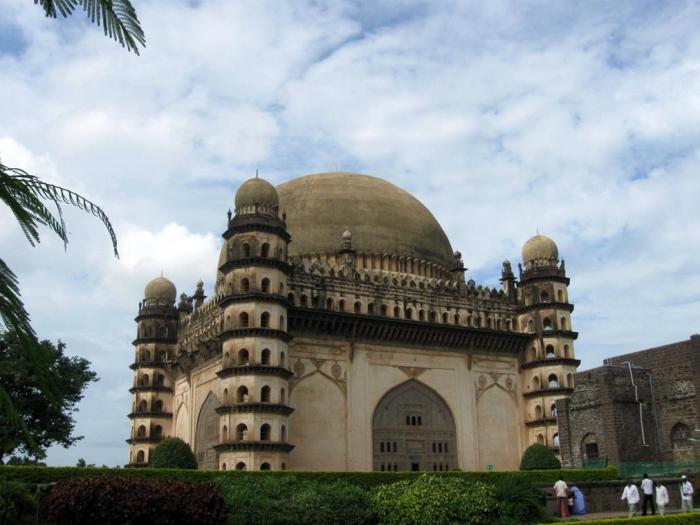
The Gol Gumbaz

Continue reading “Bijapur: A hidden heritage”

The journey to a destination

Someone said, and I can’t remember who, that the journey to a destination is as important and interesting as the destination itself. But sadly, most of us do not give much importance to what we see around us during journeys. I, too, have been guilty of this.        

But a recent holiday to North Karnataka (where I visited Bijapur, Badami, Pattadakal, Aihole, and Hampi) changed all this. Since I was travelling with a tour group for the first time, common courtesy dictated that I do not bury myself in a book all the time, something I normally do while travelling.        

But more than that, I feel that the main reason for the interesting journey was because I did not travel in a sterile aeroplane or air-conditioned train compartment (except on my return journey to Mumbai), or an air-conditioned car/jeep/bus, which usually does not allow you to be a spectator or participant to the world around you. Travelling in a Second Class train compartment or non air-conditioned vehicle forced me to look out of the window and breathe in the fresh, cool air or sometimes air flavoured with dust and diesel/petrol fumes !       

This recent trip was a veritable feast for my jaded eyes and soul. Every leg of the journey (and the various destinations, about which I will write in other blog posts) presented something new and refreshing.        

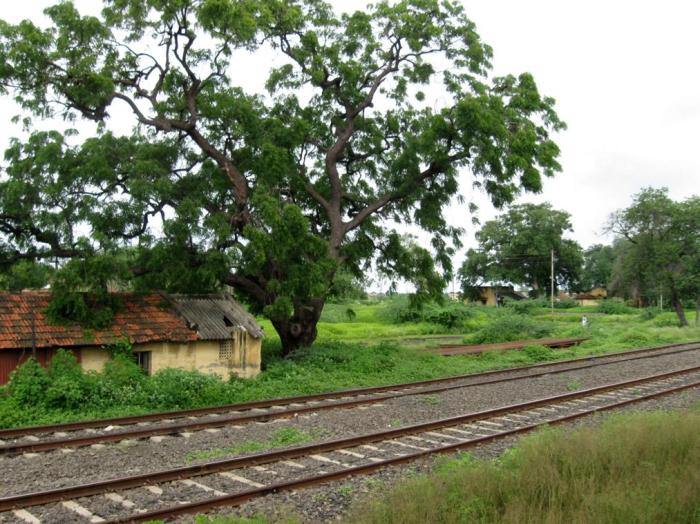
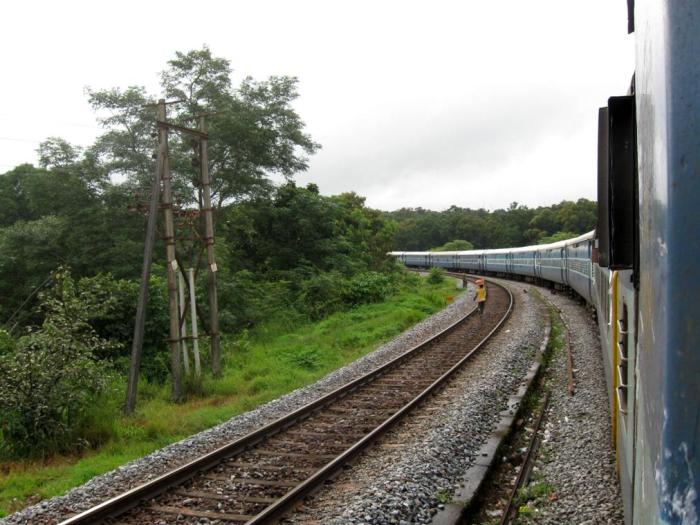
Enroute to Bijapur from Mumbai by train …       

Lush green countryside after Solapur
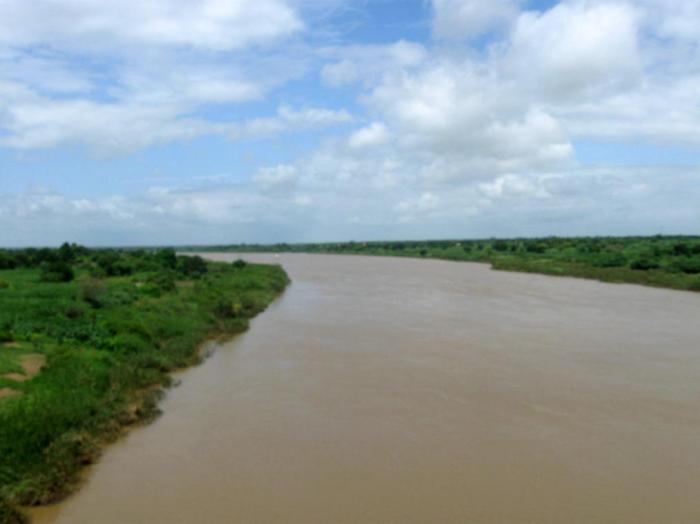
River crossing near Tadwal
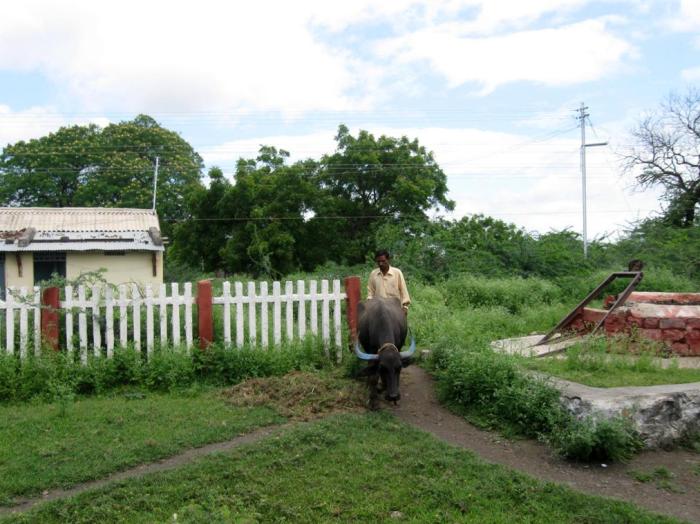
Railway lines and stations often come in the way of traditional grazing grounds for cattle. Here, a buffalo and her owner make their way along a well-tread path through the railway station. The way the pair of them came charging down the path, I thought that they would get into the train !

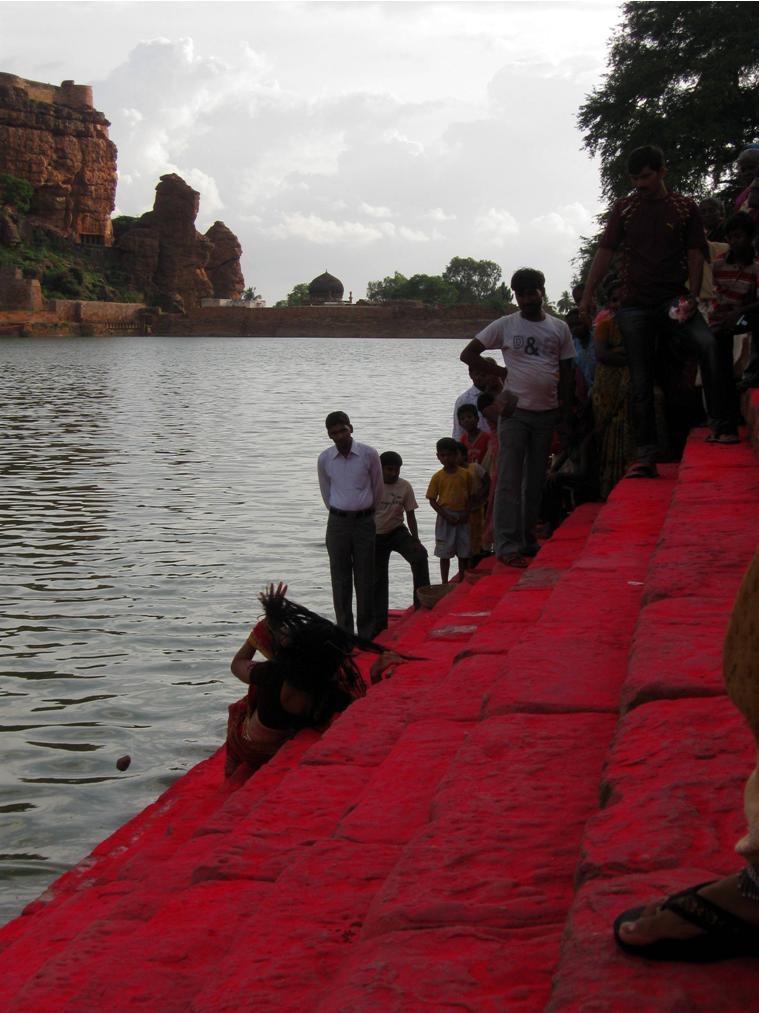
On the way to the Bhootnath Temple at Badami…       

A film shooting was in progress on the steps of the Agastya tank. As far as I could figure out, the scene being shot involved people stoning a woman as she cried out to her mother for help

Enroute to Pattadakal…       

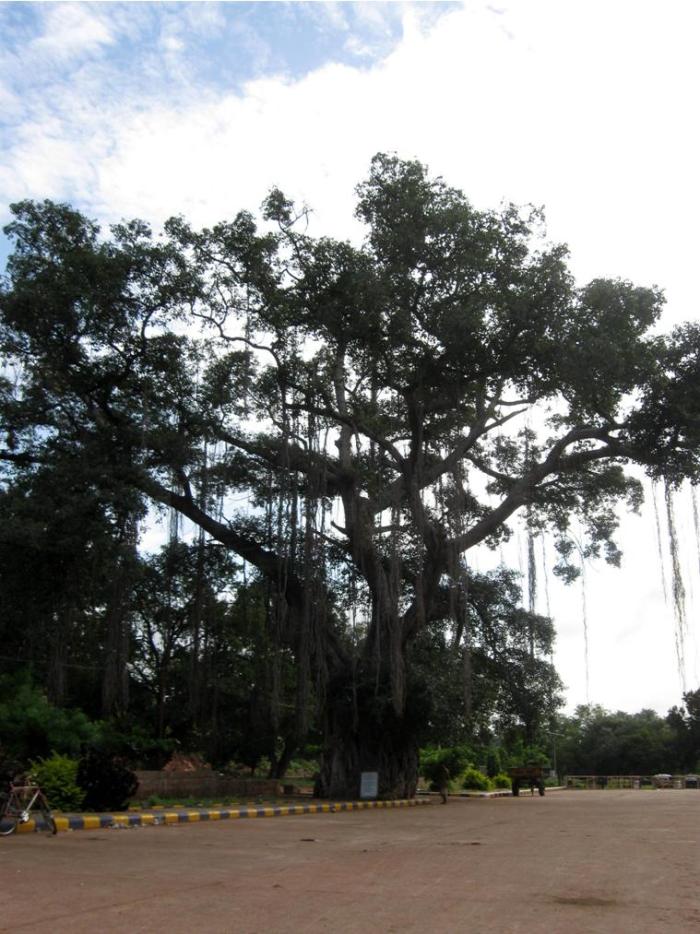
A magnificent, 300-year old banyan tree outside the Mahakoota Temple

Enroute to the Vittala Temple in Hampi…     

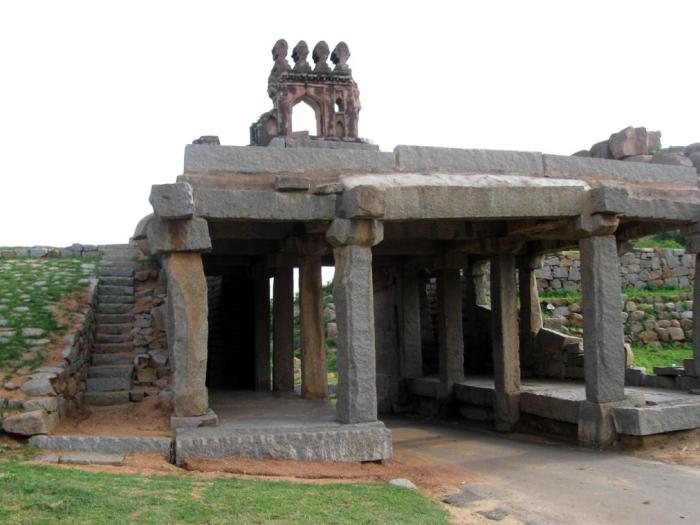
Talarigatta Gate, one of the entrance gates to the ancient village of Vittalapura

Enroute to the Daroji Bear Sanctuary…     

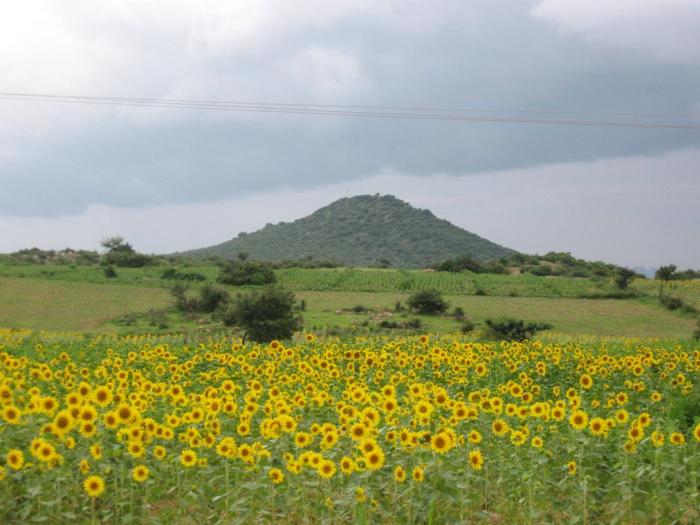
Sunflower field with fast approaching rain clouds

Enroute to Hubli…    

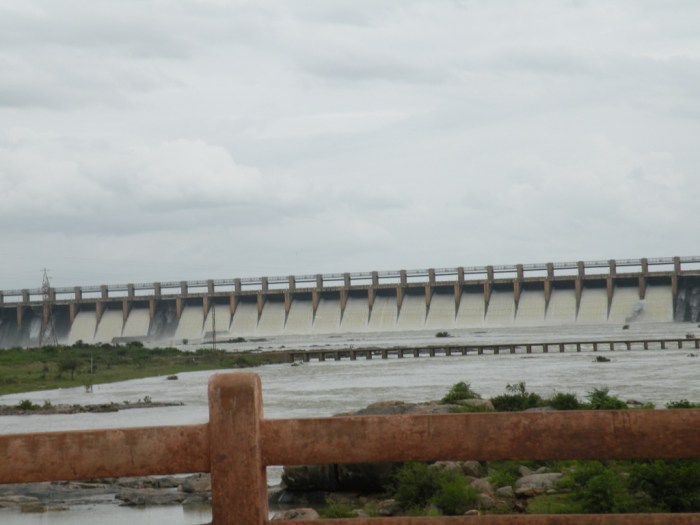
Tungabhadra Dam (Photo Courtesy: Shailaja Apte)

Enroute to Mumbai by train…    

Passing a thickly forested area before Londa Station

There were so many things that I was unable to photograph and share it here with you:       

  • endless fields of bajra, jowar, corn and sugarcane
  • lush green banana plantations
  • agressive pigs, nervous dogs and emaciated cats in the various towns and villages that we passed through
  • monkeys, monkeys and more monkeys
  • the ever-changing landscape of North Karnataka
  • the hundreds of beautiful trees in the region
  • eager-eyed children with their families

 The list can go on and on and on…

Travel Shot: Feeling blue at North Greenwich tube station

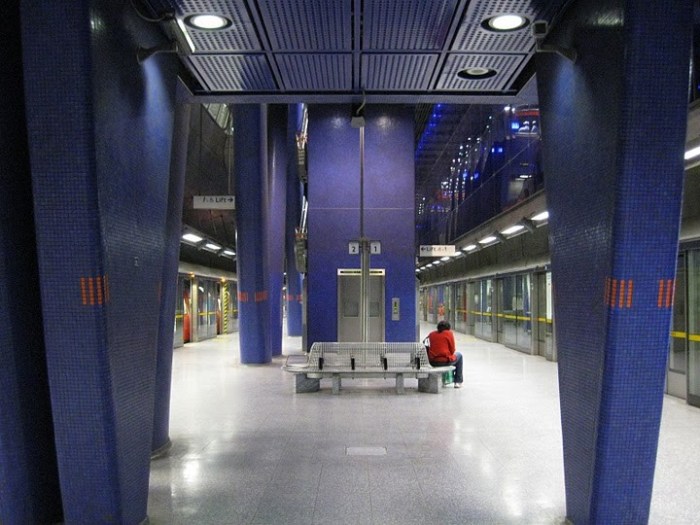
7 July 2009: North Greenwich Tube Station

For a short while, it appeared as if there there was nobody on this platform of North Greenwich tube station (Jubilee Line), except for this woman and me. Her blue jeans and red jacket mirrored the blue and red colour scheme of the station. Her slumped posture and her back to the camera, seemed to me to be the perfect setting for Edward Hopper, one of my favourite painters.

How could I not capture this shot?

Travel Shot: Traffic jam on the River Cam

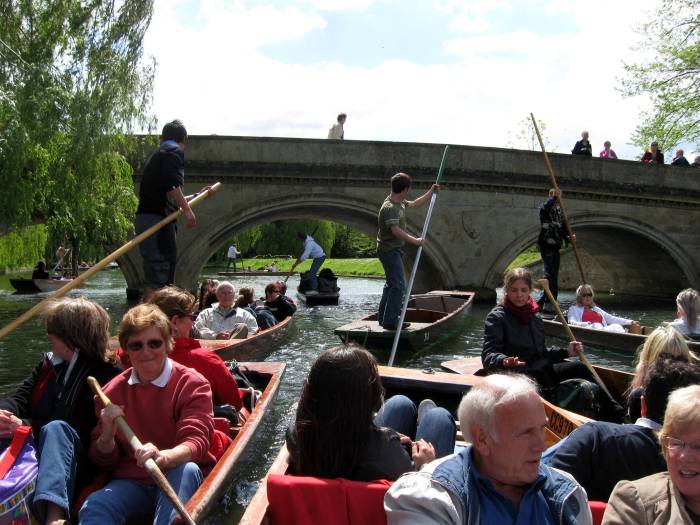
25 April 2009: Punting in Cambridge

A visit to Cambridge is incomplete without punting on the river Cam. Usually an hour-long trip, it is a different way to experience Cambridge and, of course, to listen to some outrageous stories and gossip about the University town and its famous alumni from the punters. 😉

And that is exactly how I explored Cambridge on a beautiful, lazy April day.

A walk of faith: Palkhi

I wonder about the concept of “faith” sometimes. Faith in a belief, faith in a religion, faith in people, faith in relationships, faith in God… Faith. An abstract, nebulous concept for some; yet, a strong, clear path for others.

My faith in the concept of  faith was tested during my recent trip to Pune, when the annual Palkhi Festival of Sant Tukaram and Sant Dnyaneshwar passed through the city on 5-6 July 2010. The palkhi or palanquin of Sant Dnyaneshwar carries his footwear on a silver bullock cart; I am not sure what the palkhi of Sant Tukaram carries.

A group of varkaris singing abhangs (devotional songs) around an idol of Sant Dnyaneshwar

According to the Maharashtra Tourism website, the Palkhi Festival is a 1,000 year old tradition where devotees/pilgrims, known as varkaris accompany the palkhis on foot to Pandharpur over 22 days in June (the Hindu month of Jyeshta)–July (the Hindu month of Ashada). The Palkhi Festival ends on Ashada Ekadashi.

Thousands of devotees make this annual trip every year. This year, the ToI has estimated that 3 lakh varkaris joined the 2010 Palkhi Festival. On the day the palkhis pass through Pune, roads get blocked, traffic diverted, and schools and colleges declare a holiday.

Continue reading “A walk of faith: Palkhi”

Vishrambaug Wada: A symbol of Pune’s cultural heritage and apathy

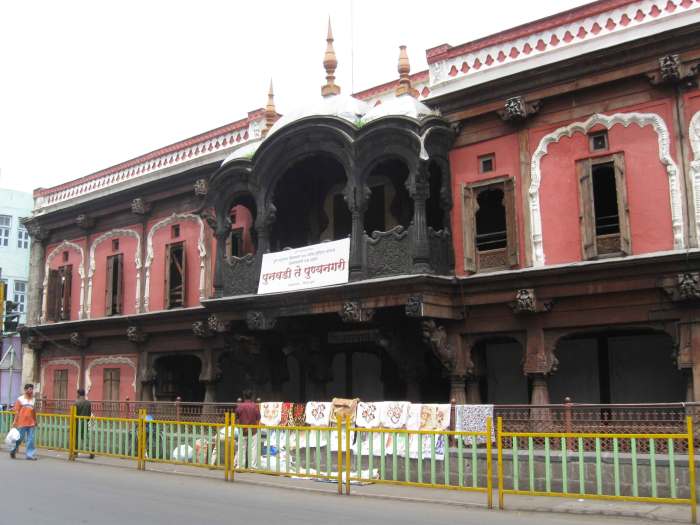
Vishrambaug Wada was built as a residence by Peshwa Baji Rao II in 1811. Today, part of the Wada is open to the public, while other parts have government offices and a post office installed in them. Located in the heart of Pune city, the Wada is a symbol of Pune’s rich cultural heritage. Ironically, it is also a symbol of neglect and apathy to that very rich cultural heritage.

I visited Vishrambaug Wada on a Sunday morning. Though the markets were open, there were not too many people around. The hawker that you can see outside Vishrambaug Wada in the photograph below was busy displaying his ware of sofa and TV covers and bedsheets, when I arrived.

The terracotta, brown and white façade of the Wada, its wooden balcony, and massive wooden pillars (which I could see from across the road), presented the perfect opportunity for a photo-op as I waited to cross the road.

Vishrambaug Wada

Continue reading “Vishrambaug Wada: A symbol of Pune’s cultural heritage and apathy”