The secret of the Nagas: A review

The background

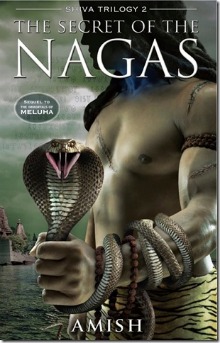
The Secret of the Nagas (Westland, pp.396, Rs.295) is the second book in the Shiva Trilogy by Amish. The Trilogy is based on the premise that Shiva was not a mythical God, but an ordinary human being who became a God because of his karma. The 3 books in the Trilogy trace the journey of Shiva from a human being to that of a God.

The Immortals of Meluha is the first book in the series. It follows the journey of Shiva from his beginnings as a Tibetan tribal leader to that of an immigrant to Meluha (the area that we now know was the site of the great Indus Valley Civilization) to becoming aware of the extraordinary destiny that awaits him and his first attempts at fulfilling that destiny. For more on the first book, you can read my review right here.

The story

The second book begins in Ayodhya with yet another skirmish between Shiva and Sati, and the Naga, who Shiva suspects was responsible for the death of his friend, Brihaspati. Yet again, the Naga escapes. By now Shiva is obsessed with hunting down the Nagas (an ostracised community of deformed beings with extraordinary skills, power and strength), and particularly that one specific Naga.

Continue reading “The secret of the Nagas: A review”

The Pattadakal Temples: Where kings were crowned and villagers dwelled

The Ganges or the River Ganga is considered to be holy to Hindus. And in Varanasi or Benares, the Ganga is considered to be at its holiest. Do you know why? It is because the Ganga’s flow is uttarabhimukhi or from South to North there, as against the usual West to East, or the less common East to West. I learnt about this piece of trivia when I visited Pattadakal.

Pattadakal is a small village in North Karnataka, situated on the banks of the river Malaprabha. It is a rather unremarkable looking, dusty village, made remarkable for one thing—the Malaprabha is also uttarabhimukhi here. This unique feature was considered an auspicious sign by the rulers of the Chalukya dynasty, thereby singling it out for royal attention.

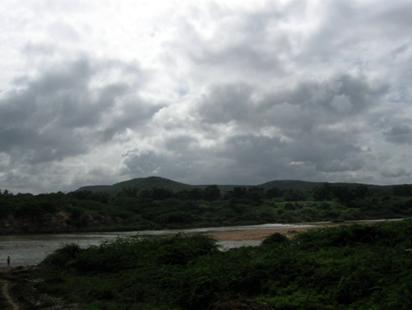
The North-flowing Malaprabha River at Pattadakal

And what an attention Pattadakal got ! The Chalukya Kings chose Pattadakal as the site for their coronation ceremonies. Being lovers of art and culture, they also chose Pattadakal as the site for building a unique temple complex that would blend the architectural and artistic traits of the northern and southern styles of temple-building that was in vogue in the 8th century. Eight temples were built on one site as a group, while two other temples were built some distance away in Pattadakal. This group of monuments at Pattadakal are designated as a UNESCO World Heritage Site.

Continue reading “The Pattadakal Temples: Where kings were crowned and villagers dwelled”