♦ This blog post was featured in the “Around the Blog” section of theDNA newspaperpublished on January 14, 2013 (pg.6) ♦
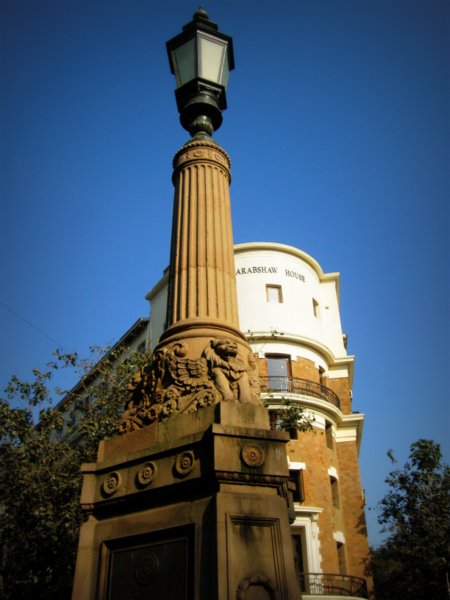
At a road junction in the busy Ballard Estate area of Mumbai, and near two landmarks of the area — Cafe Britannia and Old Customs House — stands a memorial.
World War I Memorial at Ballard Estate, Mumbai
This memorial commemorates the employees of the Bombay Port Trust (now Mumbai Port Trust) who fell during World War I (1914-1918) and also Port Trust’s contribution to the war effort. A brass plaque on the memorial reads:
This blog post was featured in the “Around the Blog” section of theDNA newspaperpublished on August 27, 2012 (pg.7).
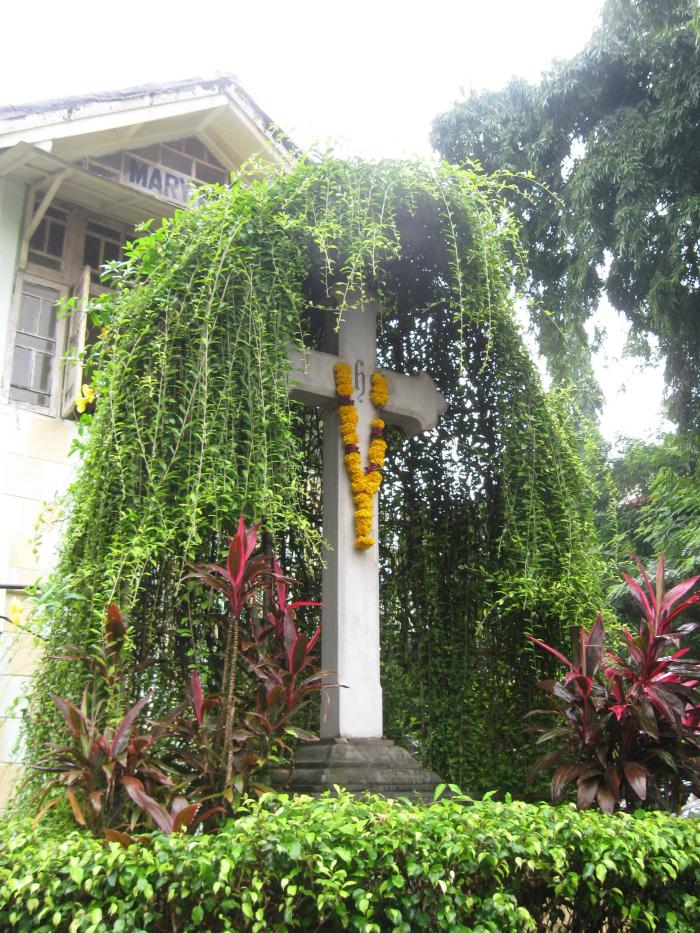
That rainy day, I was at Hill Road in Bandra on a gastronomical expedition busy stuffing my face and bags with cakes, quiche, and other baked goodies. My eyes or rather nose was trailing the various aromas coming out of the many bakeries that line the road. And that’s when a flash of yellow-orange momentarily distracted me, the yellow-orange of a string of marigolds garlanding a cross.
The garlanded cross
This large cross is somewhere on Hill Road (I can’t remember the exact location). Together with the beautiful veil like green and leafy canopy, the garland really lit up the cross.
I love the way people take something and adapt it to fit their uniquely local culture, be it food, clothes, music…. The sambhaar powder added to the tamarind paste used to make bhelpuri in Chennai, kurtis teamed up with jeans, Carnatic classical music on Western instruments like the mandolin and violin…, And the way we have “Indianised” Chinese cuisine is legendary !
But what I love the most is the way this adaptation plays out in religion. Recently, on a visit to Chennai, I saw a statue of Jesus standing on a lotus with peacocks at his feet. I have heard of aartis in churches, I have seen non-Hindus at the Sringeri and Brihadeeshwara Temples. But this was the first time I saw a cross “decorated” with a garland.
Academics call such expressions of adaptation syncretism; I call it making it our own. 😀
Mumbai Lens is a photographic series which, as the name suggests, is Mumbai-centric and is an attempt to capture the various moods of the city through my camera lens. You can read more posts from this serieshere..
This blog post was featured in the “Around the Blog” section of theDNA newspaper published on July 230, 2012 (pg.6).
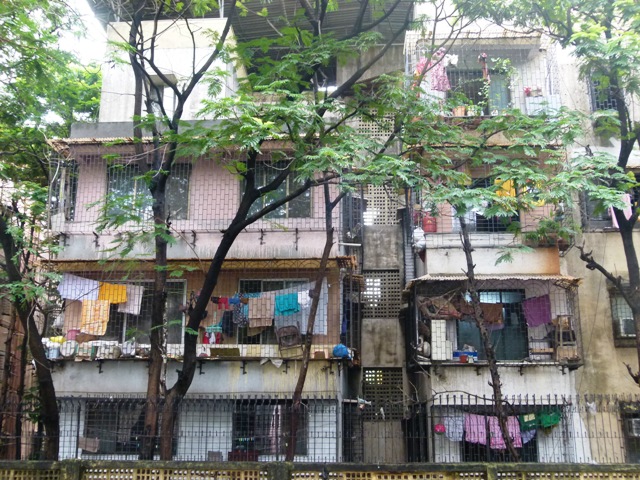
Mumbaikars, many of whom live in tiny flats with “caged windows”, optimise every inch of space that they have and then some more. I have seen these caged windows being used to store bicycles, for growing plants, for drying clothes… And I have great fun imagining the families living in such flats. A bicycle indicated school-going children, a tricycle indicated a toddler at home. If the bicycle/tricycle looked unused, then maybe the “children” had grown up. The clothes lines would help me weave even more colourful backgrounds to the families living behind those caged windows.
And then I came across these windows recently, and incidentally from the same building. It is said that a person’s desk is a reflection of his or her mind. If this logic were to be extended to families, what would the “caged windows” in the photograph be a reflection of?
What comes to your mind when you see these caged windows?
This blog post was featured in the “Around the Blog” section of theDNA newspaperpublished on May 7, 2012 (pg.6).
That Mumbai has many hidden treasures is something that is underscored now and then when I experience or unearth something interesting about this city. But Mumbai still manages to surprise me with the sheer variety. For example, when I attended an exhibition at Mumbai University’s Cowasjee Jehangir Convocation Hall at its Fort Campus earlier this year, it was not just the exhibits that caught my eye.
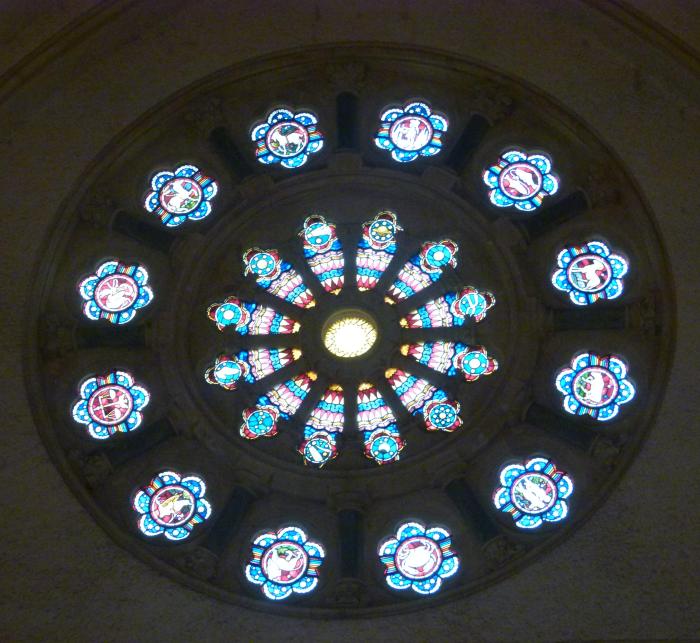
This was my first (and so far only) time that I have visited the Convocation Hall, whose grand interiors are stunning, with elaborate detailing, stained glass windows, teak wooden seats, exquisite grill work, etc. But the the large stained glass window over the entrance to the Hall is probably the grandest and most stunning feature of them all.
The Zodiac Window at the Cowasjee Jahangir Convocation Hall of the University of Mumbai
This blog post was featured in the “Around the Blog” section of the DNA newspaper published on February 27, 2012 (pg.6).
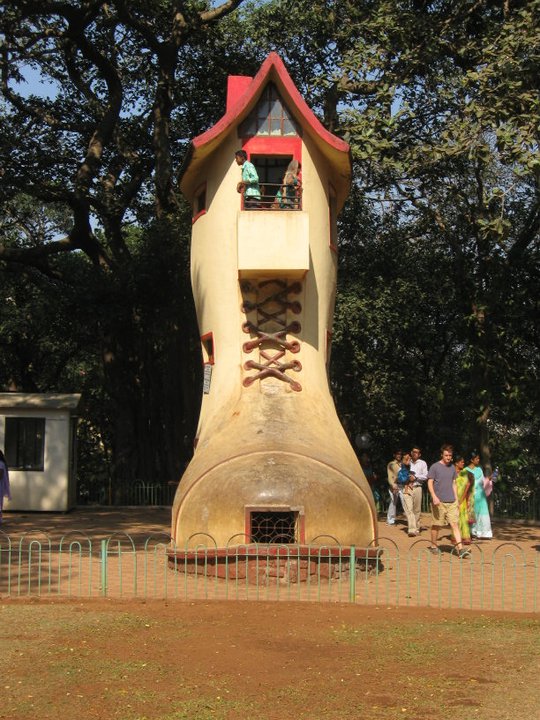
I did my first 4 years of schooling in Mumbai and without fail the annual school picnic followed the same pattern—a visit to the Byculla Zoo, followed by lunch in the grounds there; then a quick visit to the Gateway of India; and finally a drive along the Marine Drive to the Kamala Nehru Park at Malabar Hill. This is part that we kids would be waiting for—a romp in the grounds and a visit to the Shoe House in the Park (and not necessarily in that order).
The Shoe House, which is supposedly inspired by the nursery rhyme “The Old Woman who Lived in the Shoe”, was the star attraction for us. A larger than life shoe-shaped house, painted a bright yellow with red shoe laces, a red roof and red chimney—it was every kid’s dream house. We would climb the narrow stairs in twos and threes to the balcony and wave out to the other classmates and feel that the Shoe House and the world belonged to us ! Ah the thrill and joy that little climb gave us.






 My Favourite Things