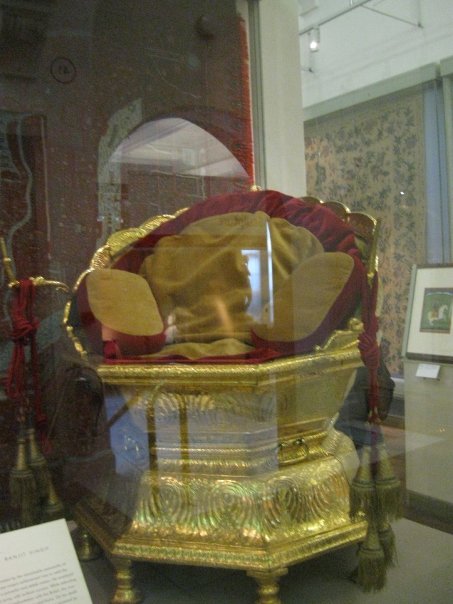
The Victoria and Albert Museum (or the V&A) in London has a fantastic collection of artifacts from India, that includes textiles, jewellery, paintings, weapons, etc. While many of these have been purchased by the V&A, some of the exhibits have been acquired during annexation of the princely states of pre-independent India by the British. One such exhibit is the Golden Throne of Maharaja Ranjit Singh, which was acquired as State property in 1849 on the annexation of Punjab.
The Padmanabhapuram Palace Complex, which is situated about 50 km from Thiruvananthapuram, has a heritage museum with exhibits that range from household articles to coins to sculptures and paintings to object d’ arts. The museum is located in the 400-year-old Thekee Kottaram (or Southern palace).
I visited the Padmanabhapuram Palace Complex in November 1998 and spent a very happy afternoon exploring it and pottering among the museum exhibits. This collection of 3 Saraswati figurines at the museum caught my eye.
About 12″ in height, these exquisitely carved wooden sculptures stood out for their craftsmanship. As I gazed into the calm and serene features of the figurines, I couldn’t help wondering as to why one rarely comes across Saraswati, the Hindu Goddess of learning, knowledge and wisdom. There are hardly any temples dedicated to Saraswati and even in art she is not a favourite subject for painters and sculptors alike.
Is it because we know that learning, knowledge and wisdom do not really come easy and even the Goddess cannot help if one is not willing to work hard for it? Or is it because material benefits are preferred over the intellect?
The Museum Treasure Series is all about artifacts found in museums with an interesting history and story attached to them. You can read more from this serieshere.
The Verulamium Museum of Everyday Life in Roman Britain has a stunning collection of artefacts dating back to the Roman period of British history. Much of its exhibits come from excavations of the ancient roman city of Verulamium.
Verulamium was the third largest town in Roman Britain, after Londinium (London) and Camulodunum (Colchester). This ancient Roman city flourished here from about 45 AD to about 420 AD and at its peak, it had a population of about 7,000. It had the status of a municipium (municipality) and had a basilica (town hall), a forum (market place) and a theatre. Verulamium was near the present day city of St. Albans, which is about 20 minutes by train from London.
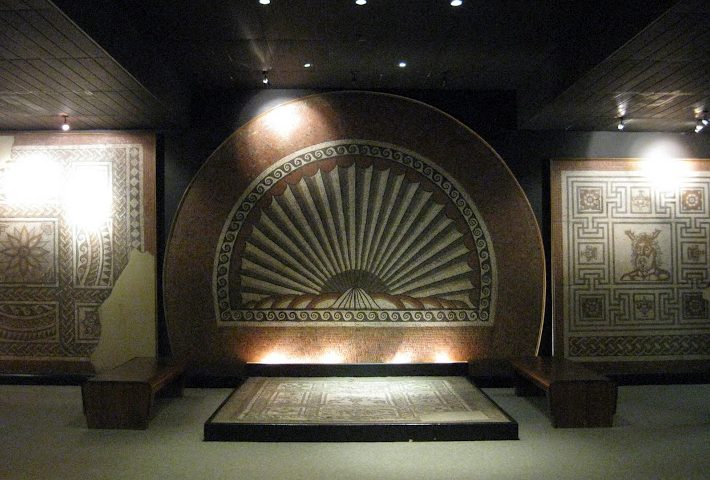
I was very fortunate to visit this museum as part of a day trip to St. Albans about 3 years back, and the Roman mosaics in the Museum’s collection is something that I have not forgotten even after all this while. These mosaics are nearly 2000 years old, and if you were to see them, you would be forgiven for thinking that they were made yesterday ! Mosaics are very difficult to preserve and the Romans must be credited with creating such high quality pieces of art which have lasted centuries.
From L to R: the Dahlia Mosaic, the Shell Mosaic, and the Oceanus/Neptune Mosaic
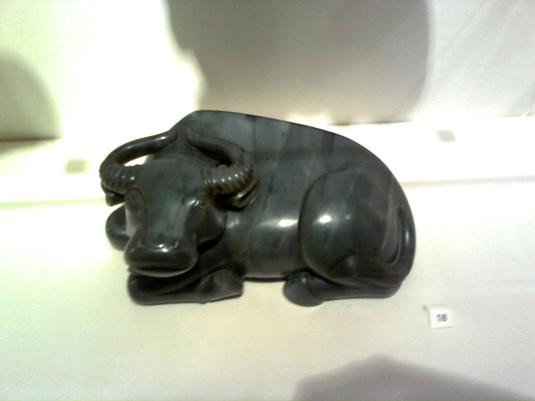
The bull stares at me and I eye him warily. Gathering my courage, I step a little closer to admire his shiny coat and curved horns, which makes for a magnificent sight. Still keeping an eye on him, and without making any sudden movements, I take out my camera and take a picture without a flash. I don’t want disturb the bull, you see. Though the picture is not great (I think my hands shook), but it is still a good capture.
The Jade Bull
I met this bull in December 2008 during one of my many visits to the British Museum London. I can’t remember the details now, but I think he was part of a visiting exhibition from a museum in China, and not part of the British Museum’s collection (they don’t have any information on this bull on their website).
Yes, this is not a real bull, but believe me staring out of his cabinet at the British Museum he looked real enough. He was no bigger than my palm, and yet every feature of his was clearly visible, right down to slightly flared nostrils. Carved out of very dark green jade, he looked very much alive and full of barely suppressed energy. It was almost as if he was just waiting for an opportunity to break free from his confinement. He could have been the proverbial bull in a museum china shop !
So, what do you think?
The Museum Treasure Series is all about artifacts found in museums with an interesting history and story attached to them. You can read more from this serieshere.
The Egyptian galleries in the British Museum in London, perhaps, receive the maximum number of visitors every day. These galleries are full of mummies, figurines of gods and shabtis, sculptures of boats, doors, beetles, the Rosetta Stone, busts of various pharaohs, etc. Amidst all these objects and artifacts from Egypt, is the towering stone of Rameses II.
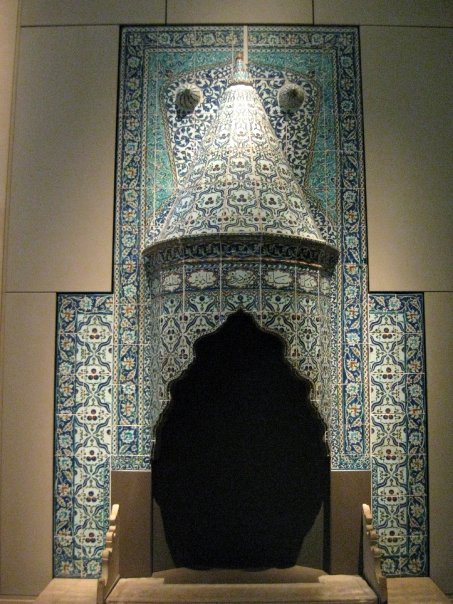
The Victoria and Albert (V&A) Museum in London is a favourite of mine. I love their collections, but more than that I love the fact that they allow visitors to photograph their treasures. One of my favourite exhibits from there is a ceramic fireplace from Turkey.
The ceramic fireplace from Turkey dated 1731 from the V&A, London






 My Favourite Things