The Indo-Islamic mosques of Champaner

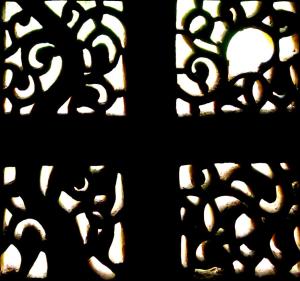
Detail from a wall carving on Kevada Masjid

“It has not rained in Champaner for 2 years, and then it rains like this. When it rains…” the guide’s voice trailed off mournfully.

About 20 pairs of suspicious, skeptical  eyes looked at the muddy, slushy path that seemed to worsen as it wound its way to apparently nowhere. But according to Manoj, the guide, the path led to 2 mosques, one of them with the most beautiful embellishments imaginable on its walls.

Maybe Manoj did not sound convincing enough, or maybe it was the mud, but most of the owners of those eyes decided to forego seeing those two mosques. But some did agree to go with the guide and see the mosques. I was one of them.

Our tour group was in Champaner for a 2-day visit. We had arrived that morning from Mumbai to a cloudy, rainy and wet day, in the wettest rainy season that Champaner was experiencing in a long time. We were to see the ruins of the medieval city of Champaner, which included many mosques in various stages of restoration or disrepair, depending on one’s point of view. I wondered how many we would be able to see with the heavy rains having made the access roads paths almost impossible to negotiate. (There are reportedly 18 such mosques, and we managed to see about 5 of them.)

Continue reading “The Indo-Islamic mosques of Champaner”

The forgotten medieval ruins of Champaner

Once upon a time there was a prince. He wasn’t particularly a happy prince or, for that matter, an unhappy prince; but he was an ambitious prince. He wanted to be remembered for posterity for his conquests, and his rule. The prince wanted to be like his grandfather, who had founded a great city and named it after himself. But the prince had to first become the king. And one day, he became the king.

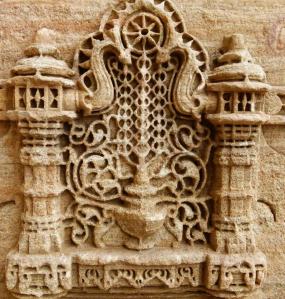
Detail of a window at the Jami Masjid

The prince, now the king, set his eyes on a neighbouring kingdom, which was very well fortified and was known to have an impregnable defence system. The king’s  advisers and soldiers urged him to consider some other kingdom to conquer.

But he declined; it had to be this kingdom. The king’s strategy was not to engage in a battle or a war; he captured the lower fortifications of this hilly kingdom, and then laid siege to it and cut off supplies.

Cloisters of the Jami Masjid

The kingdom’s ruler was amused and offered the king money, women, and jewels, but the king was not enticed. He was firm about his intentions—he wanted the kingdom. Nothing else. To show that he meant business, the king laid the foundations for his palace and a place of worship for his soldiers just outside the fortifications and at the base of this hilly kingdom.

Continue reading “The forgotten medieval ruins of Champaner”

The grand ruins of Golkonda Fort

There is some connection between rains, ruins and me. I have always had rains for company whenever I have visited ruins. Be it Tintern or Hampi or Champaner. It is never a heavy downpour, mind you, but a gentle drizzle. So I was not really surprised when rain welcomed us on arrival at the Hyderabad airport last month. I was on a day trip to Hyderabad with Neena, a colleague, and we had arrived early in the city so that we could visit the Golkonda Fort, before getting down to business.

We got that first look of Golconda, rising tall and majestic in the distance from the car we were travelling in. With rain clouds in the distance, it made for an unforgettable picture. As we neared the Fort, we kept getting tantalising glimpses of the Fort, each one a little closer. By the time the car stopped at the entrance to the Golkonda Fort, we were raring to explore the Fort.

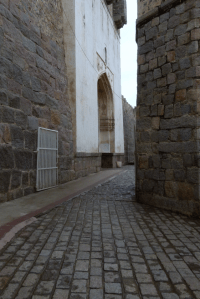
The passage leading to the entrance of Golkonda Fort

It was 9 in the morning, and with hardly any other visitors in sight and it appeared that we would have the Fort almost to ourselves. This also meant that we were swamped by a horde of guides before we even got to the ticketing office. Since we had decided not to hire a guide, we had to politely and firmly decline every offer of a guide service.

We hoped to get around the Fort with an information booklet on the Fort, which we were told was available here. To our surprise, the ticket clerk informed us that no such booklets were available for the Indian tourist, and the few copies he had were only meant for international tourists only! So we ended up walking through Golkonda Fort without a guide, without any information booklet and with only a few signposts and boards to help us find our way around. And of course, the rain !

Continue reading “The grand ruins of Golkonda Fort”

If only stones could speak… A visit to Stonehenge

Stonehenge. From the moment I read about it in a school history book, I wanted to visit it. Photographs of stone slabs in a circular formation should have been boring to a 10 year-old, but the opposite was true for me—I was fascinated with Stonehenge, so much so that everybody in my family knew about it. When I left for my year-long stay in London in September 2008, my father told me, “You’ll finally see the Stonehenge now.”

And I finally saw Stonehenge for real at 11 am at on a wet, grey and rainy day in July 2009. Instead of elation and joy at having finally seen my “childhood dream”, my first reaction was one of intense disappointment — I had expected towering stone slabs rising up to the skies, but all I saw was a cluster of stony protrusions on a plain, featureless landscape. Added to this disappointment was the persistent rain that had followed me from London, leading to a perfect set-up for the much-anticipated visit to Stonehenge turning into a disaster.

I gave myself a strict talking to about not judging monuments by their appearance and to enjoy my visit as i walked towards the ticket office. I had almost cheered up when I saw the people lined up to buy tickets to see the monument. There were babies in prams, toddlers being given their first or maybe 11th history lesson by their fond parents; bored tweens and teens dragged around by determined parents. There were also busloads of bemused Italian, Spanish and Chinese students (who were in England to learn English) and trying their best to look interested as their instructors shouted out amidst the din: “Look at the stones and feel history and pre-history”.

Continue reading “If only stones could speak… A visit to Stonehenge”

Harry Potter for the tourist

Harry Potter may have started off as a creation of literary imagination, but over the years has become very real to many people. Thanks to the success of the books and the films (not to mention the excellent marketing), Harry Potter has entered into our collective imagination and achieved cult status. And in a few years time, the books will probably be hailed as a classic. Already, there are talks of including the books as part of the syllabus and I saw quite a few blog posts recently on “management lessons learnt from Harry Potter”.

So it is no surprise that Harry Potter is also an attraction for tourists to the UK who try to visit places from the books as well as places where they were filmed. There are guided tours which undertake Harry Potter tours for the besotted tourist/fan. For example, London Walks (which conducts guided walks in and around London), has three different Harry Potter walking tours (you can read more about them here).

Now, while I am a big fan of the Harry Potter books, I am not a great fan of the Harry Potter films. So while I did not join any of the guided Harry Potter tours, it didn’t stop me getting all excited whenever I chanced upon a location during the course of my travels.

This is Australia House in London and apparently the setting or inspiration (I'm not sure which one) for Gringotts Banks

Continue reading “Harry Potter for the tourist”

Travel Shot: St. Mary’s Island

Once upon a time, ok in November 1998, a friend and I decided to travel down the West coast of India. We started in Honnavar in Karnataka and travelled all the way down to Thiruvananthapuram, hopping in and out of trains and buses. It is a trip that makes me nostalgic even thinking about it. One the places we “discovered” was St. Mary’s Island, off Malpe Beach near Udipi.

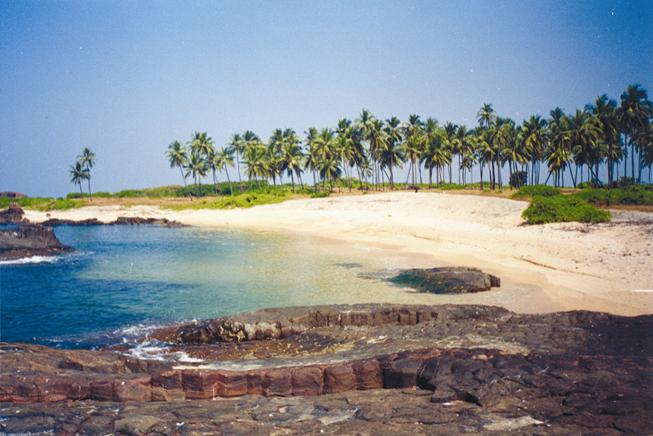
St. Mary’s Island, also called Coconut Island by the locals, is an uninhabited island with a shelly beach and clear, cool waters. This is how the local operator who ran motor boat services to the island sold the beach to us. What he did not mention was that the island was made up of columnar basalts, and that it was a geological monument.

7 November 1998: St. Mary’s Island

Continue reading “Travel Shot: St. Mary’s Island”