Forts of Rajasthan — 6: Gagron Fort of Jhalawar

It is about half past three in the afternoon and my friend Niti and I have been walking through and exploring the UNESCO World Heritage Site of Gagron Fort at Jhalawar, Rajasthan. We have been at the Fort for the last 2 hours or so and leisurely exploration has been all about trying to understand the Fort’s layout, extent and get a feel of its past.

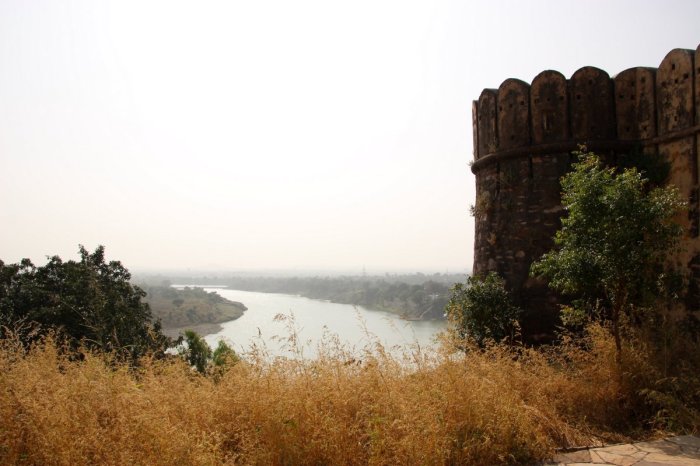
We take paths leading off tantalisingly into various parts of the Fort. We stop regularly to peer into what looks like half-finished structures, but realise that they are attempts to ‘renovate/restore’ them. We peer over the massive fort walls and rear back in alarm at the sheer drop. We also notice the fascinating rock formations around and see the river flowing silently by.

All through this, we have no clue as to what we are seeing for there are no signboards to indicate where we are within the Fort or what we are seeing. Niti and I have fun speculating what each building could have been — armoury, palace, stables, public hall, temple, etc. But the November afternoon sun is harsh and we are beginning to tire.

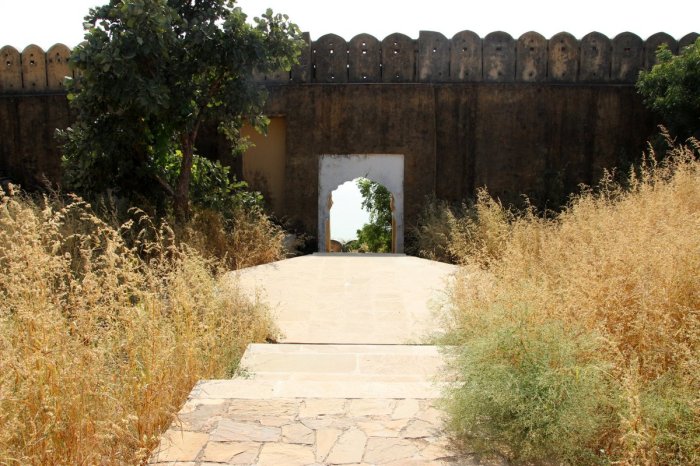
We almost decide to turn back when we see steps leading to a doorway in the fort wall and decide to explore that and before heading back.
Gagron Fort, Travel, Rajasthan, Hadoti, Jhalawar, Hadoti Trip, Hill Fort, Water Fort, UNESCO World Heritage Site, Forts of Rajasthan, Forts of India

Continue reading “Forts of Rajasthan — 6: Gagron Fort of Jhalawar”

The Buddhist caves at Kolvi

It is a little after 10 am on a November morning in 2016 when we arrive at the base of the hillock that houses the Kolvi Caves, one of the three Buddhist rock-cut cave sites in Rajasthan. A board displaying some rather sketchy information about the caves reassure us that we are in the right place.

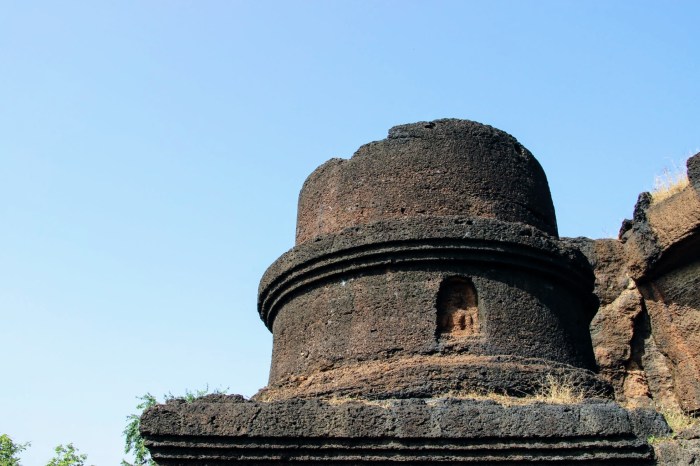
It says that the Kolvi Caves was a monastic complex of about 50 rock-cut caves, most of which have collapsed today and details have disappeared due to natural weathering. The presence of a big rock-cut stupa in the shape of a structural stupa, as we know it today, is considered to be an important and notable feature of the Kolvi Caves. It has been suggested that the absence of Bodhisattva figures at the site indicates that this was a site of Buddhist monks of the Hinayana (or Theravada) sect. The board doesn’t mention an important detail — the age of the Caves.

Apart from my friend Niti, our car driver and me, there is no one else around at the site. I take a minute to appreciate the surroundings and the location. The blackish red Kolvi hillock, which is entirely composed of laterite, rises quite suddenly and dramatically from a flat landscape.

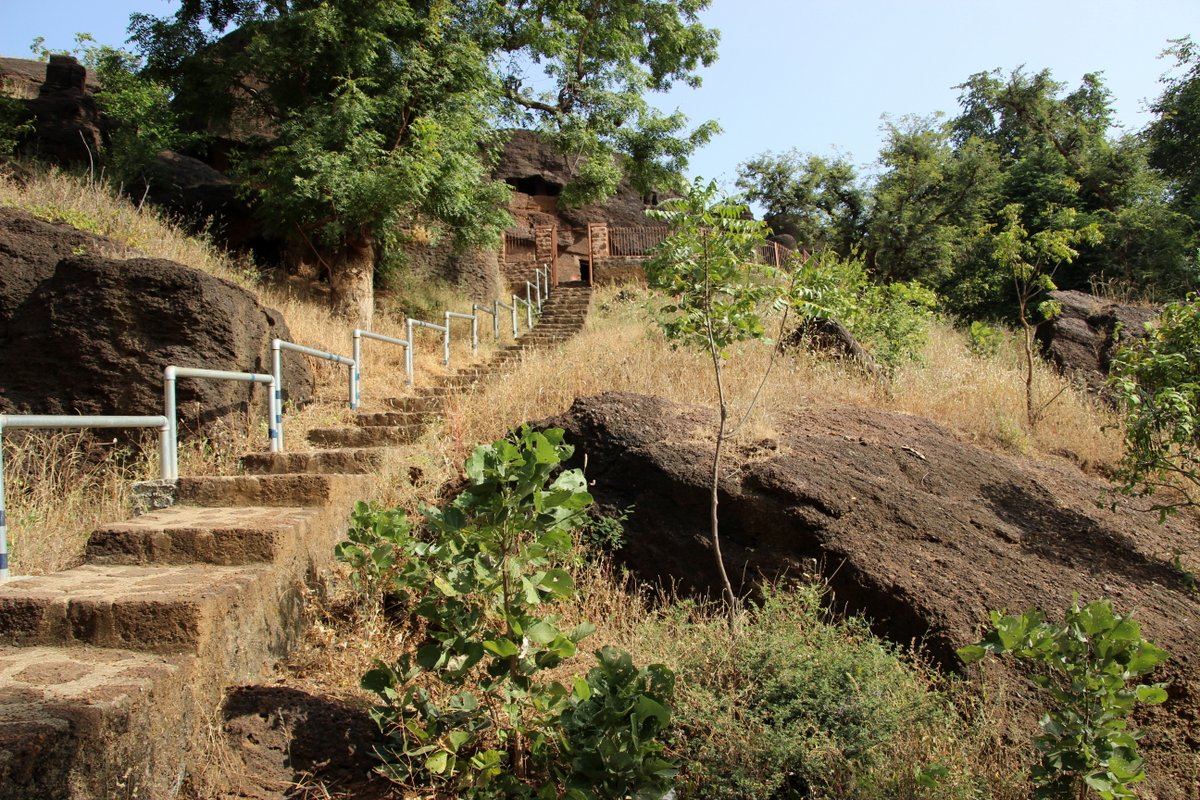
A flight of steps, probably built over a pre-existing path, leads to the top of the hill where the Caves are located. A short climb later, Niti and I are opening the gate that leads into the cave complex.

Kolvi Caves, Buddhist Caves, Indian Art, Indian Aesthetics, Mahayana, Rajasthan. Travel, Hadoti Trip, Hadoti, Laterite
The approach to the Kolvi Caves – steps and a railing have been provided for easier access.

Continue reading “The Buddhist caves at Kolvi”

An evening in Jhalrapatan

The modern history of Jhalrapatan town in the Hadoti region of Rajasthan is about 200 years old. It began in 1838, when the rulers of the newly formed princely state of Jhalawar chose Jhalrapatan as their base till a new capital city (present day Jhalawar) could be built. Before the arrival of the Jhalawar royals, Jhalrapatan was known as Patan; the word ‘Jhala’ was prefixed to it in recognition and in honour of its new rulers, who belonged to the community of Jhala Rajputs as in “Jhala ra Patan” or the Patan of the Jhalas. But even today, almost two centuries later, locals still refer to the town as Patan; it is the tourists who refer to the town as Jhalrapatan!

Jhalrapatan’s history extends back to centuries before the creation of Jhalawar state, when it was known as a temple town as well as a major trading centre. In its former avatar, the walled town was supposed to have been home to 108 temples. Imagine the sound of the bells of all 108 temples ringing at the same time — one legend says that this is how ‘Jhalrapatan got its name. As a trading centre, Jhalrapatan used was known for its opium and spices.

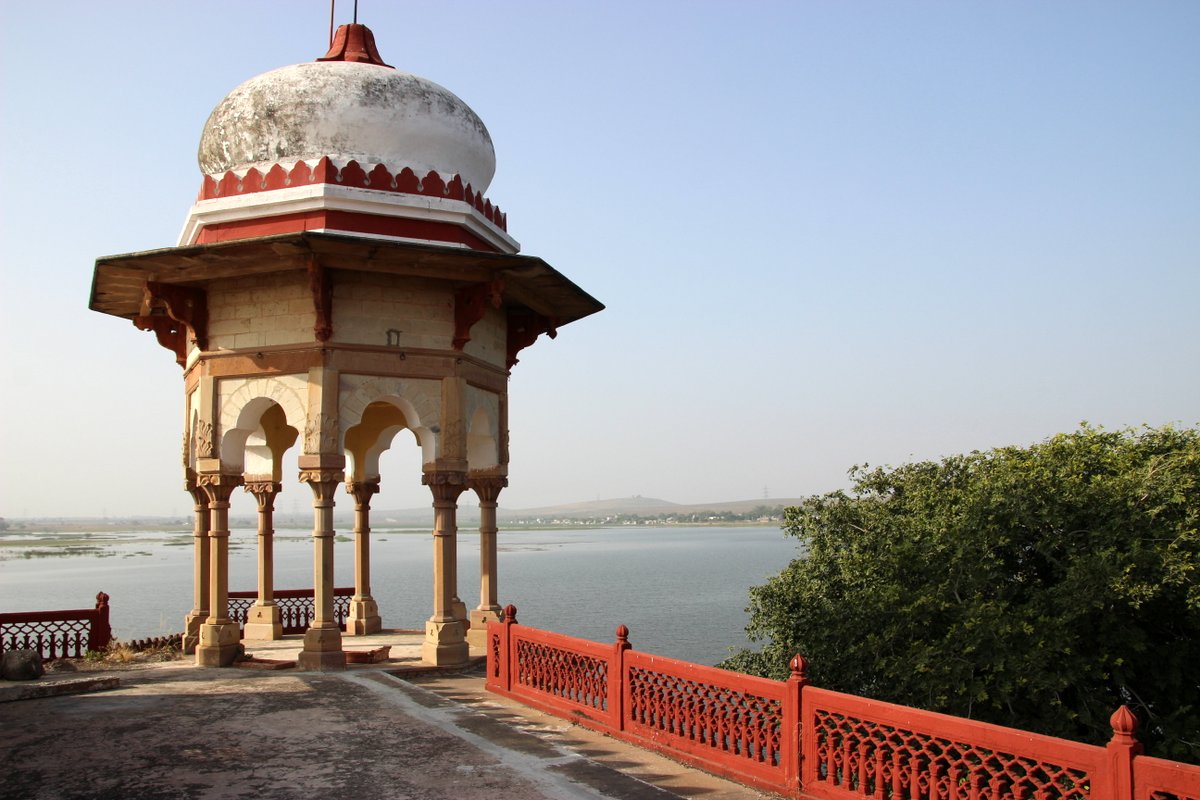
I spent one evening in Jhalrapatan exploring its various sights beginning with Madan Vilas, the erstwhile holiday home for the royal family, now owned by the Rajasthan state government, and then moved on to the temples of the town.

Jhalrapatan, Jhalawar, Travel, Rajastha, Hadoti, Madan Vilas

Continue reading “An evening in Jhalrapatan”

Bhawani Natyashala, Jhalawar, Opera House, Theatre, Rajasthan, Travel, Architecture

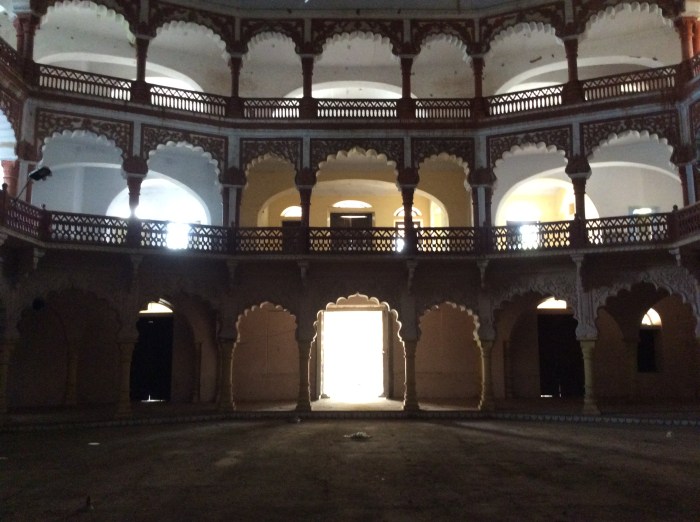
Bhawani Natyashala: The opera house at Jhalawar

One of the two things that repeatedly came up during background research on Jhalawar, before my Hadoti trip in November 2016, was the nearly 100-year old Bhawani Natyashala (the other was the Government Museum at the Gadh Mahal or Palace). The brief descriptions of the Natyashala was varied — it was a theatre, dance hall, performance hall, royal audience hall, etc. Even though the descriptions didn’t agree on what the Natyashala was, they all agreed upon one thing — that it was beautiful, one of its kind, and worth a visit.

But once in Jhalawar, I found out that the Bhawani Natyashala was closed and out-of-bounds to the public — something that none of the websites that touted it as a must-see bothered to mention ! Mahijit ji, my host in Jhalawar, told me that I could still see it from the outside and that’s what I decided to do. But luck had other plans for me.

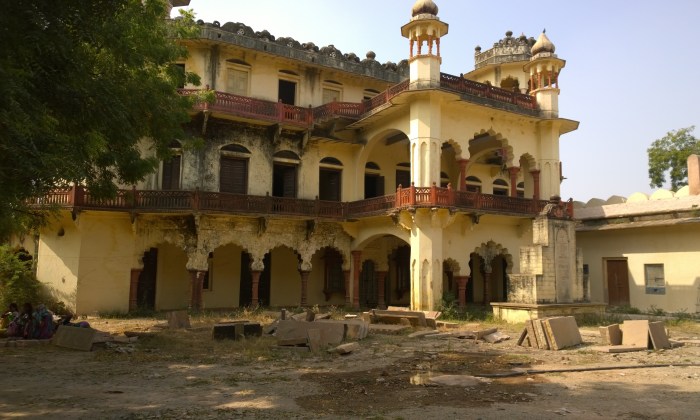
The Bhawani Natyashala is located in the premises of the Gadh Mahal, and after my friend and I finished the tour of the museum and the painted rooms, we asked the museum attendant who was taking us around, for directions to the theatre. He offered to not only take us there, but also open it up and show it to us since he had the keys with him. A short walk later, we were in front of the Bhawani Natyashala.

Continue reading “Bhawani Natyashala: The opera house at Jhalawar”

The painted rooms of the Garh Mahal of Jhalawar

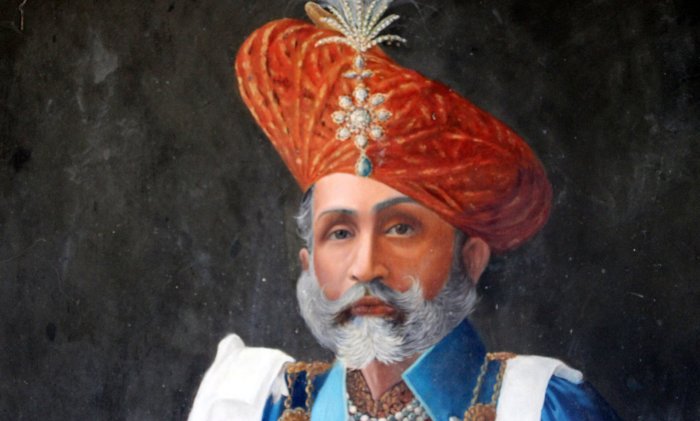
In 1916 or maybe 1917, the ruler of Jhalawar State of Rajasthan, Maharaj Rana Bhawani Singh visited the temple town of Nathdwara. There was nothing unusual about his visit; the rulers of Jhalawar followed the Pushtimarg tradition, and Nathdwara was the most important religious site for the followers of that tradition.

After the Maharaj Rana had his darshan of Shrinathji, the main deity at Nathdwara, he met with the Tilakayit or the head of the Nathdwara Temple and the foremost Pushtimarg leader. Once the usual pleasantries were over, Bhawani Singh asked the Tilakayit for the loan of some artists from Nathdwara to paint the Garh Mahal or Palace, the royal residence in Jhalawar. Bhawani Singh also wanted one artist in particular, Ghasiram Hardev Sharma, the mukhiya or head of Nathdwara’s painting department.

While a royal request for artists to decorate palaces was not unusual, asking for a specific artist definitely was, especially when he happened to be Ghasiram (more about him later on in this post!). The Tilakayit was not keen on sending Ghasiram and Bhawani Singh was not ready to take no for an answer. Eventually, Bhawani Singh managed to lure Ghasiram away from Nathdwara by offering him a monthly salary Rs.150/-, which was double of what he was earning at Nathdwara.

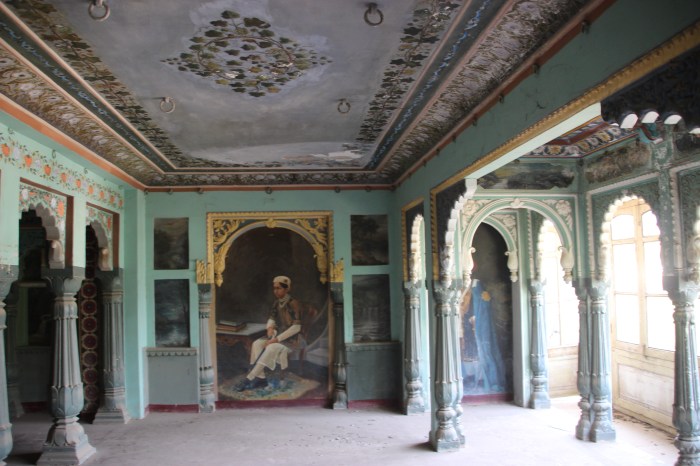
Ghasiram moved to Jhalawar as the Court Painter and therein began an association that lasted about 10-12  years and produced some extraordinary mural paintings, portraits and entire painted rooms at the Garh Mahal — something I was not aware of when I arrived in Jhalawar in November 2016.

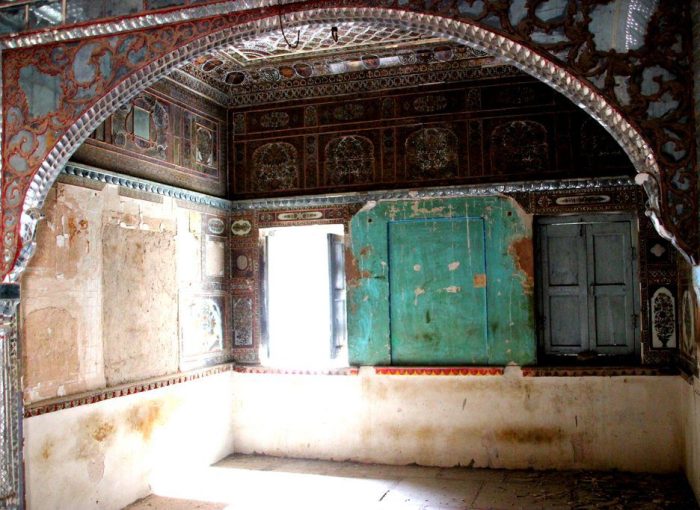
A painted room at the Garh Mahal. This one has life-sized portraits, hunting scenes, floral ceilings and more.

It was Mahijit ji, my host in Jhalawar, who told me about the painted rooms at the Garh Mahal and also that they were not open to the public. That bit of information was disappointing, but my friend Niti and I decided to try our luck when we visited the Garh Mahal

Continue reading “The painted rooms of the Garh Mahal of Jhalawar”

Discovering Jhalawar

When I started planning for the Hadoti Trip last year, I wasn’t aware of Jhalawar’s existence at all. I feel rather sheepish admitting this, but its the truth. Located about 80 km from Kota, Jhalawar cropped up as a suggestion for a pit stop to explore Gagron Fort, Jhalarapatan and the Kolvi Caves.

The information available on Jhalawar, which was sketchy to say the least with the same information being circulated on various sites — it was a former princely state, it had a palace, a theatre, a Fort (Gagron), had the highest amount of rainfall in the state, etc. But then I read about bad road conditions between the Kota and Jhalawar, I decided to shift my base from the former city to the latter since these sites were closer to Jhalawar than Kota.

Once that was decided, all I had to do was to find a hotel to stay and wait for the trip to get underway. Here, Jayanti of One Life To Travel connected me with Mahijit ji of Virendra Bhawan, and that too got finalised, and the trip countdown began. 🙂

When I got off the train at Bhawani Mandi Station on that cold November morning in 2016, I had no idea that this was the beginning of an epic trip. I had no idea that I was going to fall in love with Jhalawar, so much so that it was going to be the highlight of my Hadoti Trip.

Travel, Jhalawar, Princely State, Hadoti Trip, Royal Trip, Rajasthan, Heritage and History

Continue reading “Discovering Jhalawar”