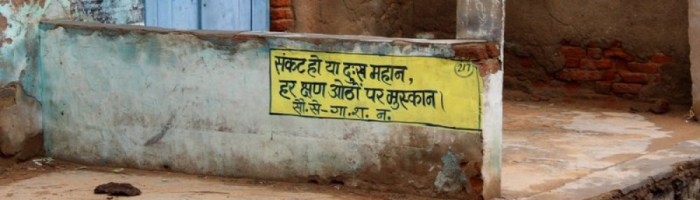
When I arrived in Nawalgarh, the first work of ‘art’ I noticed was not its famed frescoes or even its grand havelis — it was a piece of graffiti.
I was looking out of the window of the car I was travelling in, hoping to catch a glimpse of a fresco, when the car suddenly braked to let a cow pass. That’s when I saw the graffiti — a yellow rectangular patch with blue lettering on a cracked and patched surface. It was the contrast of the freshness of the graffiti against a dull and old surface that attracted me and I took a picture of it for that reason. The words (for those who can’t read the Devanagari script or understand Hindi) can be roughly translated to:
Even if it means losing your life, don’t give in to anything improper or immoral.
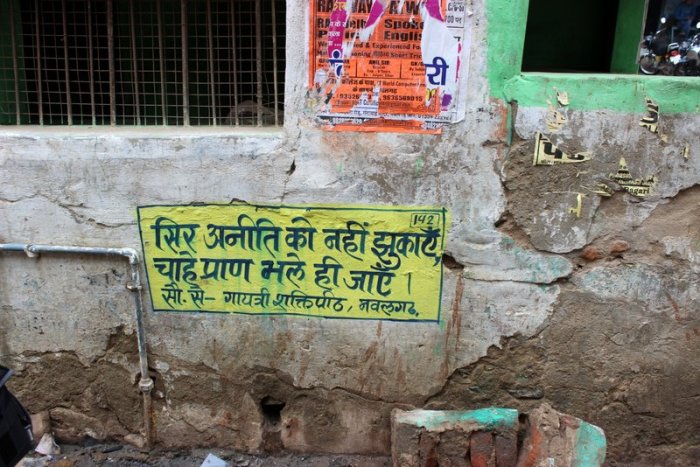
As the car moved ahead, I dismissed the graffiti as a one-off and resumed my search for the frescoes. Little did I know at that time that along with the frescoes and the havelis, I would be seeing other graffiti all over Nawalgarh.
Continue reading “Messages on the wall: The graffiti of Nawalgarh”

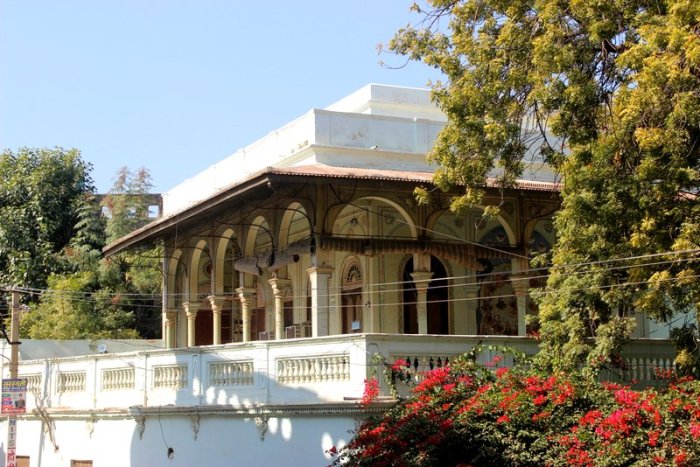 Turned out that the Museum staff knew quite a bit. The haveli was the private residence of the Podars, the very family that owned the Museum. This was where the family members and their friends stayed whenever they visited Nawalgarh. Currently, the haveli was undergoing repairs and renovation and was, therefore, unoccupied. And yes, I could go and see the haveli if I wished to.
 The more I thought about the Q&A format, the more I liked it. It took a while to get written though, and after some tweaking and editing, presenting and sharing my very first trip planner.
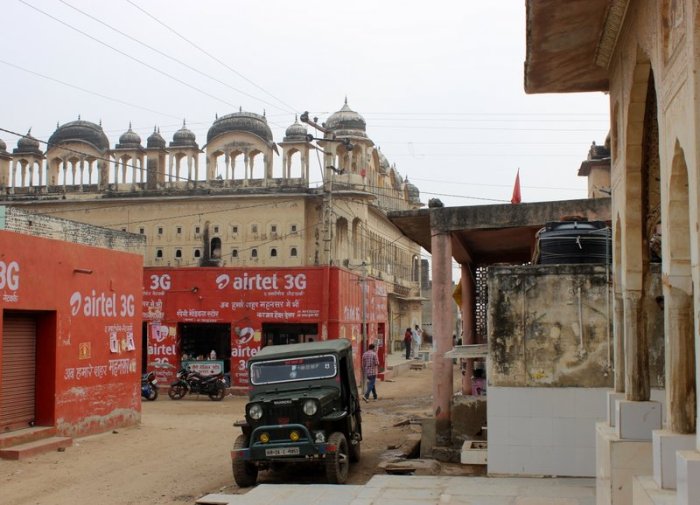 I thought of heading towards the Mahensar Fort, but my bad luck with Forts in Shekhawati continued — the Fort was now a hotel and out of bounds for the casual visitor. As I was looking around for a possible direction to head towards, a man came up to me with a large bunch of keys and said, “You must have come to see the Sone Chandi ki Dukaan. I’m the caretaker of that place. Come, I will open it up for you.”
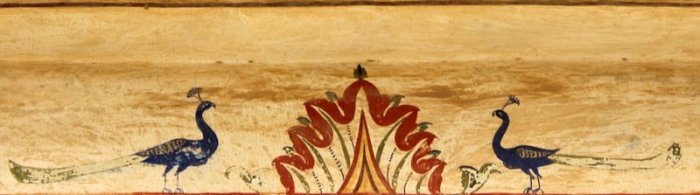
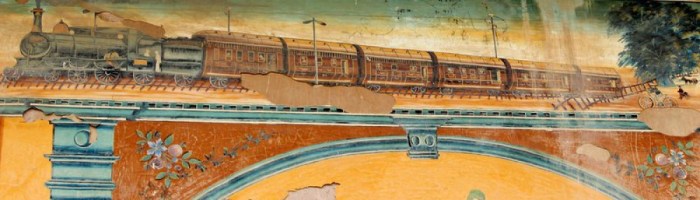
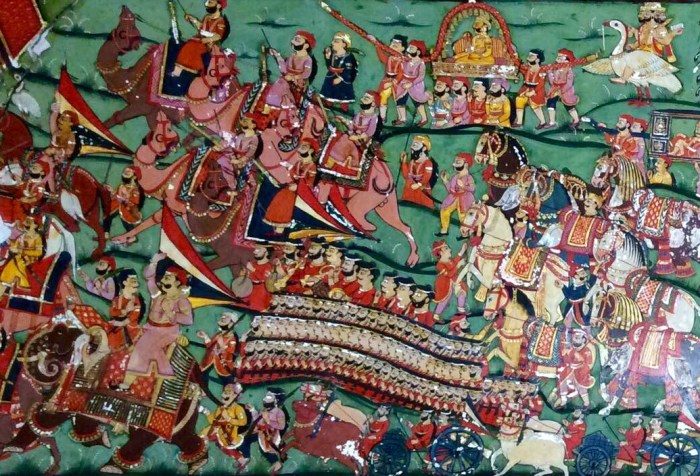
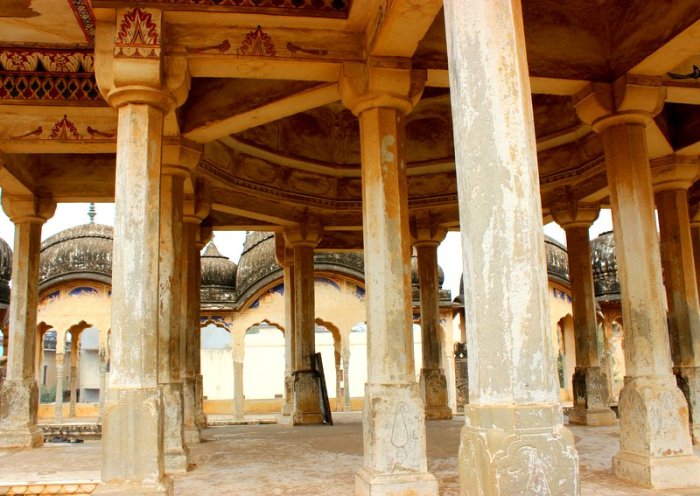 And the last surprise were the frescoes themselves, at least some of them. But more about that later on in this post.
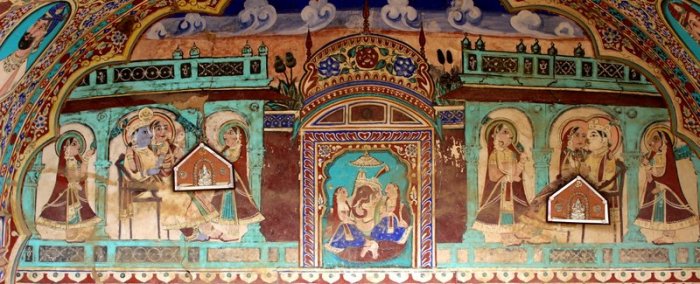
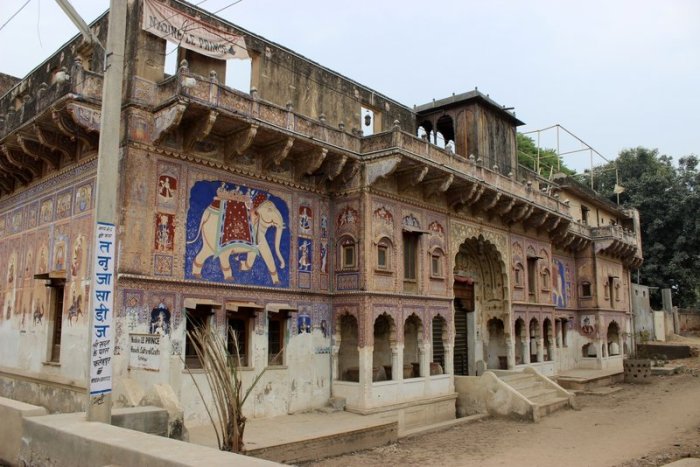 The door to the haveli was shut. A signboard (in Hindi, English and French) requesting visitors to ring the bell if they wished to tour the haveli greeted me instead. I rang the bell and waited. And I waited and waited some more… Just as I was getting ready to ring the doorbell again, I heard footsteps approaching the door.
 My Favourite Things