I got interested in photography about 3 years back and as it often happens with a new interest, related things also come into the focus of that interest—in this case it was photographers and their works. One photographer, whose name kept cropping up was that of Homai Vyarawalla, India’s first woman photojournalist. While I was curious about her work, I must admit that I didn’t really go out of my way to know more about her apart from reading the mandatory Wikipedia article and the stray media reports and photographs that would appear now and then.
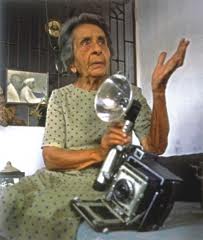
Therefore, it was serendipity when I noticed an invite for the inauguration of a retrospective of Homai Vyarawalla’s photographs on February 25, 2011. Curated by Sabeena Gadihoke, “Homai Vyarawalla: A Retrospective” was being held at the National Gallery of Modern Art (NGMA), Mumbai, in collaboration with the Alkazi Foundation for the Arts, New Delhi.
It was even more serendipitous that I had meetings near the NGMA that day and could attend the inauguration without taking time off from work. 🙂 I arrived early at the NGMA and as I was debating whether to go in or try to grab a quick cup of coffee, a car drew up to the entrance. I knew it had to be someone important, as the NGMA does not allow cars to come in. Two women stepped out, one of whom was Sabeena Gadihoke (as I found out later), and the other was Homai Vyarawalla herself. I had very obviously only noticed the invite, and not read it, as I wasn’t aware that Homai would be present for her retrospective! Since I was standing at the entrance, I found myself face to face with her. As I gaped at her, she smiled at me and said a warm hello as she was helped up the stairs. And what was my response? I continued gaping at her and just about managed to nod my head in acknowledgement !
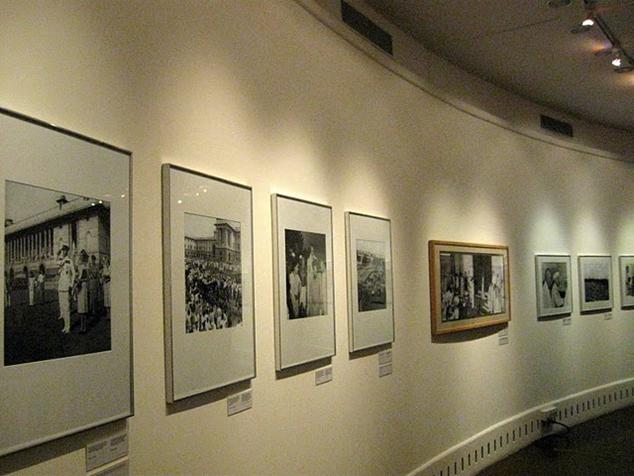
Continue reading “Face to face with a living legend: An evening with Homai Vyarawalla”




 So, I read the book while getting my mehendi done, while helping my cousin’s trousseau to be packed, in the middle of the night under torchlight, when I couldn’t bear the collective grunts and snores of so many aunts in the hall we were sleeping in, between the many wedding ceremonies, etc. By reading a few pages at a time, I managed to finish the 100-odd pages of the book over 3 days and return it to my uncle. I was just in time to congratulate the newlyweds after the wedding ceremony, and then run out to try to obtain my very own copy of the book.
 Once upon a time in Bombay (actually, this was about a 100 years back), there lived a man called Lowji Megji. He was a cotton merchant and ran a very successful business exporting cotton. He lived with his wife, mother, 5 sons, 1 daughter, and 4 servants in a large mansion in Bombay (Note: about a 100 years back, political correctness had not crept in, so I use the words “Bombay” and “servants” in this post).
 My Favourite Things