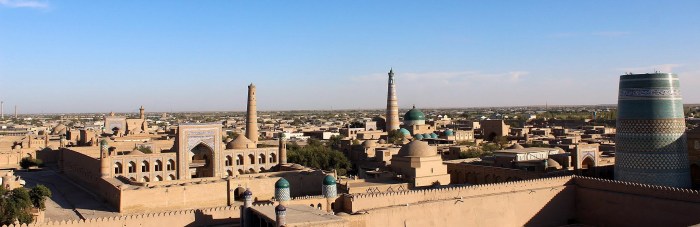
Itchan Kala: The inner fortress of Khiva

There are places that leave an impression on you after you have visited it. And then there are places which leave an impression on you even before you have visited it. Like Itchan Kala, the inner, fortified town of Khiva, an ancient city on the Silk Route in Central Asia. A UNESCO World Heritage Site, the Itchan Kala was the first of the sites to be inscribed in the list from Uzbekistan in 1990.

I came across Khiva and Itchan Kala, while researching on places to visit in UzbekistanWhile the photographs of Itchan Kala were uniformly breathtaking, not to mention tempting enough make me want to pack my bags and head there immediately, the descriptions were varied and the reactions mixed — a living fortress, a perfectly preserved medieval fortress, a fort museum, a museum city, former hub of slave trade, lifeless and artificial, a film set, a somewhere else place, over renovated and restored, lifeless, touristy… I found the multitude of opinions and impressions about Itchan Kala even more enticing than the pictures, and couldn’t wait to visit it for myself.

The sun was setting when I arrived on a September day in 2015 in the rather nondescript city of Khiva. It had been a long day of travel from Nukus, exploring the scattered ruins of Khorezem along the way. As my car wove in and out of twisting roads, I kept a lookout for the walled town, already familiar from the numerous pictures I had seen online.
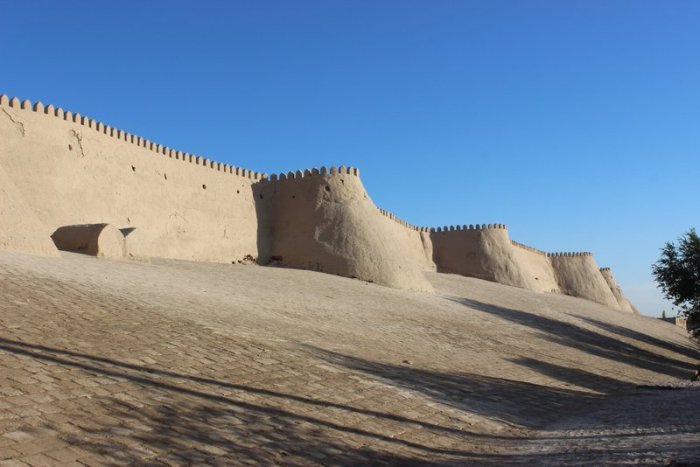
Khiva, Xiva, Travel, Uzbekistan, #MyDreamTripUzbekistan, Ichon Kala

And then, as we drove through a market, the mud walls of a fortress suddenly loomed up. It was the Itchan Kala. I barely had time to recover from that first sight before the car entered the fortress through a gate and stopped outside my hotel. As soon as the registration formalities were completed, I set out to explore the place.

Continue reading “Itchan Kala: The inner fortress of Khiva”

Nukus, Karakalpakstan, Uzbekistan, Soviet-style city, travel, #MyDreamTripUzbekistan

A city called Nukus

Nukus was my first halt in Uzbekistan. The 6th largest city of the country, it is the capital of Karakalpakstan, an autonomous region within Uzbekistan. Karakalpakstan covers a third of the area of Uzbekistan, which includes a major portion of the Ustyurt Plateau, and the Kyzyl-Kum Desert. The Amu Darya river is the lifeline of the region and flows through the city of Nukus.

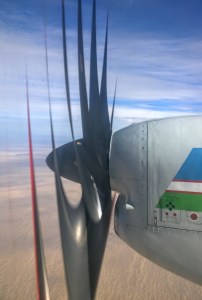
Nukus is not known for its tourist attractions, but there was a reason I visited this city. More about that at the end of the post. It is located about 1000 km northwest of Tashkent, or a two-and-a half-hour journey by air from there by a propeller-driven plane, like the one in the photograph below.

Hukus, Tashkent Domestic Airport, Propeller PlaneHukus, Tashkent Domestic Airport, Propeller Plane

When I saw the propeller-driven planes waiting on the tarmac of the Tashkent Domestic Airport, I got all excited as I had never flown in one. But 5 minutes into flying, I was reaching for ear plugs for they were incredibly noisy. It didn’t help that my window overlooked one of the propellers.

Once the initial excitement of the propeller plane had worn off, the flight was uneventful and monotonous, just like the landscape on ground below. Apart from a road or two or a cluster of dwellings, I didn’t see anything to break the sandy ground below.

Nukus itself arrived rather suddenly and if I didn’t feel the plane descending, I wouldn’t have known that. It is only later that I found out that the city is quite spread out and away from the airport, and one of the reasons why I didn’t see anything from the air.

When I landed at the rather small and quaint Nukus Airport on that September morning, I had been travelling (or waiting for a connecting flight) for almost 20 hours, and sleep deprived for even longer. It had been a long journey from humid Mumbai, to hot Delhi to cold Tashkent to dry and arid Nukus. I should have been sleepy and tired, but thanks to the numerous cups of coffee and excitement at finally being in Uzbekistan, I was not only awake, but also alert and ready to explore. 🙂

Continue reading “A city called Nukus”

Uzbekistan. Travel 2015, Central Asia, Dream Destination, Zarafshan Mountain ranges, People of Uzbekistan

Dear Uzbekistan

Many, many years ago there was once a quiet, little girl who was happiest among books, especially picture books. She hadn’t yet learned to read, and would always be asking her family members to explain what she was ‘reading’.

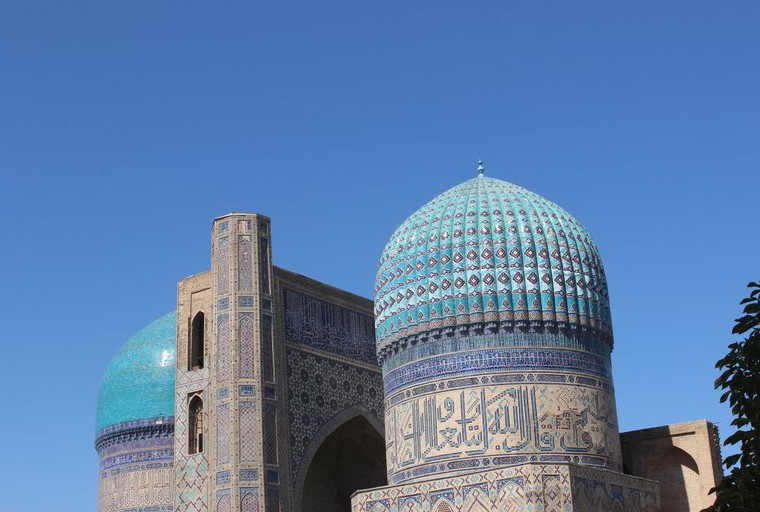
One day, her father came home with a stack of magazines. The little girl went through them all, one by one. She was particularly mesmerised by the cover of one of them. It had a picture of a blue dome against an even bluer sky, and she liked it so much that she wanted to see the dome for real.

Uzbekistan, Samarkand, Samarqand, Blue ribbed domeShe went up to her father and told him of her intention. Her father looked at the magazine cover and said, “This is in a place called Samarqand. You want to go to there?”

The girl nodded.

“It’s quite far from here. Why don’t you wait till you are grown up?”

“Okay,” said the little girl. “I will go to Samarqand when I grow up.”

The years went by. The little girl grew up, the magazine got misplaced, her father passed away, but the blue dome of Samarqand and her dream of seeing it was not forgotten. Friends and family, who knew of this dream of hers, would often ask when she was visiting Samarqand. Her answer always was, “I don’t know when. All I know is that one day I will.”

That day came four decades after she had first declared her intention to visit Samarqand. Last month, the now not-so-little girl made that trip to Samarqand and other places in Uzbekistan. There was a touch of the unreal when her plane landed in Tashkent and she couldn’t help but wonder if she was part of a dream. The fresh, cold air that hit her when she exited the aircraft convinced her that this was no dream, but the real thing ! 🙂

Continue reading “Dear Uzbekistan”

Museum Treasure: Ulugh Beg’s cup

What if I were to tell that there exists a cup so mystical and magical that it has the power of detecting poison. Would you believe me? No? I thought not, and honestly I wouldn’t believe it if someone had told me about this.

But nevertheless, such a cup did exist about six centuries ago in Central Asia. It was a time of great upheaval and power struggle in the region when old dynasties were giving way to the new. Often caught in the crossfire of the conflict between the East and the West, it was also a time of great suspicion, prejudice and uncertainties in this region. Such an atmosphere was perfect for beliefs in charms and talismans to take root and grow. And the belief in protection was vested in Jade, a compact, opaque gemstone ranging in color from dark green to almost white. According to Central Asian belief, jade could detect poison and could also protect one from illness, earthquakes and lightning. Soldiers from this region often decorated their swords, belts and saddles with jade.

So, to get back our the story of the cup with the power to detect poison… it is made of jade and once belonged to the mathematician, astronomer and prince of the Timurid Empire, Ulugh Beg. Today, that jade cup is an exhibit in the Islāmic Room of the British Museum in London.

Ulugh Beg’s Jade Cup

Continue reading “Museum Treasure: Ulugh Beg’s cup”