Royal Hampi is almost synonymous with Krishna Deva Raya, Vijayanagara Empire‘s best known king, who ruled from 1509–1529. Though there were many kings before him and a few after, most people associate everything with the Empire to Krishna Deva Raya. Lokesh, our local tour guide, was no exception—after a general introduction to Hampi and the Vijayanagara Empire, all his stories began and ended with Krishna Deva Raya!
Royal Hampi is instantly distinguishable from the other ruins at Hampi, largely due the different design elements used (for example, the Indo-Islamic architectural style of the Queen’s Bath), the delicate embellishment (for example, the Lotus Mahal), and of course, the royal size (for example, the Mahanavami Dibba).
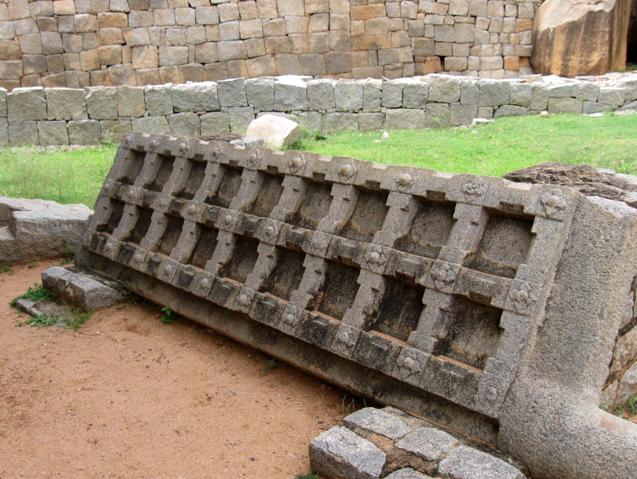
When our group disembarked at the Royal Enclosure from our vehicles, I don’t think many of us were sure as to what we were going to see beyond a high wall in front of us and some large blocks of stones lying here and there. As our group gathered around Lokesh for his orientation talk to the Royal Enclosure, none of us paid much attention to those blocks of stones. I was too busy looking around here, there, everywhere—except at my feet, which were just inches away from the massive “block of stone” shown in the picture below.
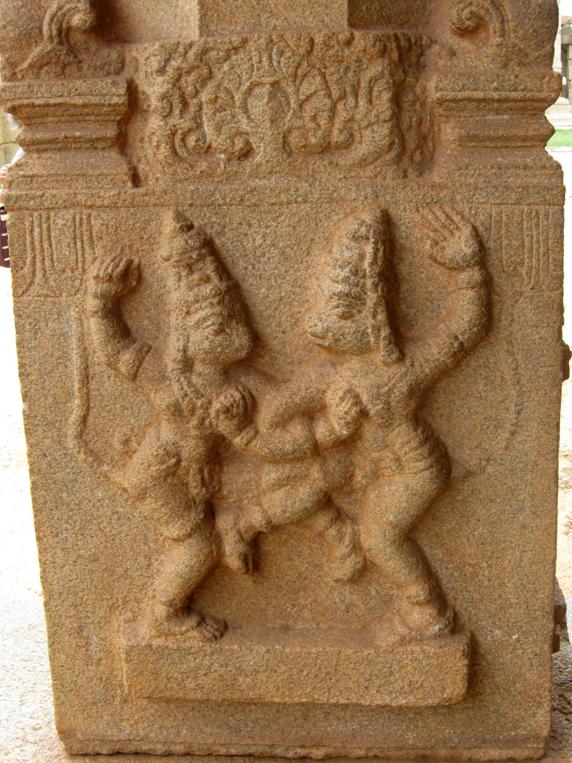
Vali and Sugreeva. Relief at the Hazara Rama Temple, Hampi
Where do I begin writing about Hampi—its many stories and histories, its kings and legends, its glorious past and ultimate ruin, its temples and other monuments, and its present day avatar. At the beginning, of course !
By Hampi (which is situated on the banks of the river Tungabhadra), I not only mean present day Hampi, but also the region around it.
Many millennia ago, the area was called Kishkinda or Kishkindanagari. This was the kingdom of the vanarVali and later his brother Sugreeva, and home to the vanars who formed the bulk of Rama’s army in his battle against Ravana in the Ramayana. Anegundi, the birthplace of Hanuman, is also located in this area. Anegundi was the erstwhile capital of the Vijayanagara Empire, before it was shifted to Hampi. One can still see the remains of old stone bridge connecting the old and new capitals.
Remains of the bridge across the Tungabhadra connecting the old capital, Anegundi, and the new capital, Hampi, of Vijayanagara
Someone said, and I can’t remember who, that the journey to a destination is as important and interesting as the destination itself. But sadly, most of us do not give much importance to what we see around us during journeys. I, too, have been guilty of this.
But a recent holiday to North Karnataka (where I visited Bijapur, Badami, Pattadakal, Aihole, and Hampi) changed all this. Since I was travelling with a tour group for the first time, common courtesy dictated that I do not bury myself in a book all the time, something I normally do while travelling.
But more than that, I feel that the main reason for the interesting journey was because I did not travel in a sterile aeroplane or air-conditioned train compartment (except on my return journey to Mumbai), or an air-conditioned car/jeep/bus, which usually does not allow you to be a spectator or participant to the world around you. Travelling in a Second Class train compartment or non air-conditioned vehicle forced me to look out of the window and breathe in the fresh, cool air or sometimes air flavoured with dust and diesel/petrol fumes !
This recent trip was a veritable feast for my jaded eyes and soul. Every leg of the journey (and the various destinations, about which I will write in other blog posts) presented something new and refreshing.
Enroute to Bijapur from Mumbai by train …
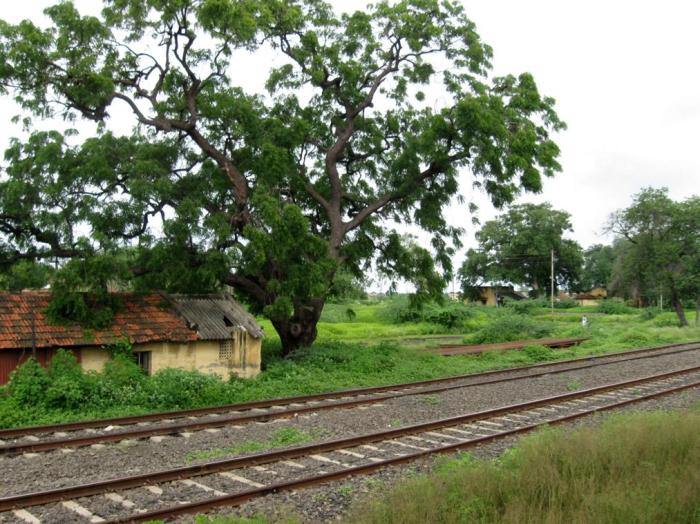
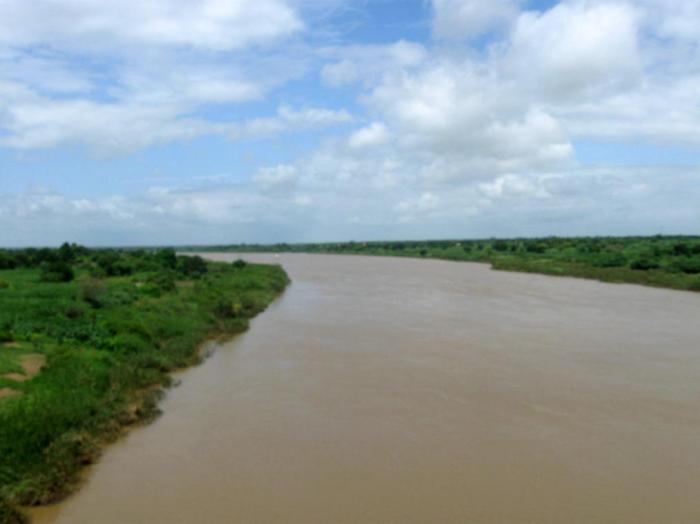
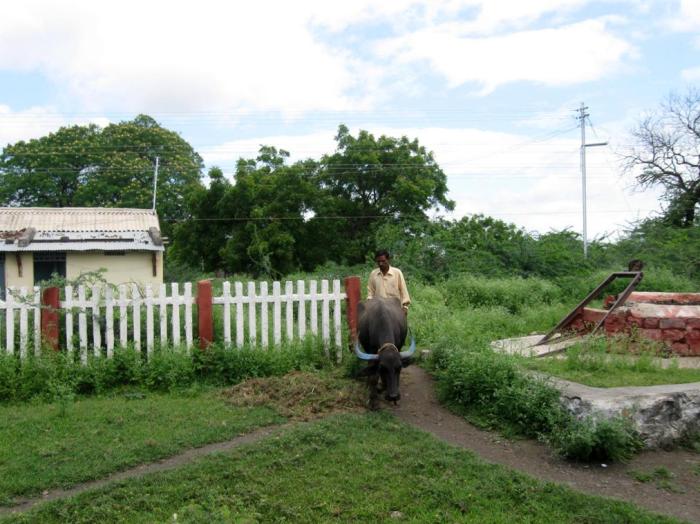
Lush green countryside after SolapurRiver crossing near TadwalRailway lines and stations often come in the way of traditional grazing grounds for cattle. Here, a buffalo and her owner make their way along a well-tread path through the railway station. The way the pair of them came charging down the path, I thought that they would get into the train !
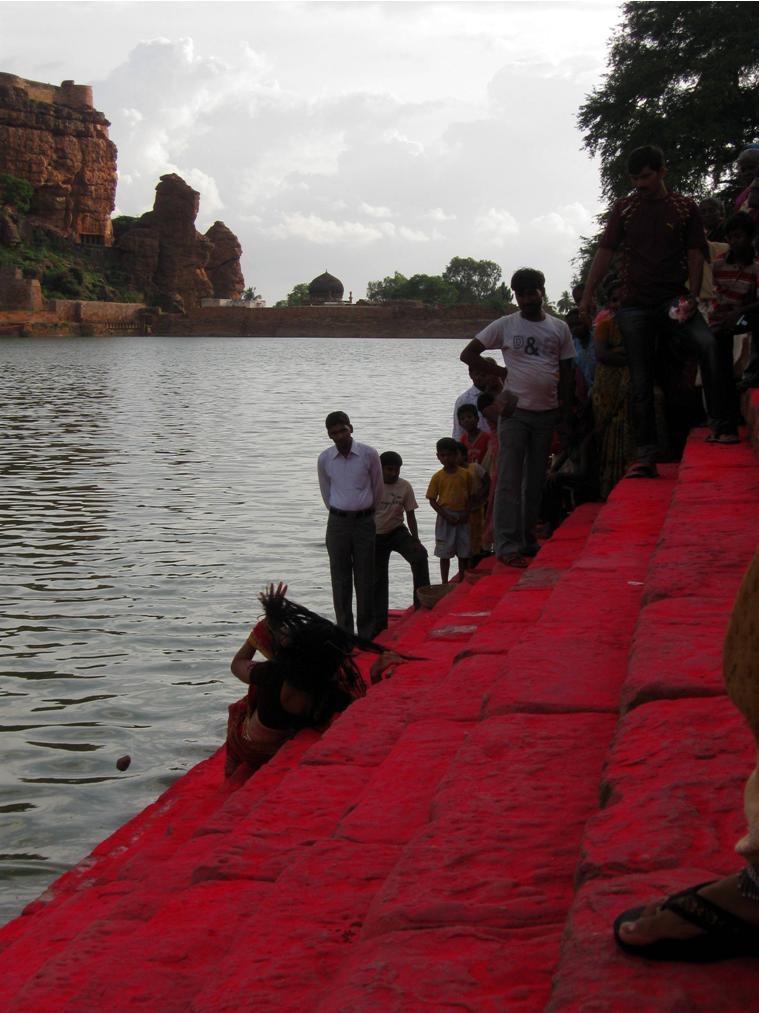
On the way to the Bhootnath Temple at Badami…
A film shooting was in progress on the steps of the Agastya tank. As far as I could figure out, the scene being shot involved people stoning a woman as she cried out to her mother for help
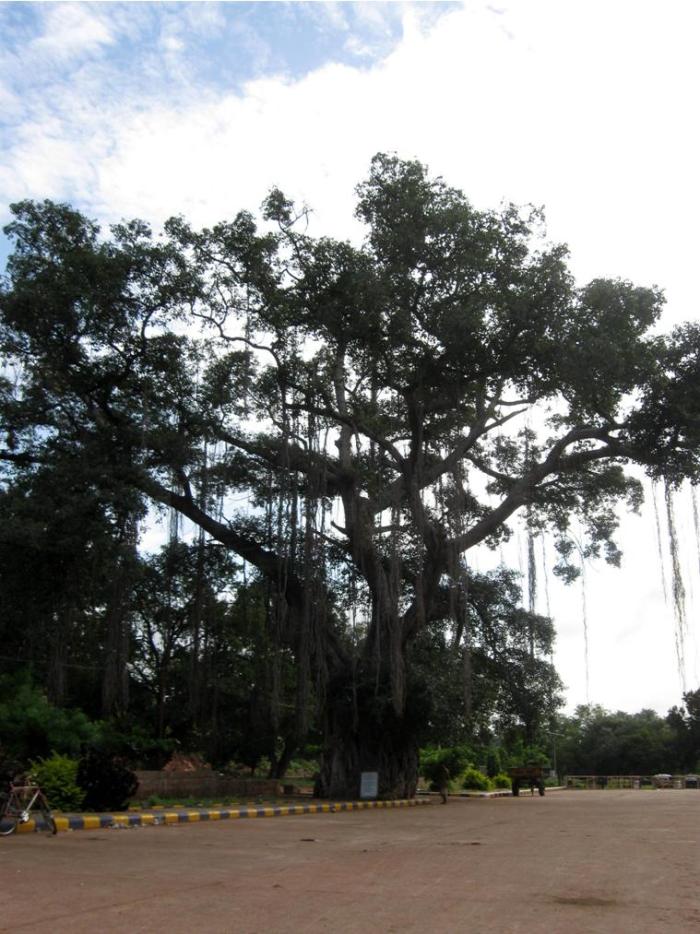
Enroute to Pattadakal…
A magnificent, 300-year old banyan tree outside the Mahakoota Temple
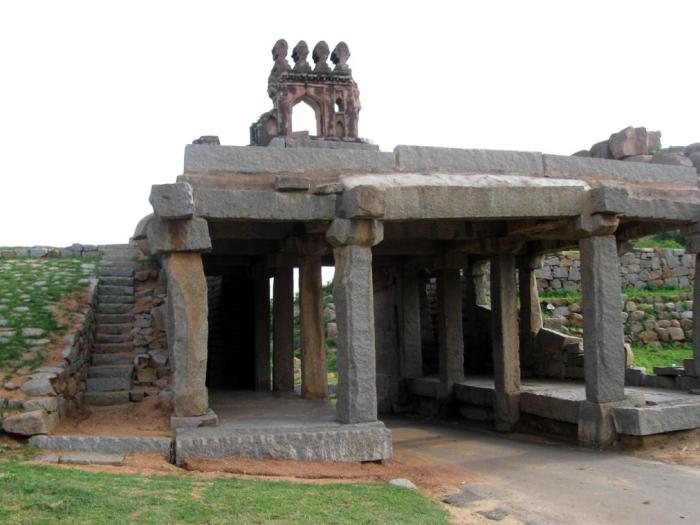
Enroute to the Vittala Temple in Hampi…
Talarigatta Gate, one of the entrance gates to the ancient village of Vittalapura
Enroute to the Daroji Bear Sanctuary…
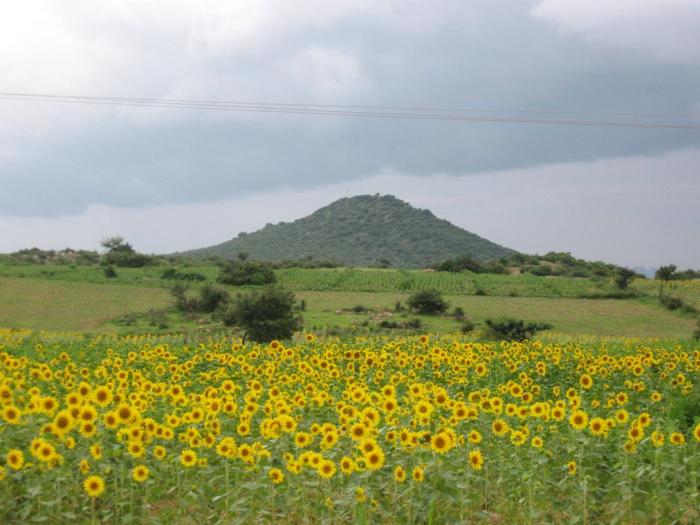
Sunflower field with fast approaching rain clouds
Enroute to Hubli…
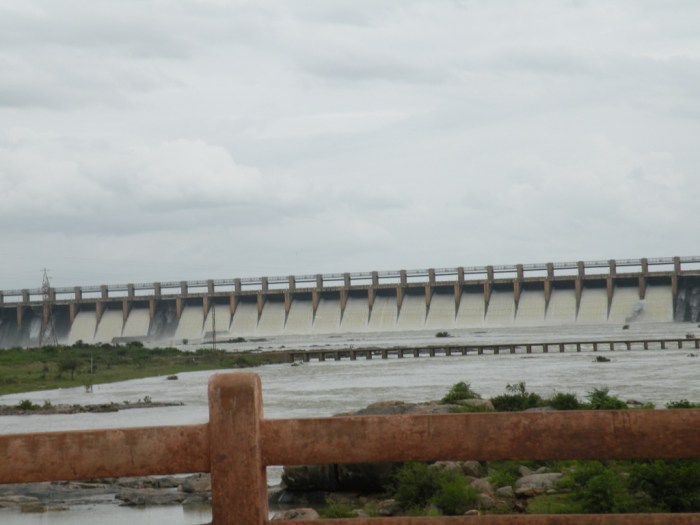
Tungabhadra Dam (Photo Courtesy: Shailaja Apte)
Enroute to Mumbai by train…
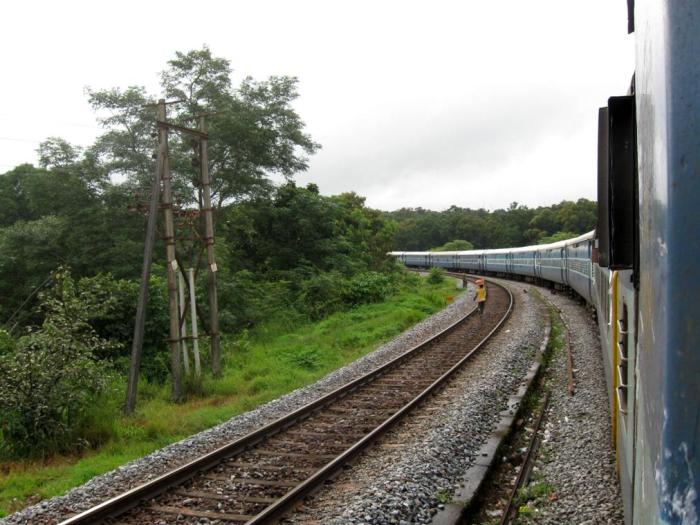
Passing a thickly forested area before Londa Station
There were so many things that I was unable to photograph and share it here with you:
endless fields of bajra, jowar, corn and sugarcane
lush green banana plantations
agressive pigs, nervous dogs and emaciated cats in the various towns and villages that we passed through




 My Favourite Things