Bijapur: A hidden heritage

I visited Bijapur as part of an organised tour of heritage places in North Karnataka in the first week of September. When our tour group stepped outside Bijapur railway station, there was no indication that we were in a place of any significance—no rickshaws or tour guides trying to hard sell a “good deal” to the sites in the town. There were only some tongas and a few people wandering about here and there. It was so quiet and peaceful that I wondered if we were in the right place at all !

Bijapur was the seat of power for the Adil Shahi dynasty which ruled from 1490 to 1686. The town was established in the 1oth–11th century by the Chalukyas, though it was then known as Vijaypura or the “city of victory”. Though the Chalukyas were renowned for their temple architecture, there is nothing to show for their presence in the town today. What it has to offer is some stunning examples of Islāmic architectureGol Gumbaz, Ibrahim Rouza, Jama Masjid, Darbar Hall, etc. Indeed, Bijapur is one of the few places in South India, where you get to see Islāmic architecture.

Bijapur is identified with and is almost synonymous with the Gol Gumbaz, the mausoleum of Muhammad Adil Shah II, who is buried here along with his two wives, his son, his daughter, and his mistress. That is perhaps the only reason all tourists gravitate towards the Gumbaz and for our group too, this was the first stop.

My first impression of the Gumbaz was not very favourable—its rather squat proportions of a plain dome atop a cube with slender seven-storeyed towers at each corner seemed too symmetrical and boring. Its size, though, was impressive, and why not—the dome is reportedly the second largest dome in the world, next only to St. Peter’s Basilica at Vatican City.
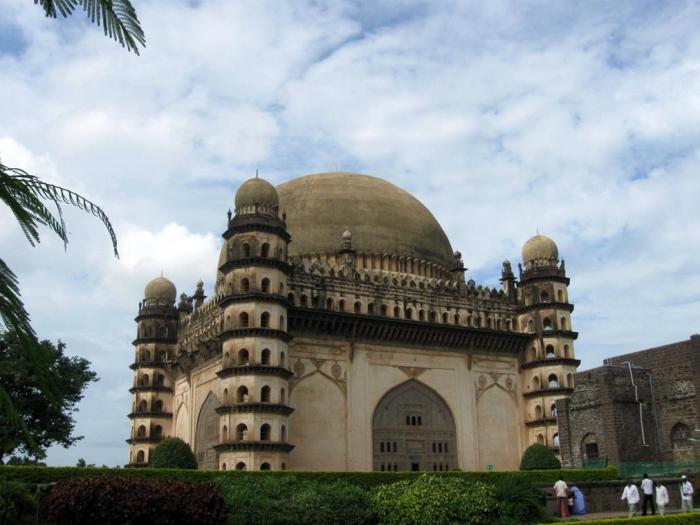
The Gol Gumbaz

Continue reading “Bijapur: A hidden heritage”

Vishrambaug Wada: A symbol of Pune’s cultural heritage and apathy

Vishrambaug Wada was built as a residence by Peshwa Baji Rao II in 1811. Today, part of the Wada is open to the public, while other parts have government offices and a post office installed in them. Located in the heart of Pune city, the Wada is a symbol of Pune’s rich cultural heritage. Ironically, it is also a symbol of neglect and apathy to that very rich cultural heritage.

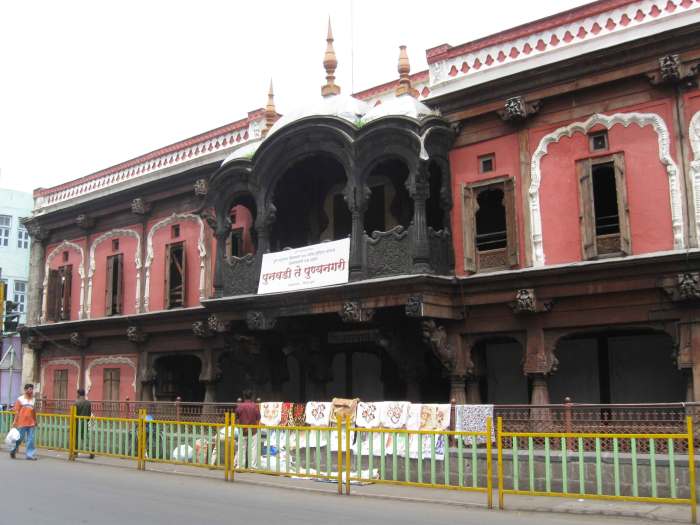
I visited Vishrambaug Wada on a Sunday morning. Though the markets were open, there were not too many people around. The hawker that you can see outside Vishrambaug Wada in the photograph below was busy displaying his ware of sofa and TV covers and bedsheets, when I arrived.

The terracotta, brown and white façade of the Wada, its wooden balcony, and massive wooden pillars (which I could see from across the road), presented the perfect opportunity for a photo-op as I waited to cross the road.

Vishrambaug Wada

Continue reading “Vishrambaug Wada: A symbol of Pune’s cultural heritage and apathy”

Pataleshwar caves: A hidden heritage of Pune

I mentioned in my previous post that I had gone ‘site’-seeing when I was in Pune last week. One of the places I went to was the 8th century, rock-cut Pataleshwar Caves.

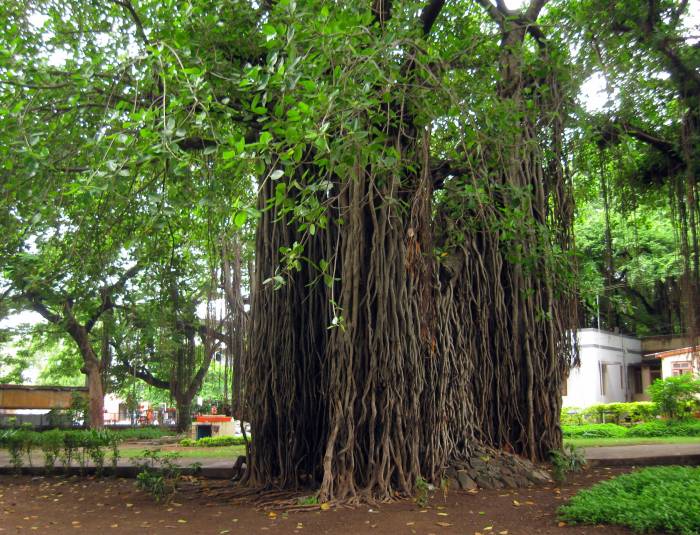
Situated on Jungli Maharaj Road, the entrance to the Caves is through a small garden with this magnificent banyan tree.

The beautiful banyan tree

In spite of its size, the banyan tree was homely, if you know what I mean. If the grounds had not been wet from the rain, I would have snuggled up to the tree with a book. I had to be content with just hugging the tree and moving on to the Caves.

Continue reading “Pataleshwar caves: A hidden heritage of Pune”

Should the Kohinoor Diamond be returned to India?

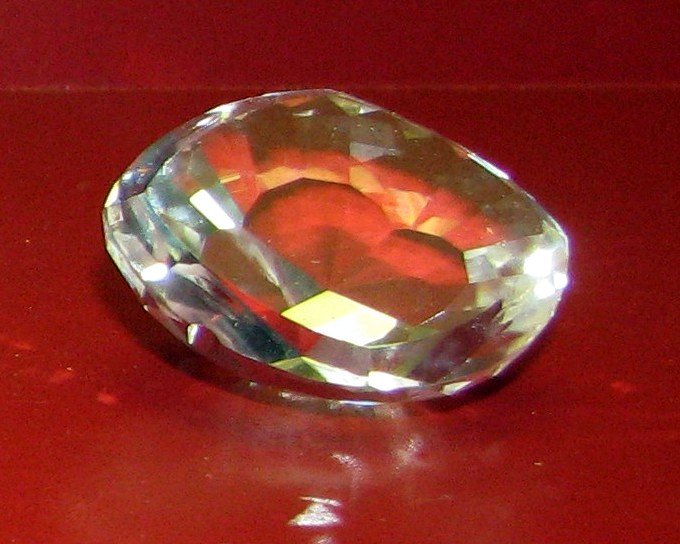
“India wants UK to return Kohinoor”. When I read this headline in The Times of India (ToI) yesterday, my first reaction was “not again!”

The Kohinoor Diamond has been in the popular emotional discourse of the country for as long as I can remember. Though the demand for the Kohinoor never makes front page or breaking news, it pops up with unfailing regularity every now and then. And each time it does, there are reactions from people asserting their self-righteous national pride, indignation, anger, cynicism, etc. Last time I checked, the ToI article had got 280 comments!

Source: Wikipedia

Continue reading “Should the Kohinoor Diamond be returned to India?”

Bandra Fort: An unexpected mid-week treat

Last Thursday, I had a mid-week holiday and that upset me very much. I am probably in a minority when I say that I hate mid-week holidays, but give me a long weekend, and I’m probably the happiest person on earth. But I digress from the theme of my blog post…

Shalini, a ‘teenagehood’ friend, had been saying for a long time that work and home routines were turning us into crabby old women, and something had to be done. So this mid-week holiday presented us with the perfect opportunity to do that ‘something’.

The outcome—a visit to the Bandra Fort.

The Bandra Fort or, to use its more impressive sounding official name, the Castella de Aguada was built by the Portuguese in 1640. It later passed on to the British, who lost it to the Marathas in 1739, and gained it back from them in 1761. You can read more about the Bandra Fort’s history here.

Continue reading “Bandra Fort: An unexpected mid-week treat”