The temples of Kiradu

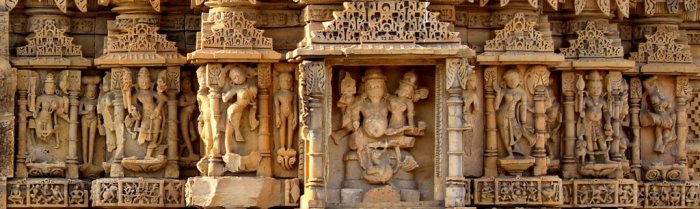
About 180 km south-west of Jaisalmer, where the Thar Desert meets some isolated outcrops of the Aravalli mountain ranges, lie the ruins of the temples of Kiradu. It is believed that there were around 108 temples on this site, but today only 5 temples remain — 4 of those are dedicated to Shiva and 1 temple is believed to have been dedicated to to Vishnu.

I first heard about the temples at Kiradu when I received an invitation from Suryagarh. The itinerary attached with the mail included a visit to these temples. I was intrigued enough to look up for more information on the internet immediately — even before I accepted the invitation. To my surprise, I found little substantive information online. This only made the temples more intriguing and mysterious for me and I couldn’t wait to see them for myself when I visited Suryagarh in July 2016.

And after lunch on my last day at Suryagarh, we set off to see the Kiradu temples. It was a beautiful, but long, drive through the Thar, through dramatic changes in the landscape from desert to hilly.

It was around 6 pm when we arrived at the Kiradu temples, which meant I had an hour or so before sunset and before the light faded. The next hour saw me racing from temple to temple, pumped with adrenaline, trying to take in as much of the details as I could and photographing whatever I thought was interesting or significant.
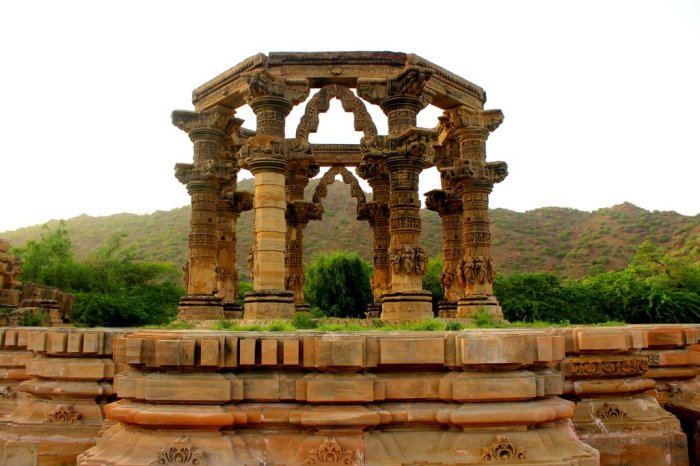
Temples of Kiradu, Kiradu Temples, Cursed Temples, Barmer, Heritage, Rajasthan, History,
A nritya (?) mandapa with elaborately carved toranas and pillars. One of the pillars has been reconstructed as part of the restoration work undertaken by the ASI at Kiradu

Continue reading “The temples of Kiradu”

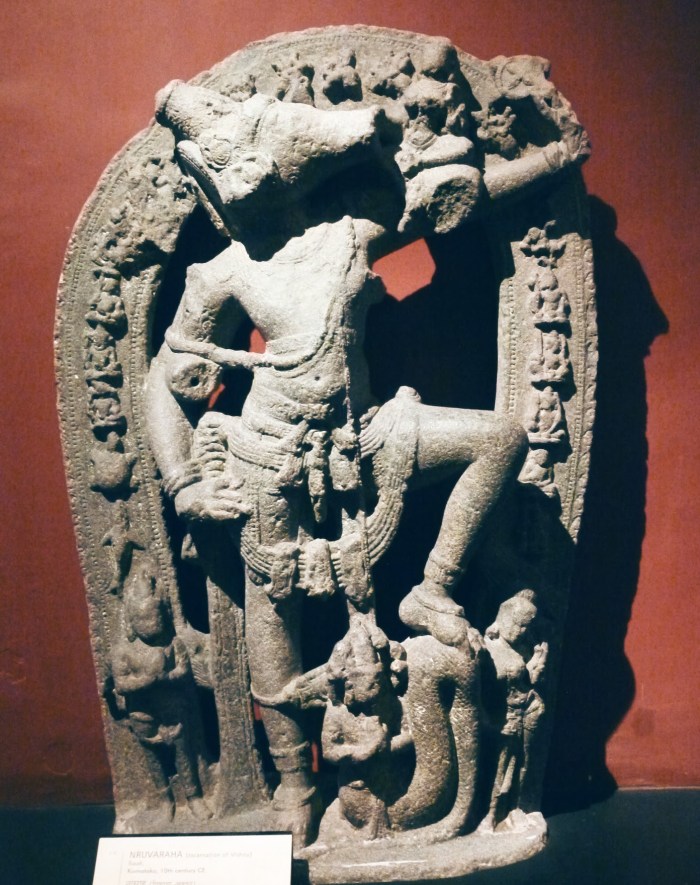
Museum Treasure: The Bhu-Varaha at CSMVS sculpture gallery

The sculpture gallery of the Chhatrapati Shivaji Maharaj Vastu Sangrahalaya (CSMVS) has many treasures within, with some of them being more impressive than the others. One of the “quieter” sculptures is that of a 10th century Varaha from Karnataka.

On my visits to the sculpture gallery, I would give this sculpture — which is about 3.5 feet in height and about 2 feet in width — only a cursory glance, passing it over for other exhibits. It was not until I had to write an assignment as part of my Indian Aesthetics course at Jnanapravaha, where I had to choose one of the sculptures in the gallery that I had my first good look at the Varaha.

And regretted not having paid attention to it before, so rich were the details and the iconography. At the end of my detailed tour of the sculpture gallery, there was no doubt which sculpture I would be writing about. 🙂

P1050175

Continue reading “Museum Treasure: The Bhu-Varaha at CSMVS sculpture gallery”

Mahisasuramardini: The slayer of the buffalo demon

Today is Vijaya Dashami or Bijoya. Today is the day when the Goddess Durga defeated Mahisasura or the buffalo demon, after a fierce battle that lasted 9 days and 9 nights. After killing him on the 10th day, Durga came to known as Mahisasuramardini or “she who killed the buffalo demon”.

Durga, Mahisasuramardini, Hindu Mythology, Indian Art, Indian AestheticsThe story of Mahisasuramardini (which you can read here or here) is perhaps one of the best known in Hindu mythology, and its associated imagery is one of the most recognisable.

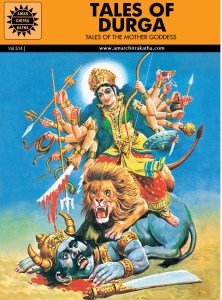
I was introduced to the story of Mahisasuramardini by my grandmothers, and also my mother’s recitation of the Mahisasuramardini Stotram. Like most children of the 1970s, I was introduced to the popular imagery of Mahisasuramardini through Amar Chitra Katha’s “Tales of Durga” (see picture on the left).

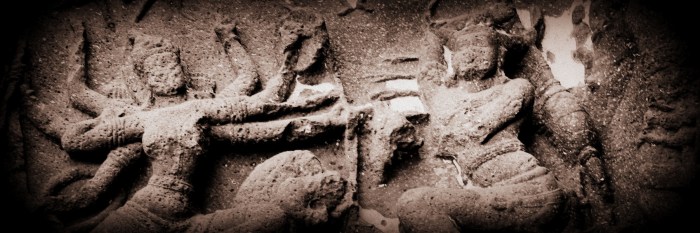
It was this image of Mahisasuramardini that stayed with me till 1997 when I visited Mahabalipuram. I saw Indian sculptural art in a ‘natural’ setting for the first time, including this depiction of Mahisasuramardini. That was when I realised the immensity, beauty and power of the narratives I had heard and read from the time I was a kid.

That visit also marked the beginning of my interest in Hindu mythology expanding to include its representation in classical Indian art. And Mahisasuramardini fascinated me like no other, which, thanks to my travels in India, I came across in Aihole, Ellora, Patan, Vadnagar and Nalla Sopara. Artiistically and stylistically, each one of the relief sculptures were very different, and yet unmistakably that of Mahisasuramardini.

Continue reading “Mahisasuramardini: The slayer of the buffalo demon”