Love and poetry through the ages: A bharatanatyam performance by Alarmel Valli

Last Saturday, I attended a dance performance after many years—”Only Until the Light Fades: Love in Dance and Poetry”, a bharatanatyam performance by noted danseuse Alarmel Valli at the Tata Theatre of the NCPA (National Centre for Performing Arts) in Mumbai. This performance, which was part of the NCPA’s ongoing Nakshatra Dance Festival, was conceptualised in collaboration with the noted poet, Arundhati Subramaniam.

When I set out for the NCPA that evening, all I knew was that I was going for Alarmel Valli’s bharatanatyam performance at my favourite theatre in Mumbai and unaware that I was attending the premiere of a special production. I was also unaware of the fact that this was the first time that Alarmel Valli would be performing to an English poem, or even the fact that the theme of the dance performance was love and poetry!

“Only Until the Light Fades…” explored love through poetry in Tamil, Telugu, Sanskrit and English from the Sangam Period to the medieval period to contemporary times and through the narration of a teenager, the feelings of a woman desolate in love, the actions of a jealous lover, and through the questioning thoughts of a contemporary Indian poet writing in English.

The dance programme was quite unusual in that there was no bhakti element at all. Alarmel Valli’s opening dance item was an invocation to love, instead of the conventional invocation to Ganesha or Saraswati. And yet it also followed the conventional pattern of a bharatanatyam performance by beginning with an invocation and ending with a tillana.

Alarmel Valli : Screenshot from http://www.alarmelvalli.org

Continue reading “Love and poetry through the ages: A bharatanatyam performance by Alarmel Valli”

A sepia-toned history of my family

Sometime back, I came across a fantastic blog titled The Indian Memory Project and instantly fell in love with the blog’s aim—to “trace the history of India, its people, professions, development, traditions, cultures, settlements and cities through pictures found in personal family albums and archives”. So, recently, when I came across some old family photographs, I thought, why not create my own family’s memory project and share them with you on this blog. So read on…

But first a little geographical background of my family to set the context—we are originally from Tirunelveli district in Tamil Nadu, a southern Indian state. My father’s side of the family is from Tharuvai, and my mother’s side of the family is from Narasinganallur—both villages in Tirunelveli district.

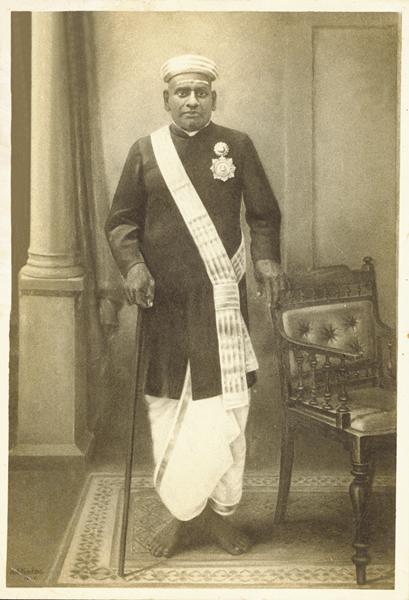
This family memory project begins with the story of my great-grandfather (my father’s paternal grandfather), T. Ganapati Sastri (1860–1926), a renowned Sanskrit scholar. Ganapati Sastri had very humble beginnings in Tharuvai—a place he left for Trivandrum (now Thiruvananthapuram) in his 16th year for economic reasons.

Trivandrum, c. 1915: My great-grandfather, Mahamahopadhyaya Dr. T. Ganapati Sastri

Continue reading “A sepia-toned history of my family”

Bandra Fort: An unexpected mid-week treat

Last Thursday, I had a mid-week holiday and that upset me very much. I am probably in a minority when I say that I hate mid-week holidays, but give me a long weekend, and I’m probably the happiest person on earth. But I digress from the theme of my blog post…

Shalini, a ‘teenagehood’ friend, had been saying for a long time that work and home routines were turning us into crabby old women, and something had to be done. So this mid-week holiday presented us with the perfect opportunity to do that ‘something’.

The outcome—a visit to the Bandra Fort.

The Bandra Fort or, to use its more impressive sounding official name, the Castella de Aguada was built by the Portuguese in 1640. It later passed on to the British, who lost it to the Marathas in 1739, and gained it back from them in 1761. You can read more about the Bandra Fort’s history here.

Continue reading “Bandra Fort: An unexpected mid-week treat”