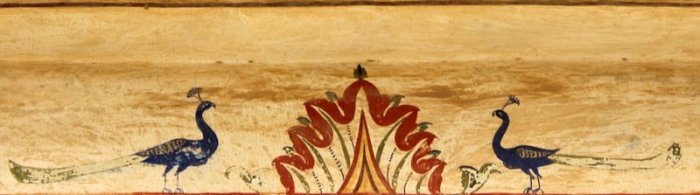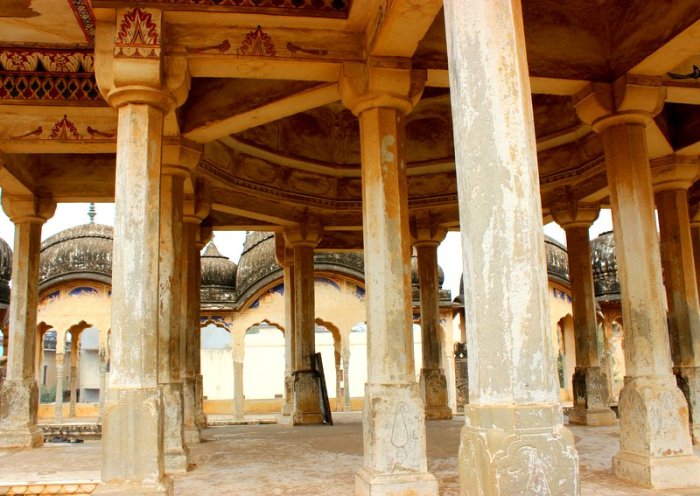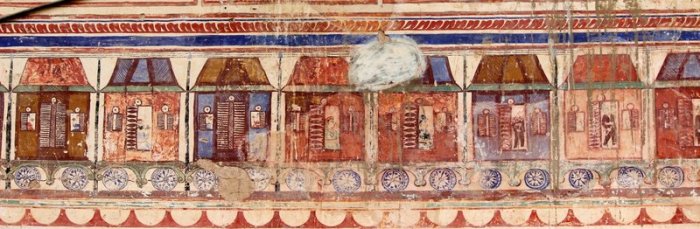
Mahansar, Mahensar, Painted Towns of Shekhawati, Fresco, Art Gallery, Painting, Heritage, Travel, Rajasthan

The painted towns of Shekhawati-7: Mahensar

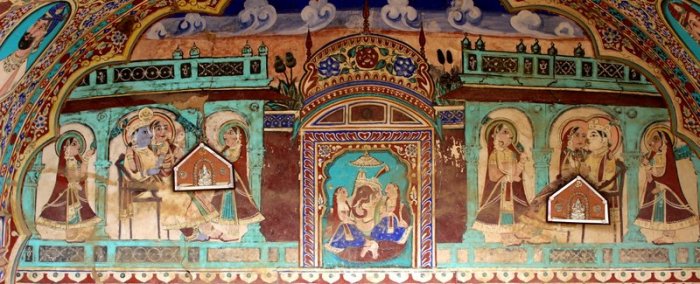
Ilay Cooper’s book on Shekhawati set me off on an extraordinary trip to that extraordinary place in January this year. I had to wait for nearly 6 months, though, before I felt ready to write about it — so overwhelming were my thoughts and emotions. This post on Mahensar is the last of 8 posts in the series on “The Painted Towns of Shekhawati”. If you haven’t read the introduction to Shekhawati’s history (and the series), I recommend that you do so now, before proceeding further. If you have already done so, then dive straight into the post.


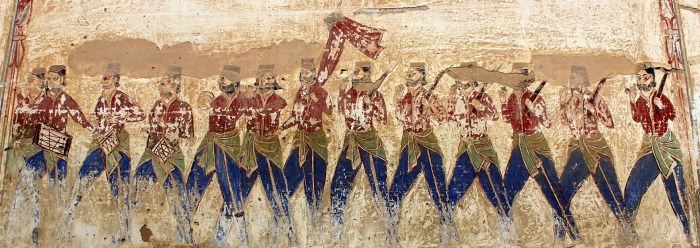
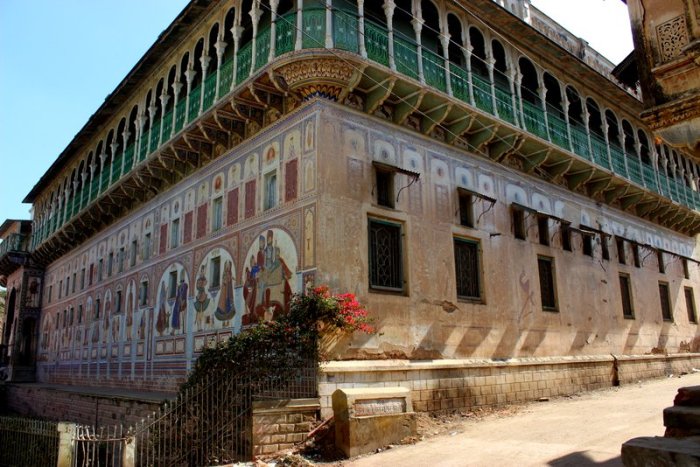
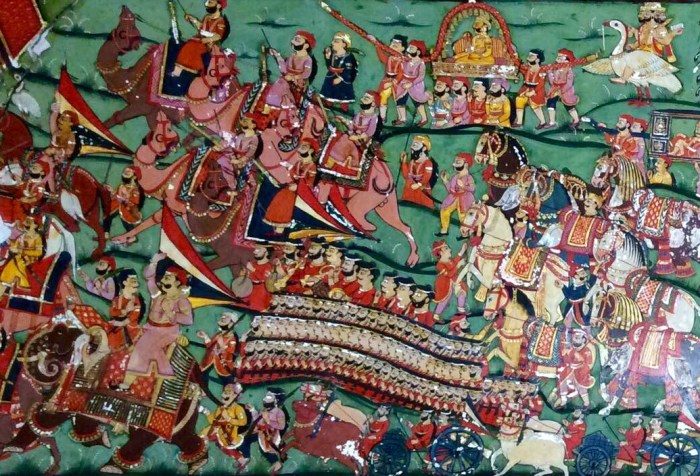
Mahensar is well-known for two things — the paintings inside a place called Sone Chandi ki Dukaan (or the Gold and Silver Shop) and a liquour made from saunf or aniseed. I knew about the first, having read about it in Ilay Cooper’s book, but was completely ignorant about the second, till the manager of the hotel I was staying in told me about it.

According to him, no Rajput wedding in the Shekhawati region was complete without this particular liquor being served to the wedding guests. Why, it was popular across Haryana, Punjab and Delhi and was also more famous than the frescoes of the region and with heritage value as well !

So when I arrived in Mahensar from Bissau at around 2 on that January afternoon, I was expecting to see more of the famous liquor around instead of the frescoes. And I probably would have, if had not been a local election day at Mahensar and, therefore, a dry day.  There weren’t too many people around and the few frescoes visible were faded and located high up on the haveli walls.
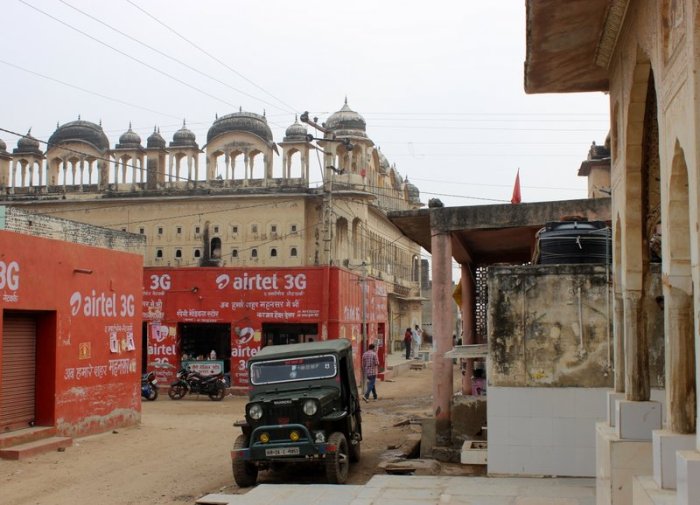
Mahansar, Mahensar, Painted Towns of Shekhawati, Fresco, Art Gallery, Painting, Heritage, Travel, RajasthanI thought of heading towards the Mahensar Fort, but my bad luck with Forts in Shekhawati continued — the Fort was now a hotel and out of bounds for the casual visitor. As I was looking around for a possible direction to head towards, a man came up to me with a large bunch of keys and said, “You must have come to see the Sone Chandi ki Dukaan. I’m the caretaker of that place. Come, I will open it up for you.” Continue reading “The painted towns of Shekhawati-7: Mahensar”

The painted towns of Shekhawati-6: Bissau

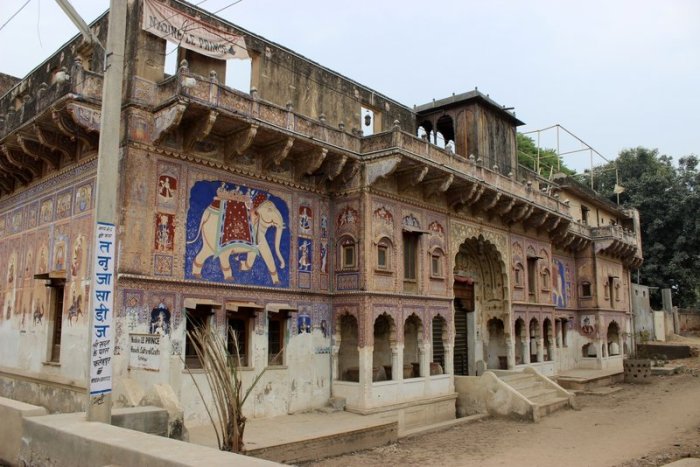
Ilay Cooper’s book on Shekhawati set me off on an extraordinary trip to that extraordinary place in January this year. I had to wait for nearly 6 months, though, before I felt ready to write about it — so overwhelming were my thoughts and emotions. This post on Bissau is the seventh of 8 posts in the series on “The Painted Towns of Shekhawati”. If you haven’t read the introduction to Shekhawati’s history (and the series), I recommend that you do so now, before proceeding further. If you have already done so, then dive straight into the post.


When I set out for Bissau on my third day of exploring the painted towns of Shekhawati, I had no idea of the surprises awaiting me.

The first was the drive to Bissau from Nawalgarh. Gone was the flat landscape (with an occasional hillock breaking the monotony) that I had seen on my previous days in the region. Instead, there were stretches of gentle, undulating sand dunes.

The second was Bissau itself or rather the state the town was in — it was clean with recently swept roads, no rubbish heaps or plastic bags lying around. After having seen filthy towns like Nawalgarh, Bissau came a pleasant and welcome surprise.

The next surprise was the first painted monument I visited in Bissau — the Sarkari Chhatri. It turned out to be a school, an open air school in fact, with the chhatris serving as classrooms for different grades. A PT class was in progress when I arrived and though I wanted to explore the monument, I baulked at disturbing the students. But the school teachers assured me that it was fine and I went ahead to the accompaniment of curious stares and many giggles from the students.

Bissau, Painted Towns of Shekhawati, Fresco, Art Gallery, Painting, Heritage, Travel, RajasthanAnd the last surprise were the frescoes themselves, at least some of them. But more about that later on in this post.
Continue reading “The painted towns of Shekhawati-6: Bissau”

Fatehpur, Painted Towns of Shekhawati, Fresco, Art Gallery, Painting, Heritage, Travel, Rajasthan

The painted towns of Shekhawati-5: Fatehpur

Ilay Cooper’s book on Shekhawati set me off on an extraordinary trip to that extraordinary place in January this year. I had to wait for nearly 6 months, though, before I felt ready to write about it — so overwhelming were my thoughts and emotions. This post on Fatehpur is the sixth of 8 posts in the series on “The Painted Towns of Shekhawati”. If you haven’t read the introduction to Shekhawati’s history (and the series), I recommend that you do so now, before proceeding further. If you have already done so, then dive straight into the post.


Fatehpur, Painted Towns of Shekhawati, Fresco, Art Gallery, Painting, Heritage, Travel, RajasthanThe door to the haveli was shut. A signboard (in Hindi, English and French) requesting visitors to ring the bell if they wished to tour the haveli greeted me instead. I rang the bell and waited. And I waited and waited some more… Just as I was getting ready to ring the doorbell again, I heard footsteps approaching the door.
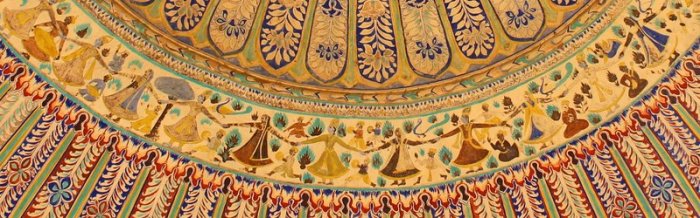
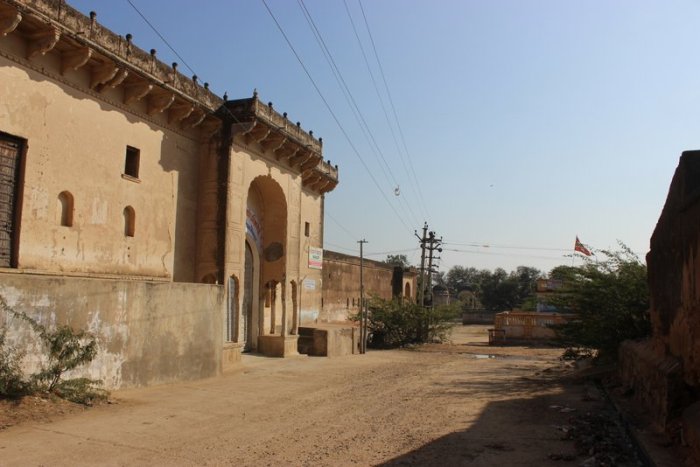
The door opened and I found myself face to face with a young man, a Westerner, who said in a distinctly French accent, “Hello ! Sorry I took so long to open the door. I was in another part of the haveli. Are you here to see it?

“Yes, please, ” I said.

“Great ! My name is Jonathan and I’m an art history student. I’ll take you around the haveli. Would you like the tour to be in Hindi, English or French?”

I gaped at Jonathan and said, “Umm… English please.”

“Wonderful,” beamed Jonathan. “Welcome to the Nadine Le Prince Haveli.”

And that’s how an art history student from France took me on a guided tour of a haveli in Fatehpur in the Shekhawati region of Rajasthan, India.

But more about that later, as I have to introduce you to Fatehpur and take you around some of the other havelis there first. 🙂 Continue reading “The painted towns of Shekhawati-5: Fatehpur”

The painted towns of Shekhawati-2: Dundlod

Ilay Cooper’s book on Shekhawati set me off on an extraordinary trip to an extraordinary place, and I had to wait for nearly six months before I felt ready to write about it — so overwhelming were my thoughts and emotions. This post on Dundlod is the third of eight posts in the series on “The Painted Towns of Shekhawati”. If you haven’t read this introduction to Shekhawati’s history (and the series), I recommend that you do so now, before proceeding further.


The gates to the Dundlod Fort are locked when I arrive at 2.30 in the afternoon from Nawalgarh.

“How can a Fort be locked at this time of the day?” I grumble, looking around for some information on the Fort timings. I don’t find any and instead start looking around for someone who can help me, but there is no one around and all the shops are shut — Dundlod appears to be practically deserted.

Dundlod, Painted Towns of Shekhawati, Fresco, Art Gallery, Painting, Heritage, Travel, Rajasthan, Goenka

I see a tea stall that is open and walk towards it. The tea stall owner guesses what I’m going to ask him and says: “The Fort is shut. They have gone horse riding.”

“Who are ‘they’?” I ask.

“The owners of the Fort and their foreign guests. You come after some time,” is the reply.

I decide to explore the town instead and as I’m wondering which direction to head towards, the tea stall owner points me towards a haveli (mansion) and says that the caretaker-cum-watchman will open it for me to see.

That’s how I end up at the Shubhnarayan Anandram Goenka Haveli. Continue reading “The painted towns of Shekhawati-2: Dundlod”

The painted towns of Shekhawati-1: Nawalgarh

Ilay Cooper’s book on Shekhawati set me off on an extraordinary trip to an extraordinary place, and I had to wait for nearly six months before I felt ready to write about it — so overwhelming were my thoughts and emotions. This post on Nawalgarh is the second of eight posts in the series on “The Painted Towns of Shekhawati”. If you haven’t read this introduction to Shekhawati’s history (and the series), I recommend that you do so now, before proceeding further.


Nawalgarh was my base for exploring the Shekhawati region and also the first of the towns I visited. Named after Nawal Singh, its founder, Nawalgarh was built in 1737 on the site of an earlier settlement.

Nawal Singh followed an active policy of encouraging traders and merchants from Jaipur to settle down in Nawalgarh. The Patodia and Murarka families were the first to arrive on his invitation and seeing them grow and prosper, other merchants soon followed. By the mid-1800s, Nawalgarh had become a large and prosperous town with three forts, city walls, bastions and four gates to protect it.

I arrived in Nawalgarh on a cold and rainy winter’s day in January, in time for a late lunch at my hotel before heading off to explore the town. It was a leisurely stroll through the town’s markets, lanes and bylanes with the purpose to get a feel of what had brought me to Nawalgarh (and for that matter the Shekhawati region) in the first place — the painted havelis or mansions.

Nawalgarh, Painted Towns of Shekhawati, Fresco, Art Gallery, Painting, Heritage, Travel, Rajasthan
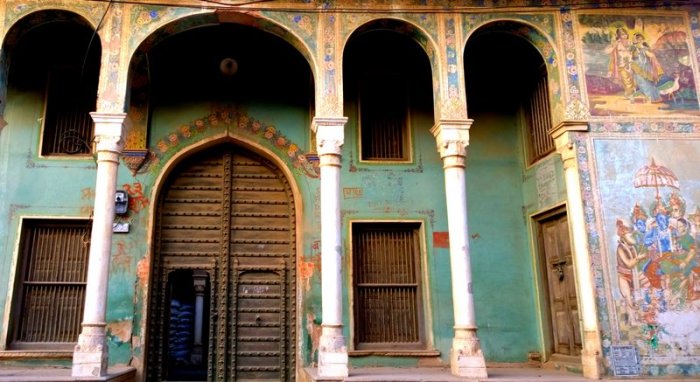
Entrance to the Sheth Anandram Jaipuria Haveli. Unlike other havelis where the background colour is beige, the walls of this haveli are green

Continue reading “The painted towns of Shekhawati-1: Nawalgarh”

The painted towns of Shekhawati: Past and present

Ilay Cooper’s book on Shekhawati set me off on an extraordinary trip to an extraordinary place, and I had to wait for nearly six months before I felt ready to write about it — so overwhelming were my thoughts and emotions.

Presenting the first of eight posts on the painted towns of Shekhawati. It is a brief account of the region’s history (an introduction to the series really), in order to understand the region’s past and present, in the context of the Shekhawati Series.


Shekhawati is one of the four regions of Rajasthan, the others being Mewar, Marwar and Hadoti). Spread over Sikar, Jhunjhunu and Churu districts of Rajasthan, it is best known for its grand and palatial havelis (mansions). It is also known for being home to many of India’s well-known business families — Birla, Poddar, Bajaj, Jhunjhunwala, Khaitan, Oswal, Piramal, Ruia, Singhania, and Goenka, among others are from this region.

One would think that this would automatically mean a lot of visibility and tourist footfall in the region, but this is not the case — compared to the other regions of Rajasthan, Shekhawati is less visible. Which, in my opinion, is really surprising as the history of the region is quite unique and distinct from the rest of the State (at least in the context of the series that I’m writing).

Take the famous painted havelis of Shekhawati, for example, and how they came to be built. Painted Towns of Shekhawati, Nawalgarh, Poddar Haveli, Continue reading “The painted towns of Shekhawati: Past and present”