The NH22 / Hindustan-Tibet Road

“We’ll take a 10-minute break here,” announces Doreen, our tour organiser and manager, as our convoy of 3 vehicles comes to a halt.

‘Here’ is somewhere on the road to Kalpa from Sarahan. It’s 10.30 am on a cold September morning and our 3rd day in Himachal Pradesh. As the rest of my group disperses to stretch their legs or use the washroom, I notice our drivers lock the vehicle with what seems like undue haste and almost sprint towards a temple that we have just passed.

That is when I notice many vehicles stopping and their drivers, and sometimes also the passengers, getting out and entering the temple. Curious to know more about this temple, I make my way towards it as well.
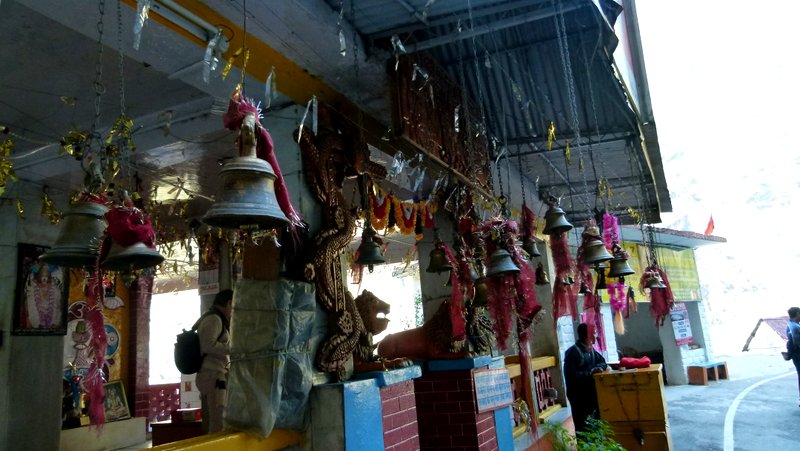
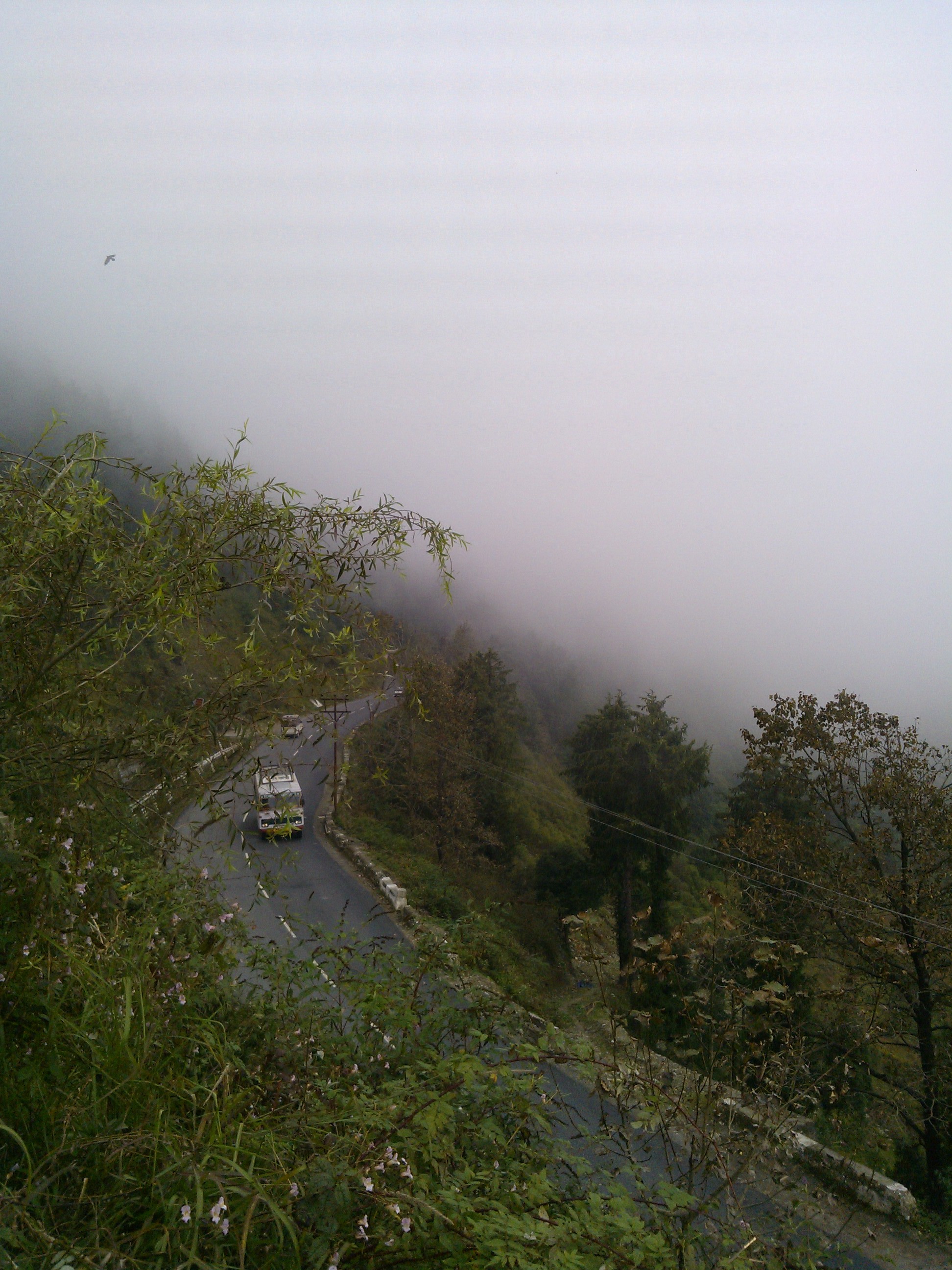
NH22, Hindustan Tibet Road, Himachal Pradesh, Taranga Devi TempleBy the time I reach the temple, the drivers are already out and on their way back to the vehicles. But on seeing me approach, Pawan (the driver of the vehicle I am travelling in) stays behind.

“What is this temple?” I ask.

“This is the temple of Tarandaa Devi,” Pawan replies. “She is the guardian deity of the road, us drivers, and all those who travel on this road. It is she who protects us and keeps us safe from accidents on the road.”

“The temple seems like a recent construction. Is it new”?

“Well, the construction is new, but there has always been a temple here. And the Tarandaa Devi idol is hundreds of years old.”

“Do you always stop by to pray here?”

“Always. No matter how rushed or how late, I always stop here. Tarandaa Devi has protected me and my family for many, many years. I was born in a village close by and have a very close association with this road — the NH22.

“Really? Tell me more about it.”

And over the next few days, in bits and pieces and fits and starts, Pawan told me about his association with the NH22 or National Highway No. 22.

Continue reading “The NH22 / Hindustan-Tibet Road”

Moonrises, sunsets and sunrises at Kinner Kailash

Before my trip to Himachal Pradesh, everyone who knew I was travelling there had something to tell me about the place. More so because this was my first trip there and also because I would be seeing the Himalayas for the first time.

So, I got to hear about the weather, the roads, the people, the rivers, the food, the vegetation, the various mountain ranges, the monkeys, the treks, the hotels, the temples, the local culture, apples, snow, wildlife… But all of them missed out on telling me about the breathtaking Himalayan sunrises and sunsets or for that matter, Himalayan moonrises and moonsets.

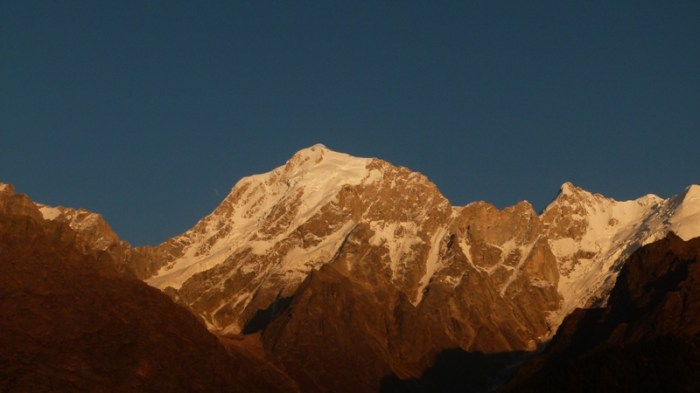
The first sunrise and sunset that I saw were at Fagu and Sarahan respectively. They were beautiful and I may have even termed them as spectacular, if I had not gone to Kalpa and seen the sunrises, sunsets and moonrises over the Kinner Kailash range; they redefined the words “spectacular” and “breathtaking” for me.

On my first evening at Kalpa, our group visited a gompa at Kalpa village. Our visit ended around sunset after which we were generally wandering about. Suddenly I heard Doreen, our tour leader, call out to us in an urgent voice to hurry and see the moonrise.

We all rushed to where Doreen was standing and saw a bit of the moon from behind a mountain peak getting ready to make its appearance for the night. And over the next few minutes, I was witness to a moonrise like none that I had seen before and, perhaps none that I am likely to ever see.

Kinner Kailash, Kalpa, moonrise

Continue reading “Moonrises, sunsets and sunrises at Kinner Kailash”

Serene Sarahan

Sarahan, Apples, Himachal Pradesh“Have you had Himachali apples?”  the three women ask. “They’re really good, you know. The best.”
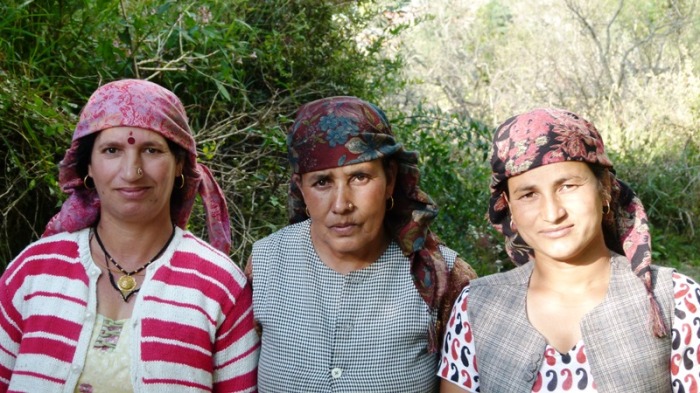
I am at Sarahan in Himachal Pradesh walking around and exploring this pretty little town, when I meet the 3 women and get into a conversation about apples with them.

“I know. I’ve had them in Mumbai,” I smile.

“Oh Mumbai,” the first woman says in a dismissive tone. “After all the travelling the apples do, they won’t taste the same.” The other two women laugh.

“Yes, they won’t,” the second woman insists. “You must have Himachali apples here. In Himachal.

“Would you like some apples?”asks the third woman.

“Sure,” I say. “I’d love to have an apple.”

Within minutes, I am biting into an apple that one of the women gives me. It is fresh and juicy — a little sweet, a little tart — just the way I like my apples. And the women are right, the apple tastes like nothing I’ve had before. “They’re perfect,” I say to the women.

That is the cue for the women to give me more apples and before I know it I am clutching a paper bag full of apples and saying thanks and goodbye to the 3 women. They refuse payment from me and say that my appreciation is payment enough and send me on my way !

Sarahan, Apples, People, Himachal Pradesh Continue reading “Serene Sarahan”

Dear Himachal Pradesh…

I dreamt about you yesterday.

It was a lovely dream where my 10-day trip to Fagu, Sarahan, Kalpa, Sangla, Narkhanda and Chail in September was relived all over again. I usually don’t remember my dreams when I wake up, but this one was so crystal clear and real that I’m pretty sure that I must have spoken in my sleep !

I dreamt of the trip of many firsts — the first time I visited your state, the first time I saw the mighty Himalayas, the first time my under-graduate and post-graduate classes on Himalayan Geology came alive, the first time I saw apples on trees, the first time I tasted a yellow plum, the first time I saw the confluence of two rivers … and so much more.

Himachal Pradesh, FaguI dreamt about the rainstorm you welcomed me and the group I was travelling with. And how in the space of a few hours, we went from hot and humid Mumbai to cold, almost freezing, weather in Fagu. That night, I slept under two blankets and had a heater in the room.

I dreamt of that first morning I woke up to in Fagu. Clouds had covered the entire valley and I delighted in watching the clouds vanish like wisps of vapour as the sun rose in the sky to reveal the distant snow-clad peaks of the Himalayas. And closer, much closer, was the vegetation associated with the Himalayan ecosystem. Not that I could identify any, but still… 🙂

Continue reading “Dear Himachal Pradesh…”

The ascent of Pavagadh Hill

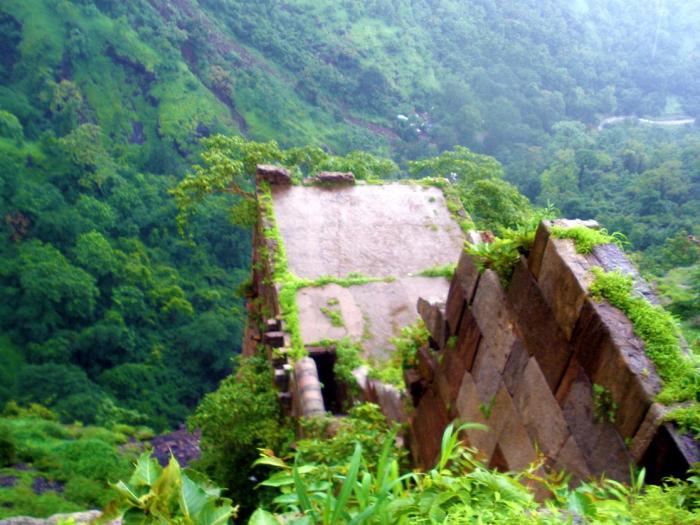
The town of Champaner is situated at the base of Pavagadh Hill, which is a sudden rise in an otherwise gently undulating landscape. A climb up Pavagadh Hill reveals a heady mix of interesting geology, mythology, religious confluence, history, strategic military brilliance and foresight, clever design and architecture, rainwater harvesting systems, sustainable measures, a hidden valley of flowers, etc.

Geologically, Pavagadh Hill is quite different from Champaner. The Hill is composed of rhyolite, a volcanic rock, while Champaner is almost entirely sandstone, a sedimentary rock. It is this volcanic feature which made Pavagadh an important and strategic location for whoever ruled it. About 830 m high, it descends or ascends (depending on your point of view) in five plateaus, each of which are separated by steep cliffs. This feature enabled fortifications to be built at vantage points around the hill in a circular manner, making it indefensible and non-breachable. And also confusing for the visitor/tourist.

Photo: Rupal Parikh

Continue reading “The ascent of Pavagadh Hill”

The Indo-Islamic mosques of Champaner

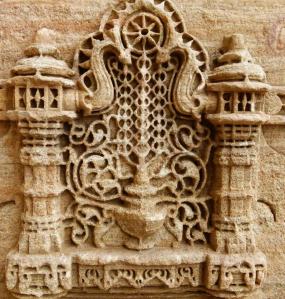
Detail from a wall carving on Kevada Masjid

“It has not rained in Champaner for 2 years, and then it rains like this. When it rains…” the guide’s voice trailed off mournfully.

About 20 pairs of suspicious, skeptical  eyes looked at the muddy, slushy path that seemed to worsen as it wound its way to apparently nowhere. But according to Manoj, the guide, the path led to 2 mosques, one of them with the most beautiful embellishments imaginable on its walls.

Maybe Manoj did not sound convincing enough, or maybe it was the mud, but most of the owners of those eyes decided to forego seeing those two mosques. But some did agree to go with the guide and see the mosques. I was one of them.

Our tour group was in Champaner for a 2-day visit. We had arrived that morning from Mumbai to a cloudy, rainy and wet day, in the wettest rainy season that Champaner was experiencing in a long time. We were to see the ruins of the medieval city of Champaner, which included many mosques in various stages of restoration or disrepair, depending on one’s point of view. I wondered how many we would be able to see with the heavy rains having made the access roads paths almost impossible to negotiate. (There are reportedly 18 such mosques, and we managed to see about 5 of them.)

Continue reading “The Indo-Islamic mosques of Champaner”