The Kala Ghoda Arts Festival 2017

My experience of and participation in the annual Kala Ghoda Arts Festival (KGAF) this year, which was held from 3rd to 12th February, was limited, for I was travelling. This was the first time that I missed the opening day of KGAF, missed seeing the stalls open, missed seeing the installations on the first day, missed bumping into people I always meet at the KGAF, missed attending other events…

It felt strange and kind of weird to miss out on what has become an annual tradition for me. So I did the next best thing: the day after I returned to Mumbai, I headed to Rampart Row in the Kala Ghoda area, where the visual art installations are displayed. Like in previous years, I went in the morning, before the place officially opened and before the place got crowded. Since I wasn’t following the #htKGAF hashtag on social media, I had no idea what the installations were like. So it was almost like seeing them on the first day. Almost.

As always I began with the Kala Ghoda installation — the black horse that is the centrepiece of the KGAF.
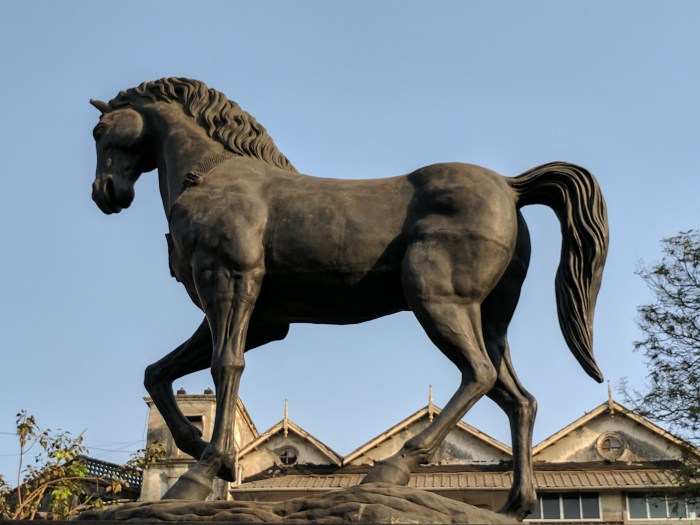
KGAF, Kala Ghoda Arts Festival, Mumbai 2017, Visual Art, Art Installation
The new Kala Ghoda was designed by Alfaz Miller (with inputs from sculptor Arzan Khambatta), and crafted by Shreehari Bhosle

Continue reading “The Kala Ghoda Arts Festival 2017”

Travel Shot: The bridge over River Namdang

The drive to Sibsagar (also known as Sivasagar) from Jorhat in Assam takes about an hour. Except for one small stretch, the road, which is the National Highway 37, is smooth and and makes for a beautiful drive. The entire stretch is lined with banana and coconut trees and cottages with cane around them making for a pretty sight. It is almost impossible to take one’s eyes off the beauty all around.

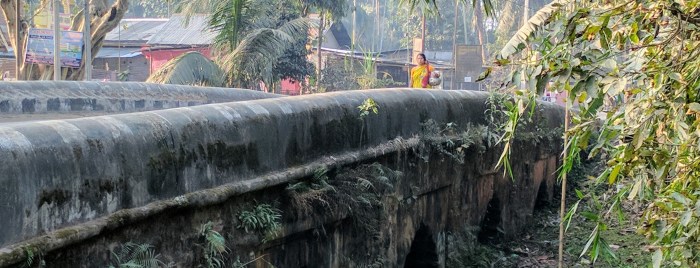
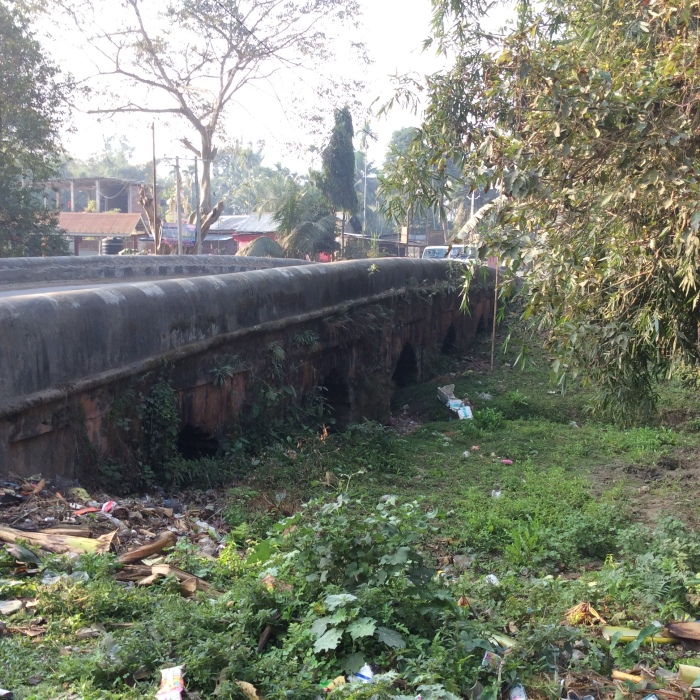
But there is one place along the drive, about 15 km before Sibsagar and at a place called Gaurisagar, when you have focus on something else, even get off the vehicle you are travelling in. It is a bridge across the river Namdang, a tributary of the river Dikhou. The bridge is a small, not a particularly impressive looking, one and is about 60 m in length and 7 m in width.

But don’t go by its looks, for this bridge is only one of 10 such bridges ever built in Assam that still survives today. It is a Sila Saku or a stone bridge that was built in 1703 by the Ahom King under whom the dynasty reached its zenith, Swargdeo Rudra Singha.

Assam, Namdang Stone Bridge, Assam, Jorhat to Sibsagar, Rudra Singha, Ahom Structure, Stone Structure

Continue reading “Travel Shot: The bridge over River Namdang”

Mahabalipuram, UNESCO World Heritage Site, Arjuna's Penance, Descent Of Ganga, Relief Panel, Narrative Networks

Stories in Stone: Arjuna’s penance or descent of the Ganga?

Stories in Stone is all about sculptures — either standalone or entire narrative panels. Each post in this series will showcase one such sculpture, look beyond its iconography and deconstruct the details in an attempt to understand the idea and/or the story it conveys.


The UNESCO world heritage site of Mahabalipuram or Mamallapuram is extraordinary for the sheer number and variety of monuments, as well as their scale and design. Rock-cut temples, structural temples, relief panels and more vie for attention, each one more captivating than the rest. Though a fair number of the monuments are incomplete or unfinished and weathered, their beauty is not diminished.

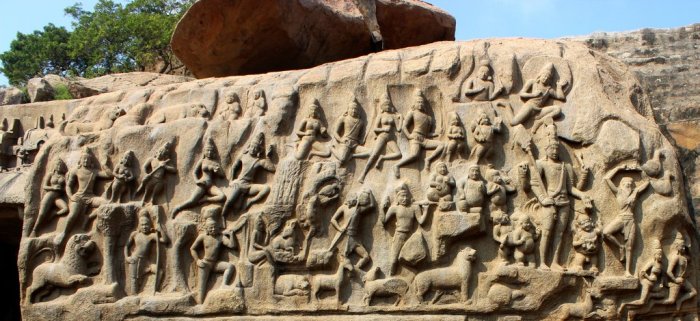
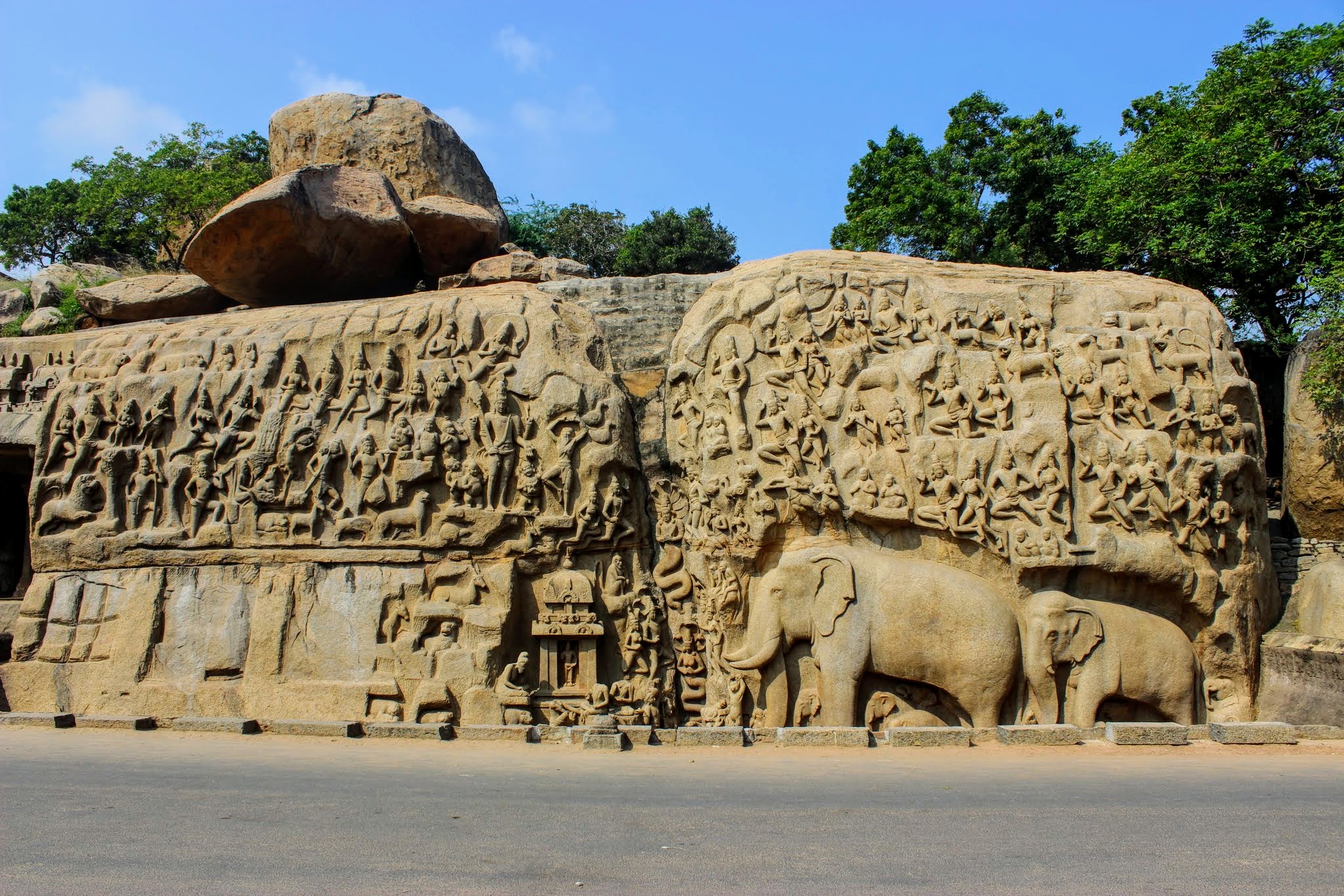
The monuments at Mahabalipuram have been the subject of many a study, but none more so than a large relief panel carved on a granite cliff. It is a panel that has led to debates and divisions among art historians over what it depicts or denotes or refers to — Arjuna’s Penance or the Descent of Ganga [1]

Before I narrate their stories and discuss why the panel could be one or both or maybe neither, let us take a close look at the various elements that make up this panel. A real close look beginning with photograph below (please click on the picture to see a full size version).

Mahabalipuram, UNESCO World Heritage Site, Arjuna's Penance, Descent Of Ganga, Relief Panel, Narrative Networks Continue reading “Stories in Stone: Arjuna’s penance or descent of the Ganga?”

Tyagaraja’s tambura

When I entered the Sri Prasanna Venkatesa Perumal Kovil in Madurai on that January evening in 2016, I had no idea of what I was about to see. I don’t think other members of the group I was travelling with did either.

The only clue that there was something important in the temple came from Sriram’s (our group leader) rather enigmatic statement that there was a surprise waiting for us there. He wouldn’t say what it was though, and went off in search of the priest.

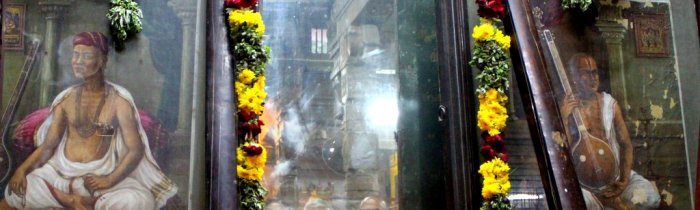
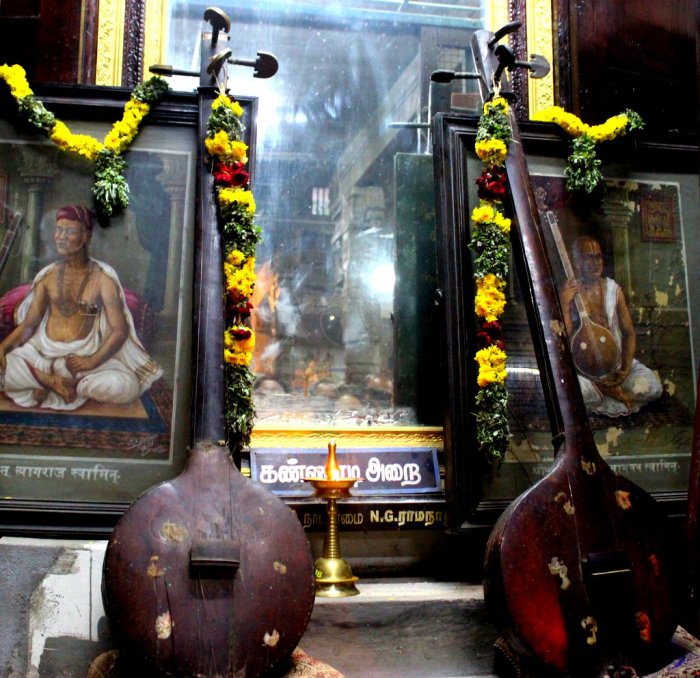
I looked around trying to guess what the ‘surprise’ could be. Was it the 12 ft tall Hanuman idol? Was it the Perumal idol in the sanctum? Or was it something else? As I looked around trying to figure out the ‘surprise’ in the temple, Sriram beckoned to our group to gather around a small shrine on one side. It was a simple shrine with two framed pictures — one of which I recognised as that of Tyagaraja (1767-1847), one of the greatest composers of Carnatic classical music — and two old tanpuras or tamburas.

Tyagaraja, Tanpura, Tambura, Musical Instrument, Saint Thyagaraja, Prasanna Venkatsa Perumal Temple, Madurai, Musical Heritage
Tygaraja’s framed portrait and tambura is on the left, while Venkataramana Bhagavathar’s tambura and framed portrait are on the right.

As the priest bustled around getting the shrine opened, Sriram casually announced that the tambura on the left used to belong to Tyagaraja. You could have heard a pin drop at the silence that followed. Continue reading “Tyagaraja’s tambura”

Museum Treasure: Vaikuntha Kamalaja

The Dr. Ramnath A. Podar Haveli Museum at Nawalgarh in the Shekhawati region of Rajasthan was built in 1902. Originally a residence and known as Podar Haveli, it was converted into a museum after major renovation and restoration works were undertaken of the frescoes and murals that cover every inch of its exterior and interior walls.

The Haveli Museum, which is over 100 feet long, is supposed to have 750 frescoes on its outer walls, passages, two courtyards and all the rooms in the lower level. Every fresco/mural is detailed and covers themes from mythology to local folk tales to whimsical depictions of everyday life.

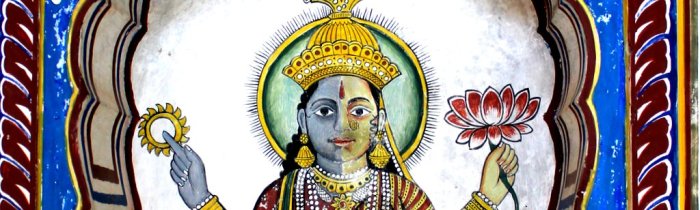
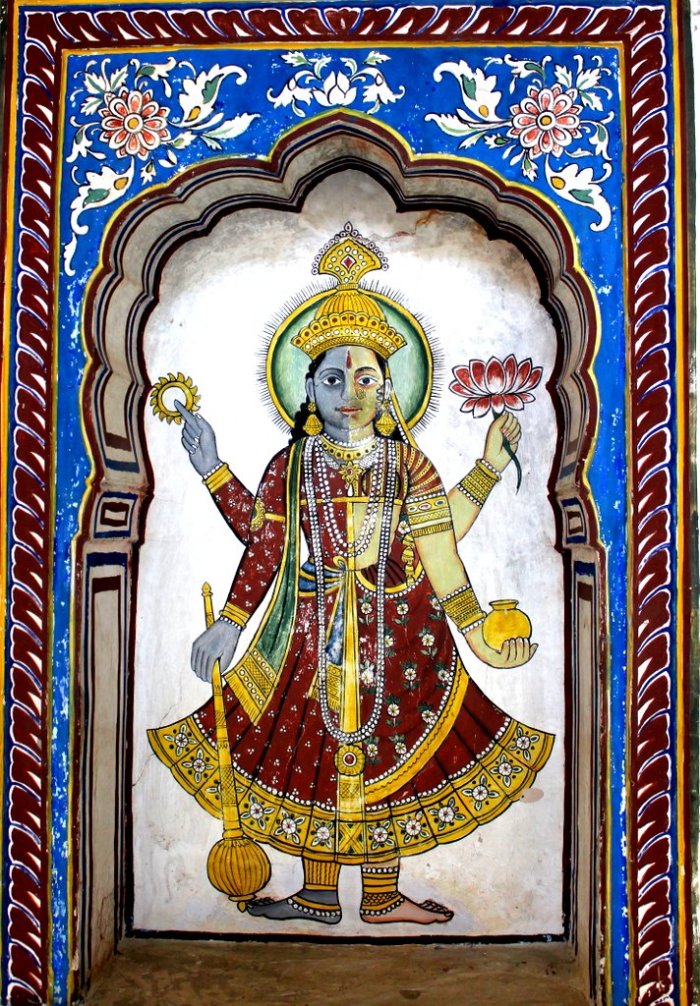
Though there were many stunning works of art at the Haveli Museum, there was one that caught my eye — more for the unusual subject than for the quality of art. It was like an Ardhanareeshwara, but instead of the composite image of Shiva and Parvati, it was one of Vishnu and Lakshmi.

Vaikuntha Kamalaja, Vasudeva Kamalaja, Vasudeva Lakshmi, Composite form of Vishnu and Lakshmi Ramnath Poddar Haceli Museum

Continue reading “Museum Treasure: Vaikuntha Kamalaja”

Delhi and I

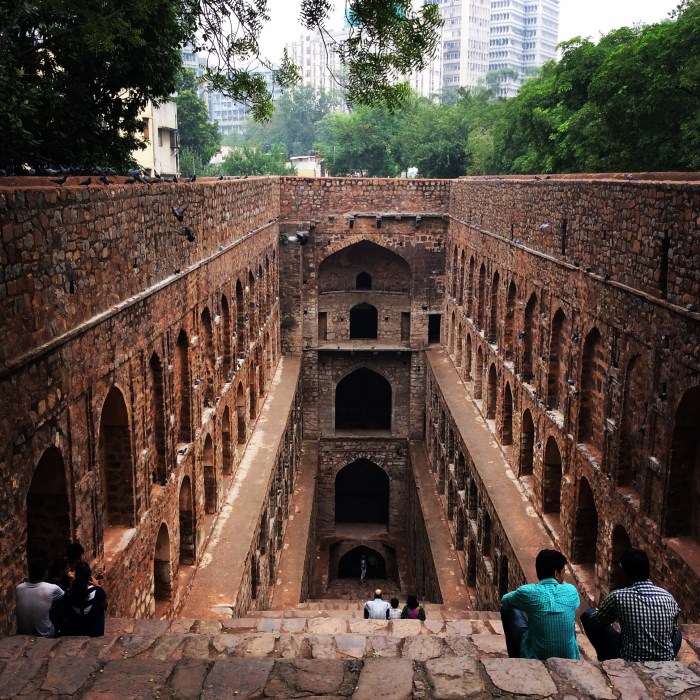
This is the story of a 36-year old relationship with a city that has had many names in the past, but is known quite simply as Delhi today.

It is a city that has fascinated me for a long, long time.

It is a city that I have never lived in, but have visited it so many times that I have lost count.

And yet, it is a city, that I know very little about.

It is a city that sets off my respiratory allergies, if I stay for more than a day.

And yet, it is also a city that I want to live in for at least a year.

Delhi, History and Heritage, Many Delhis, Mughal Delhi, Pre-mughal Delhi
Agrasen ki Baoli. Photo: July 2016

It is a city where diffused and clear memories and experiences are strung together in the same strand.

Like my first visit to Delhi in 1980.

Continue reading “Delhi and I”