Monumental Bukhara: Masjids, madrassahs, mausoleums and more

The legend of the origin of Bukhara appears in the Shahnameh (or the Epic of the Persian Kings) by Firdausi.

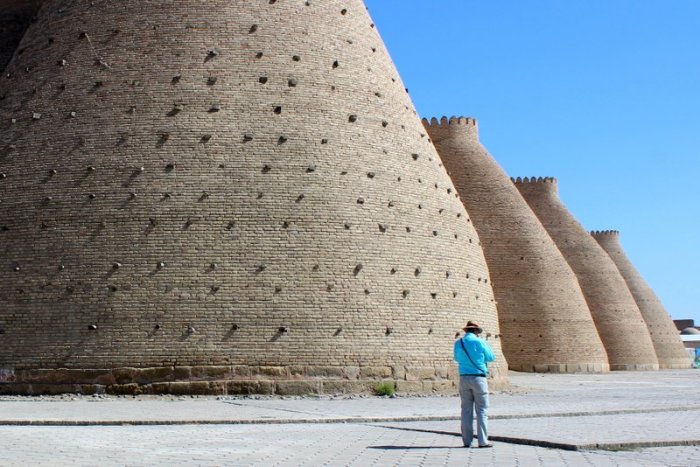
When King Siyavush of the Pishdak dynasty wed Farangis, the daughter of King Afrosiab of Samarqand, he was gifted a vassal kingdom in the Bukhara region by his father-in-law. Siyavush, who had always liked this region for its many rivers and its location on the ancient trade route, built a new city there — Bukhara. The first structure that he built was the Ark or Arg (the Persian word for ‘citadel).
#MyDreamTripUzbekistan, Bukhara, Travel, Uzbekistan, Central Asia, Heritage , UNESCO World Heritage Site

Today, Siyavush’s Ark is long gone and another one stands in its place. Also known as the Ark, it is no coincidence that this 16th century Ark too continues to be at the heart of Bukhara, both historical and modern. And that’s why I begin this post with the Ark, for both the legend and the history of Bukhara is inextricably linked to it or the people who governed from there.

Continue reading “Monumental Bukhara: Masjids, madrassahs, mausoleums and more”

There’s something about Bukhara !

I fell in love in Bukhara. I wasn’t expecting to, but then love is always unexpected, isn’t it?

In fact, I wasn’t expecting anything from Bukhara when I visited Uzbekistan in September 2015. I was too busy dreaming about the Savitsky Museum at Nukus, the blue domes of Samarqand, and the minarets of Khiva. Bukhara was part of my itinerary, but it was more like a pit stop in the 700+ km road distance between Khiva and Samarkand — a place to rest and relax before moving on to the city that had inspired my Uzbekistan trip in the first place — Samarqand. Therefore, my online research for Bukhara only comprised a cursory reading of its history and finalising a B&B to stay.

I arrived in Bukhara after a 7-hour drive through the gorgeous Kyzyl Kum Desert from Khiva. The journey wasn’t particularly tiring as the roads were good for most of the distance, but after seven hours in the car, I just wanted to reach Bukhara. My first impressions of Bukhara were of a clean city with wide tree-lined avenues, multi-storied and traditional buildings existing side by side, and a very different vibe from the cities I had visited in Uzbekistan thus far.

#MyDreamTripUzbekistan, Bukhara, Uzbekistan, Travel, Central Asia, Heritage, UNESCO World Heritage Site
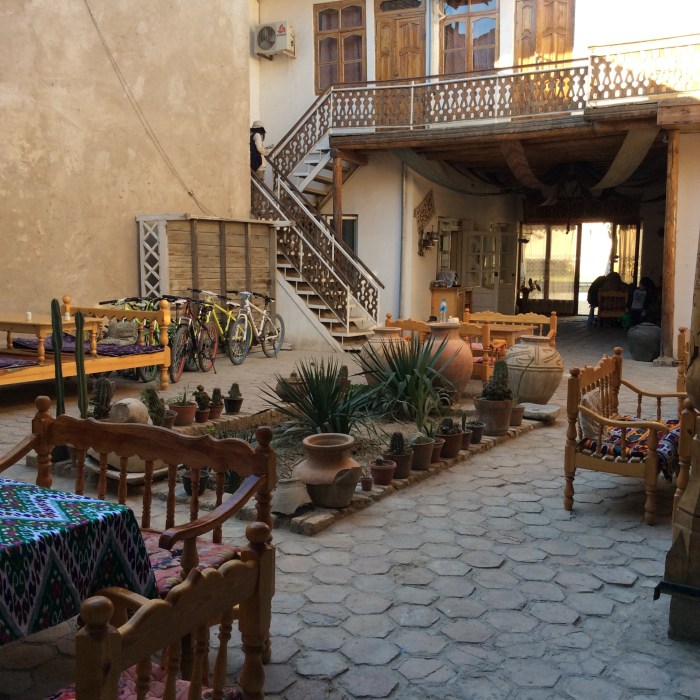
The main courtyard at Rustam & Zukhra

The B&B I was staying in, Rustam & Zukhra, was a charming little place and though I was tempted to rest after the long journey, I thought it best to walk and stretch my legs a bit. Within minutes, I was at the historic Lyabi Hauz Complex and was transfixed by the sight before me. Continue reading “There’s something about Bukhara !”

Itchan Kala: The inner fortress of Khiva

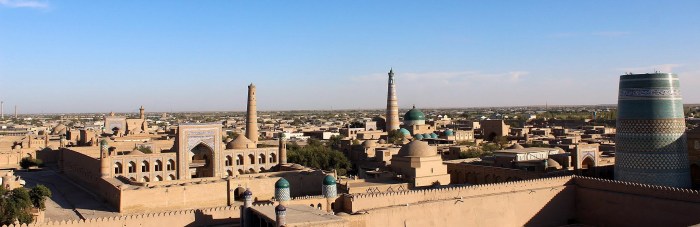
There are places that leave an impression on you after you have visited it. And then there are places which leave an impression on you even before you have visited it. Like Itchan Kala, the inner, fortified town of Khiva, an ancient city on the Silk Route in Central Asia. A UNESCO World Heritage Site, the Itchan Kala was the first of the sites to be inscribed in the list from Uzbekistan in 1990.

I came across Khiva and Itchan Kala, while researching on places to visit in UzbekistanWhile the photographs of Itchan Kala were uniformly breathtaking, not to mention tempting enough make me want to pack my bags and head there immediately, the descriptions were varied and the reactions mixed — a living fortress, a perfectly preserved medieval fortress, a fort museum, a museum city, former hub of slave trade, lifeless and artificial, a film set, a somewhere else place, over renovated and restored, lifeless, touristy… I found the multitude of opinions and impressions about Itchan Kala even more enticing than the pictures, and couldn’t wait to visit it for myself.

The sun was setting when I arrived on a September day in 2015 in the rather nondescript city of Khiva. It had been a long day of travel from Nukus, exploring the scattered ruins of Khorezem along the way. As my car wove in and out of twisting roads, I kept a lookout for the walled town, already familiar from the numerous pictures I had seen online.

Khiva, Xiva, Travel, Uzbekistan, #MyDreamTripUzbekistan, Ichon Kala

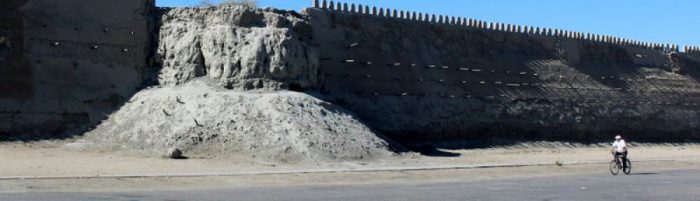
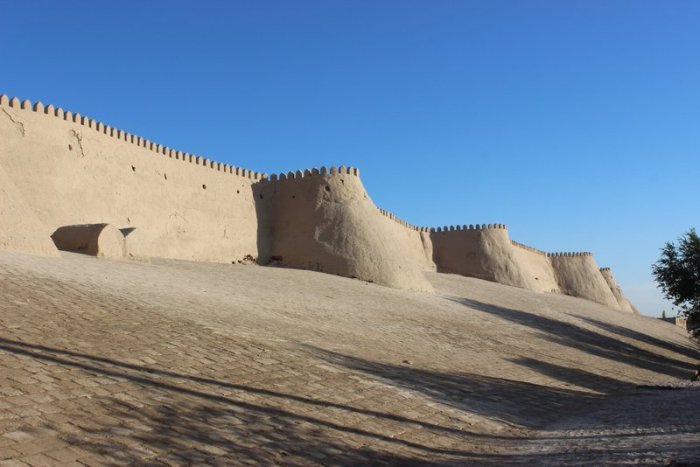
And then, as we drove through a market, the mud walls of a fortress suddenly loomed up. It was the Itchan Kala. I barely had time to recover from that first sight before the car entered the fortress through a gate and stopped outside my hotel. As soon as the registration formalities were completed, I set out to explore the place.

Continue reading “Itchan Kala: The inner fortress of Khiva”

3 forts and a dakhma: Exploring a bygone era

Scattered across the vast Karakalpakstan region in the north-western part of Uzbekistan are the remains of many fortified settlements. These fortified settlements or qalas extend into the Khorezm Province in western Uzbekistan as well and also into the neighbouring country of Turkmenistan.

Archaeologists say that these fortified settlements were built over a 1,000-year period with the earliest fortifications making an appearance around 700 BCE. The qalas, which were constructed from compressed mud or clay bricks, were built in the fertile region created by the Amu Darya delta. It is believed that the number of qalas in the region run into hundreds; however, only about 80 or so have been documented.

Elliq Qala, Karakalpakstan, Khorezm, Heritage, Monuments of Uzbekistan

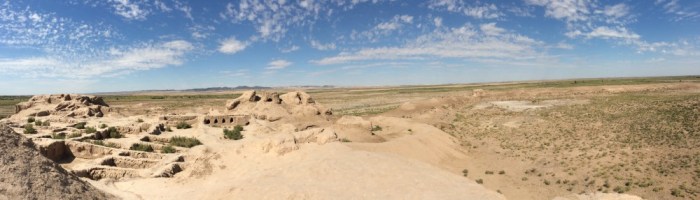
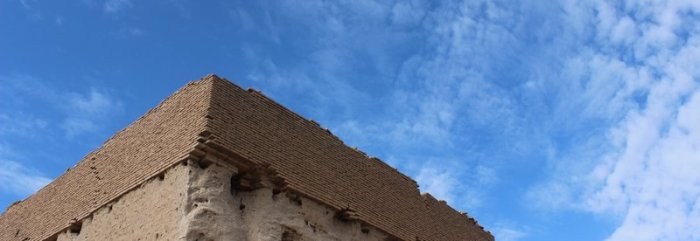
I visited 2 qalas in the region — Toprak and Ayaz — and saw a third (Gyaur) from a distance, after visiting Mizdakhan and on my way to Khiva. I also made an arduous climb (my knees are still protesting after 3 months) to see the Chilpyk dakhma or Tower of Silence, but more on that later.

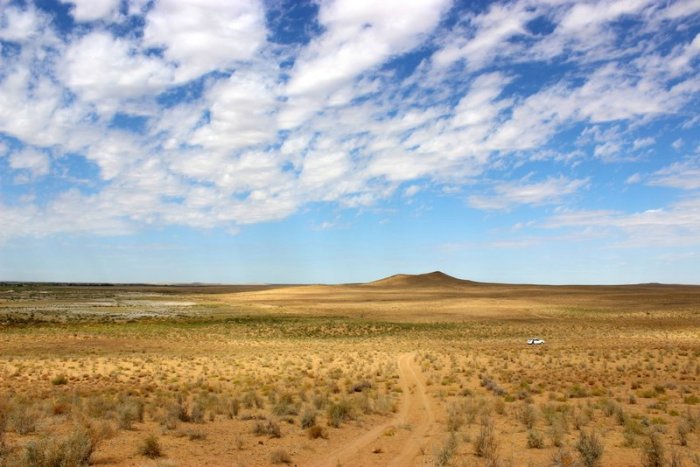
To travel through a vast area in a single day, see these intriguing bits of history scattered about in a desolate and barren land was quite an experience. Continue reading “3 forts and a dakhma: Exploring a bygone era”

The Mizdahkan Necropolis: A city for the dead

About 20 km west of Nukus and past the town of Khojayli, on the way to the Uzbekistan-Turkmenistan border crossing, is Mizdahkan. An ancient and vast necropolis, Mizdahkan is spread over three low-lying hills, covering an area of approximately 2 sq.km.

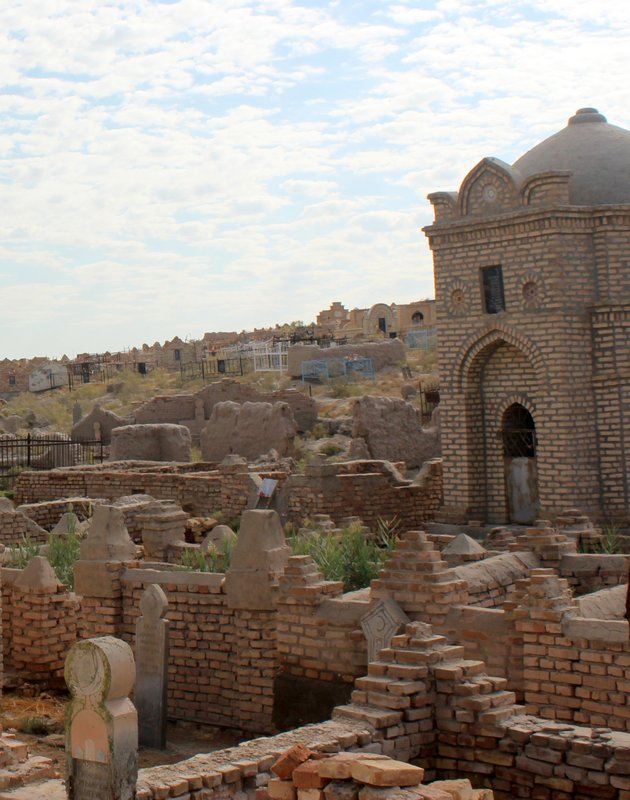
Mizdahkan appears rather suddenly in an otherwise flat landscape. One moment you are driving past Soviet-style blocky constructions separated by vast stretches of emptiness. And the next moment there are thousands of graves, tombs and mausoleums stretching away from you and into the horizon. Even though I had seen online images of the Mizdahkan Necropolis before my visit, their appearance was still unexpected and a little unreal. I actually confirmed with the driver that we were indeed at Mizdahkan !

A low boundary wall separates the necropolis from the road, and like the seemingly unending graves it enclosed, this one too seemed to stretch on without a break. Just as I was wondering where the entrance to Mizdahkan was, a partly open blue door appeared on the wall. It was the entrance to the city of the dead, Mizdahkan.

Once inside the blue doors and after the initial look, the first thing that struck me was the different ages, styles and types of tombs — from unmarked graves to those with gravestones to plain tombs to elaborate ones to well-preserved ones to those falling apart… they were all there.

Mizdahkan, Karakalpakstan, Uzbekistan, Necropolis, City of the Dead, Ancient burial site, travel, Central Asia, Culture Continue reading “The Mizdahkan Necropolis: A city for the dead”

Art in the Desert: The Savitsky Collection at Nukus

I love museums and they are an integral part of all my travels. The trip to Uzbekistan was no different and I visited quite a few museums there. In the case of one museum, I took it one step further — I added one destination to my Uzbekistan itinerary, only because of that museum.

The destination? Nukus, in the remote Karakalpakstan region of Uzbekistan.

The museum? The Karakalpak Museum of Arts, which houses the Savitsky Collection.

Karakalpakstan Museum of Art Savitsky Museum Nukus
The Karakalpakstan Museum / Nukus Museum, which houses the Savitsky Collection

The story of how this museum (known locally as the Nukus or Savitsky Museum) came to be is straight out of a “believe it or not”. Like most stories, it has:.

A protagonist: Igor Savitsky, an artist
An antagonist: the Communist Soviet government
A supporting cast: Several artists from Uzbekistan and Russia
A location: Karakalpakstan

Our story begins in 1950, when Igor Savitsky (1915–1984) joined the “Khorezm Archaeological and Ethnographic Expedition led by the world-famous scientist, Sergei P. Tolstov” as the artist for the expedition. Continue reading “Art in the Desert: The Savitsky Collection at Nukus”