Nukus, Karakalpakstan, Uzbekistan, Soviet-style city, travel, #MyDreamTripUzbekistan

A city called Nukus

Nukus was my first halt in Uzbekistan. The 6th largest city of the country, it is the capital of Karakalpakstan, an autonomous region within Uzbekistan. Karakalpakstan covers a third of the area of Uzbekistan, which includes a major portion of the Ustyurt Plateau, and the Kyzyl-Kum Desert. The Amu Darya river is the lifeline of the region and flows through the city of Nukus.

Nukus is not known for its tourist attractions, but there was a reason I visited this city. More about that at the end of the post. It is located about 1000 km northwest of Tashkent, or a two-and-a half-hour journey by air from there by a propeller-driven plane, like the one in the photograph below.
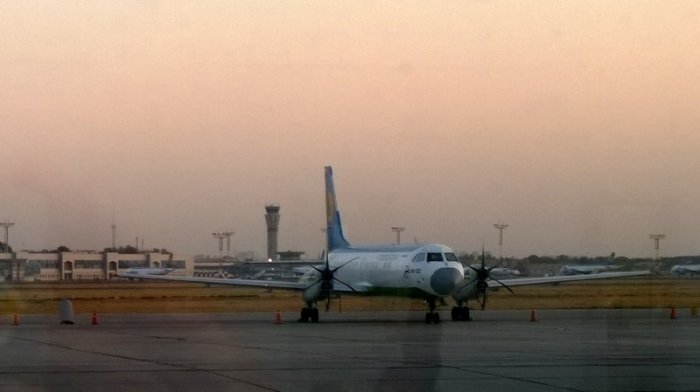
Hukus, Tashkent Domestic Airport, Propeller PlaneHukus, Tashkent Domestic Airport, Propeller Plane

When I saw the propeller-driven planes waiting on the tarmac of the Tashkent Domestic Airport, I got all excited as I had never flown in one. But 5 minutes into flying, I was reaching for ear plugs for they were incredibly noisy. It didn’t help that my window overlooked one of the propellers.

Once the initial excitement of the propeller plane had worn off, the flight was uneventful and monotonous, just like the landscape on ground below. Apart from a road or two or a cluster of dwellings, I didn’t see anything to break the sandy ground below.

Nukus itself arrived rather suddenly and if I didn’t feel the plane descending, I wouldn’t have known that. It is only later that I found out that the city is quite spread out and away from the airport, and one of the reasons why I didn’t see anything from the air.

When I landed at the rather small and quaint Nukus Airport on that September morning, I had been travelling (or waiting for a connecting flight) for almost 20 hours, and sleep deprived for even longer. It had been a long journey from humid Mumbai, to hot Delhi to cold Tashkent to dry and arid Nukus. I should have been sleepy and tired, but thanks to the numerous cups of coffee and excitement at finally being in Uzbekistan, I was not only awake, but also alert and ready to explore. 🙂

Continue reading “A city called Nukus”

Uzbekistan. Travel 2015, Central Asia, Dream Destination, Zarafshan Mountain ranges, People of Uzbekistan

Dear Uzbekistan

Many, many years ago there was once a quiet, little girl who was happiest among books, especially picture books. She hadn’t yet learned to read, and would always be asking her family members to explain what she was ‘reading’.

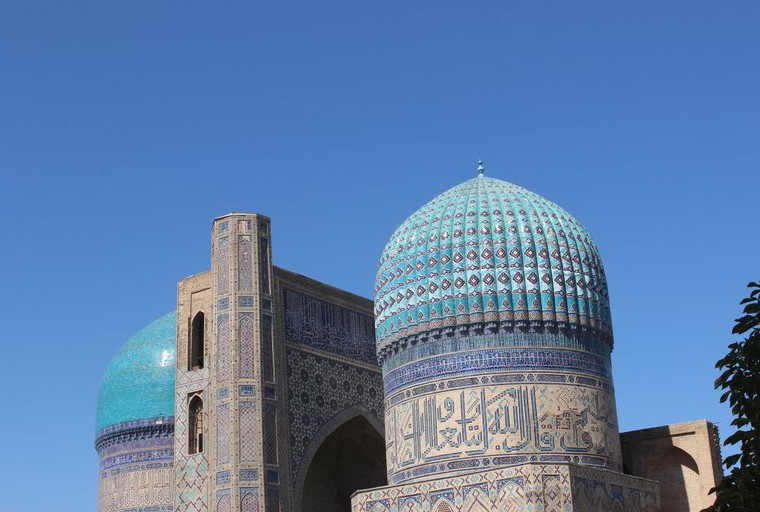
One day, her father came home with a stack of magazines. The little girl went through them all, one by one. She was particularly mesmerised by the cover of one of them. It had a picture of a blue dome against an even bluer sky, and she liked it so much that she wanted to see the dome for real.

Uzbekistan, Samarkand, Samarqand, Blue ribbed domeShe went up to her father and told him of her intention. Her father looked at the magazine cover and said, “This is in a place called Samarqand. You want to go to there?”

The girl nodded.

“It’s quite far from here. Why don’t you wait till you are grown up?”

“Okay,” said the little girl. “I will go to Samarqand when I grow up.”

The years went by. The little girl grew up, the magazine got misplaced, her father passed away, but the blue dome of Samarqand and her dream of seeing it was not forgotten. Friends and family, who knew of this dream of hers, would often ask when she was visiting Samarqand. Her answer always was, “I don’t know when. All I know is that one day I will.”

That day came four decades after she had first declared her intention to visit Samarqand. Last month, the now not-so-little girl made that trip to Samarqand and other places in Uzbekistan. There was a touch of the unreal when her plane landed in Tashkent and she couldn’t help but wonder if she was part of a dream. The fresh, cold air that hit her when she exited the aircraft convinced her that this was no dream, but the real thing ! 🙂

Continue reading “Dear Uzbekistan”

Book Review: Waters Close Over Us

This book review is part of #TSBCReadsIndia, a reading challenge wherein one reads a book from each State and Union Territory of India. Presenting the book from Madhya Pradesh and the third of the 36 books to be read in this literary journey across India.


My earliest travel memories revolve around trains and river crossings, in particular the Narmada at Bharuch. I remember being awed by the expanse of the river flowing under the railway bridge, and wondering where that water was coming from and where it was going to. As the train crossed the river, my mother and I would fling coins from the train window into the Narmada. These were offerings, my mother would whisper into my ears, to the river Narmada as she was life-sustaining and, therefore, sacred. Together, we would fold our hands and bow before the river.

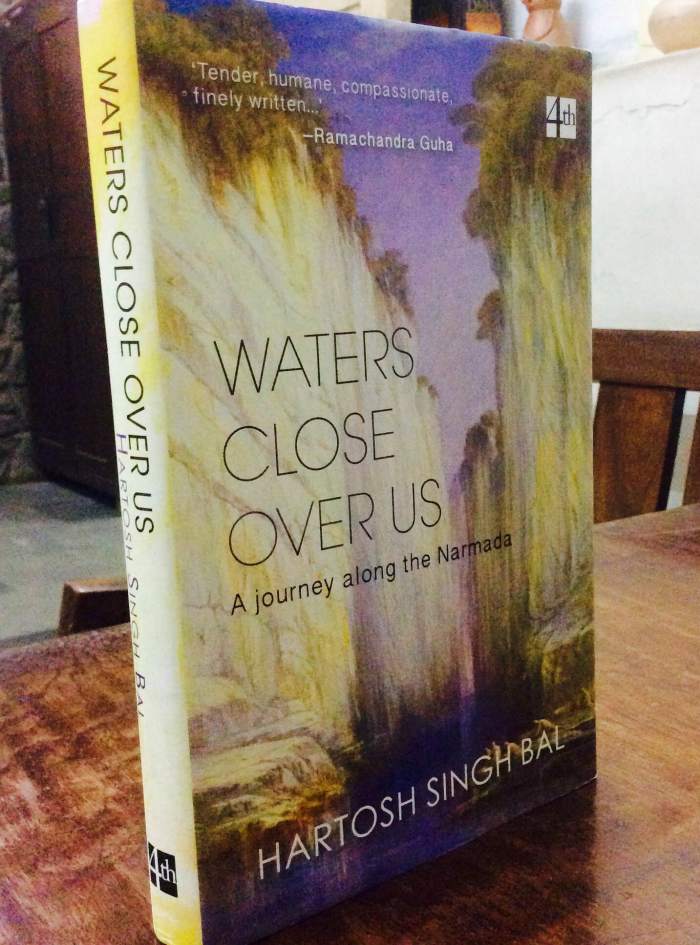
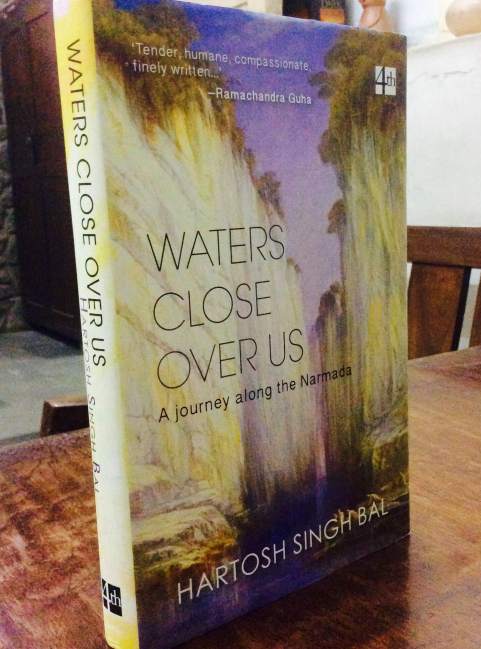
Decades have passed since those train journeys. I no longer throw coins into the Narmada or any other river from the train window, but my fascination and reverence for rivers — especially the Narmada — continues even today. That was the reason I bought a copy of Waters Close Over Us: A Journey Along the Narmada (HB, 242 pages, 2013, Fourth Estate) by Hartosh Singh Bal, soon after its release.

Waters Close Upon usThe book lay unread for almost 2 years and then #TSBCReadsIndia happened. I did not even have to think twice before selecting this book as my read for Madhya Pradesh. There couldn’t be a more apt choice for as just as Madhya Pradesh is the geographical heart of India, so is the river Narmada. Continue reading “Book Review: Waters Close Over Us”

Buddha, Brahma & Shankaracharya: A visit to Nala Sopara

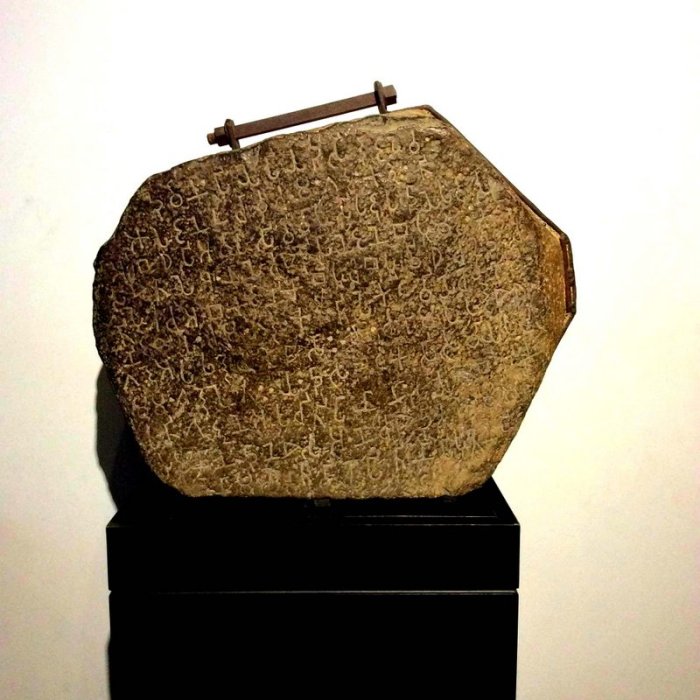
The visit to Nala Sopara in March this year had its beginnings in a museum located 85 km away in Mumbai. On one of my many visits to the sculpture gallery of the Chhatrapati Shivaji Maharaj Vastu Sangrahalaya, I came across an exhibit which, at first glance, looked like a random block of stone.

Ashokan Edict, Nala Sopara, ShurapakaBut museums don’t exhibit just about any random block of stone, do they? A closer look at the stone exhibit revealed inscriptions and when I read the accompanying information board, discovered that I was looking at the 9th Ashokan Edict. This edict, which dates the third century BCE, had been found at a stupa in Nala Sopara.

I was vaguely aware that Nala Sopara had a Buddhist past, but this was the first time I was hearing about the presence of a stupa there. An internet search revealed that the stupa at Nala Sopara still existed, that it was under the care of the Archaeological Survey of India (ASI), and also that one could visit it. The same internet search also led me to this fabulous blog post that not only talked about the stupa, but also an ancient temple in Nala Sopara — the Chakreshwar Mahadev Temple.

The result? The first free Saturday that came up saw me headed for Nala Sopara (which is connected by suburban train services from Mumbai) with my friends — Anuradha, Rama and Rupal. 🙂

Continue reading “Buddha, Brahma & Shankaracharya: A visit to Nala Sopara”

Winter of 1992

In my previous post on the “Summer of 1992“, I shared with you one of the reasons why that year was so important for me. I continue with another post on the same theme, but set in the winter of 1992. Once again, this involves travel for the purpose of study as part requirement of the Master’s programme in Geology I was pursuing at that time.


“Right. Everyone take off every single piece of metal on your body and keep it in your bags. No belts, earrings, chains, rings, loose change, metal rimmed spectacles, etc. You cannot carry any metal inside as it is dangerous. Also, no lighters or matchsticks or any combustible substance.”

I listened to these instructions carefully and started taking off the metal items on my body. My classmates did the same.

“Once you’re done, please keep your bags in this corner of the room. Don’t worry about its safety for the room will be locked and a security guard will be stationed outside.”

It took us a while to remove all metal and combustible items items from our person and pockets, put them in our backpacks, and then stow them in the corner indicated. Finally, we were done.

“Everyone done? Good. Come and collect these hard hats and headlamps from me. I’ll show you how to wear them.”

All of us lined up to collect out ‘gear’ and get ‘kitted’ out with a growing sense of excitement and wide grins on our faces.

“All set, everyone? Good. Follow me.”

And we followed him as led us down a flight of stairs going into the earth. Deep into the earth.

Continue reading “Winter of 1992”

Summer of 1992

1992 was a very important year for me. A turning point, you could say. A coming of age even. I can’t pinpoint to a particular moment or event for there were many that made the year so memorable. But two of them were really special and, interestingly (or maybe not !) both involved travel. It was not the kind of travel I do today; rather, it was travel for the purpose of study as part requirement of the Master’s programme in Geology I was pursuing at that time.

In May 1992, I arrived in Bhuj (in Kachchh district of Gujarat) with AK, a classmate, to undertake a 15-day field trip for our Master’s dissertation in Geology. Though both of us were based in Bhuj and had a common faculty guide, we had separate field work sites (about 15 km away) and our field work was individual. Our faculty guide was scheduled to join us in Bhuj after about 10 days when we would have finished the bulk of our field work and be able to present our preliminary findings to him.

I was very excited about this field trip to Bhuj for this was to be my first solo field trip. Previously, I had always been part of a larger group of classmates. Having a geological hammer, compass, and topographical map all to myself and not share it with anyone made me feel quite grown-up, important and empowered ! 😛

Bhuj, Smainarayan Talav, Mandvi Road, Geology field work, Summer of 1992, Sudha Ganapathi
First day of field work in May 1992. Just look how delighted I am !

The first day of field work was exhilarating and as perfect as a young geologist like me could hope for — excellent rock exposures, variety in rock structures and textures, fossils, some intriguing geological puzzles… It was also very distracting, but I soon settled down and within the next day or two established a field work routine.

Continue reading “Summer of 1992”