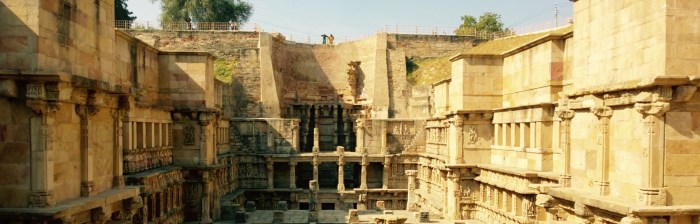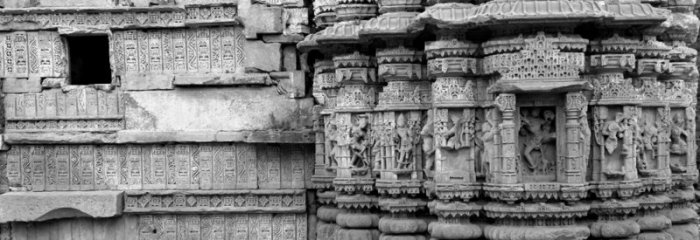
Rudra Mahalaya Temple, Shiva Temple, Sidhpur, Siddhraj Jaisinh, 12th Century, Gujarat

The Rudra Mahalaya Temple at Sidhpur

The gates to the Rudra Mahalaya Temple at Sidhpur are locked when I arrive just before 6 pm that December evening in 2014. Surrounded by modern-day residential houses, the centuries-old temple is deserted and looks like it is holding out against a seige.The twilight makes the temple, which is maintained by the Archaeological Survey of India, look lifeless as well. As I’m wondering what to do, a passerby stops to say, “Call out for the watchman. He’ll come and open the gate.”

I call out for the watchman and the driver of the auto-rickshaw I have hired also adds to my calls. Soon, I can see someone coming out of the temple and walking towards us.

‘Yes?”, he asks.

“I want to see the temple,” I say, prepared to argue it out with him if he says something about closing times or anything else.

“Okay,” he says simply, pulling out a key bunch and deflating my ready arguments immediately. “Put your camera away. No photography allowed here.”

“Why not?” I ask, getting ready to argue again.

“Rules,” is the simple and frustrating answer.

I realise I have no choice in this matter and put away my camera. Only when I put away the camera and close my bag does the watchman open the gates and allow me inside. “You can take pictures from outside the gate, if you want to.”
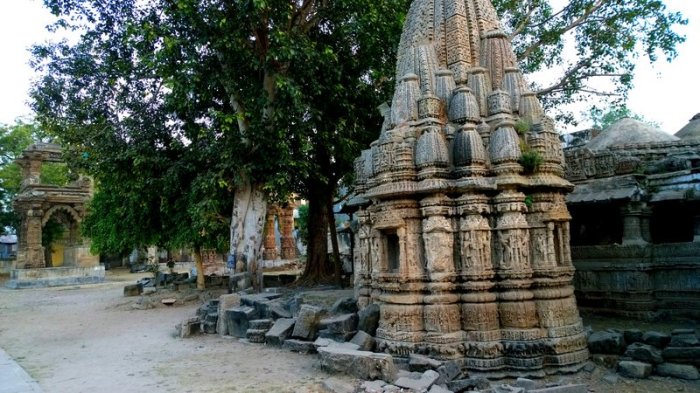
Rudra Mahalaya Temple, Shiva Temple, Sidhpur, Siddhraj Jaisinh, 12th Century, GujaratI just shrug and follow him inside and stop when I reach the temple. And stare at the sight in front of me. Continue reading “The Rudra Mahalaya Temple at Sidhpur”

The grand and empty Vohrawads of Sidhpur

I first heard of Sidhpur about 6 months back when I shamelessly eavesdropped on a conversation while commuting to work by bus. In my defence, the conversation, which was between two women from the Dawoodi Bohra community (as was evident from the colourful ridas they wore) in Gujarati and English, was really loud.

It was an animated conversation in which they spoke about their ancestral homes in Sidhpur and the holidays spent there. They spoke of chandeliers, Belgian glass windows, wooden antique furniture, fine linen, tableware, feasts, parties, and antiques among other things. There was gossip, as well as an element of ‘my-ancestral-house-is-grander-than-your-ancestral-house”, but it seemed to be in good fun.

The “conversation” on ancestral homes in Sidhpur intrigued me to look for more information on the Internet. Thanks to my good friend Google, I found in Sidhpur mansions with distinctive European style architecture, each one grander than the other. This information was enough for me to include a visit to Sidhpur when I toured North Gujarat in December 2014.

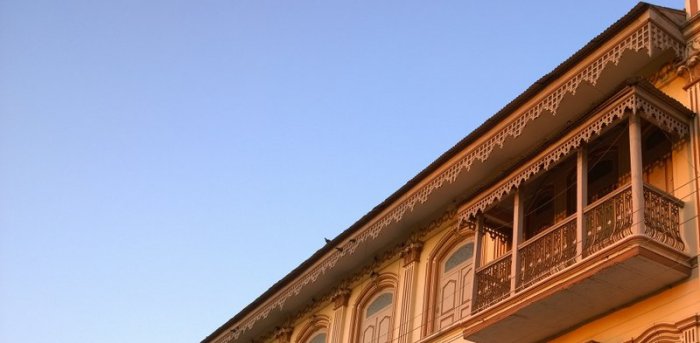
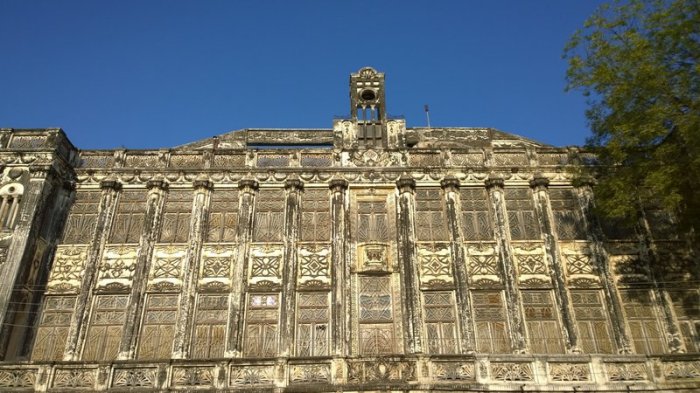
It was a little after 4 pm when I arrived at Sidhpur. While asking for directions from a local tea stall, I learnt that the Bohra houses were called Vohrawads and also that I needed to go to the Najampura area, which had the best and maximum number of such houses. A short rickshaw ride later, I was standing in front of the house that you see in the photograph below.

Sidhpur, Vohrawad, Comminity housing, Gujarat
Locally, this mansion is called the “house with 365 windows”

Continue reading “The grand and empty Vohrawads of Sidhpur”

The Sahastralinga Talav, a museum and a conversation

Whenever I visit centuries-old monuments, the one thing that never fails to amaze me is how they were built without machinery of any sort to aid them. I am also struck by how the planners and builders of those times made optimum use of available resources in the absence of technology as we know it today.

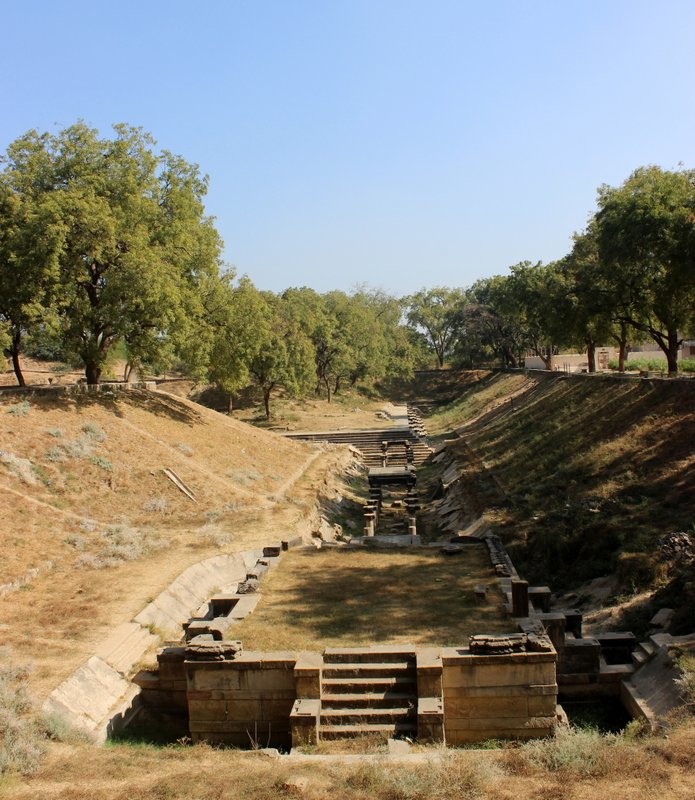
A visit to the Sahastralinga Talav at Patan underscored these beliefs of mine. Located a kilometre away from Rani ni Vav, the Talav was one of the many artificial tanks built in Gujarat by Siddharaj Jaisinh (1093-1143 CE), a king from the Solanki Dynasty.

It was past noon when I arrived at the Sahastralinga Talav, after visiting the queen of stepwells. There was no one else at the site apart from a goat-herd and his frisky goats. Even though it was December and winter, it was quite hot and the sunlight very harsh. Due to this, I was initially reluctant to explore further. But I’m glad I did as I would have missed out on exploring a real treasure.

Sahastralinga Talav, Patan, Solanki Dynasty, Gujarat, Water harvesting and water management system Continue reading “The Sahastralinga Talav, a museum and a conversation”

Rani ni Vav: The queen of stepwells

Rani ni Vav, Rani ki Vav, Queen's stepwell, UNESCO World Heritage Site, Incredible India, Gujarat, PatanIt is around 10.30 in the morning when I enter the Rani ni Vav (or the Queen’s Stepwell) complex at Patan. It’s a sunny day with bright blue and cloudless skies.
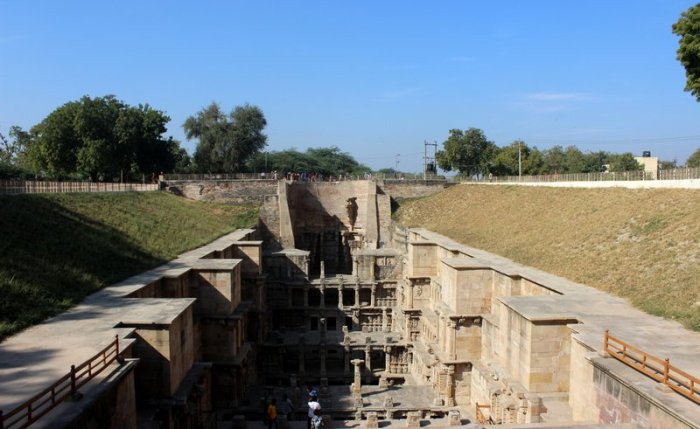
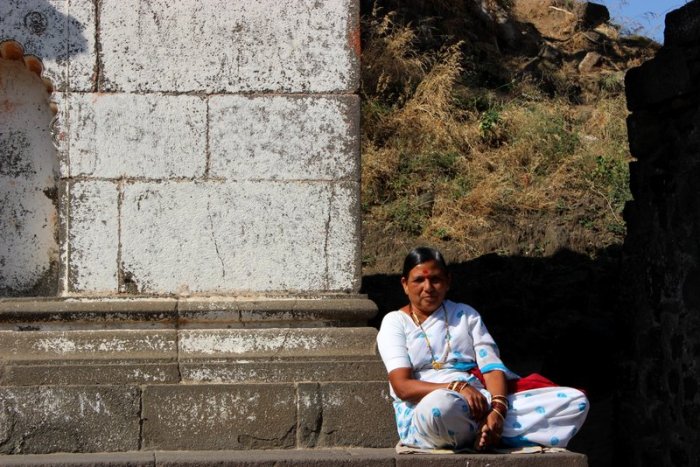
I take this as an auspicious sign for I have been rather unlucky when it comes to viewing stepwells. Be it at Hampi, Champaner or Lonar, the wells were full of water when I visited them, and I was unable to see the step-like feature of the wells. So keenly aware I am of my ‘luck’ with stepwells that I cannot help asking the person selling entry tickets to the monument, if there is water in the stepwell.

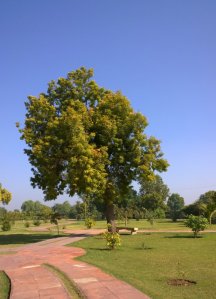
I get the reassuring reply that the water supply dried up a long time back and the step well is completely dry. So it is with a spring in my steps and a smile on my face that I enter the complex. Manicured lawns and well laid out pathways welcome me, and I pass a photo shoot, as well as coy couples hiding behind bushes on my way to the stepwell, which is a short walk from the entrance.

Soon the stepwell is visible or rather a fenced off rise and depression is visible and it is only when I am almost upon it that I see steps descending into the stepwell. I have picked up a booklet from the ticket office on the Rani ni Vav and settle down on the topmost step to read and familiarise myself with the history of the stepwell.

Rani ni Vav, Rani ki Vav, Queen's stepwell, UNESCO World Heritage Site, Incredible India, Gujarat, Patan Continue reading “Rani ni Vav: The queen of stepwells”

The woman priest at Daulatabad Fort

It is mid-morning on a December day in 2013 at Daulatabad Fort. I have been climbing for about an hour or so in an attempt to reach the top of the hill Fort, pausing only to take photographs or sips of water to keep myself hydrated. It has been a never-ending climb; every time I think I have negotiated the final set of steps and reached the top, another set appears almost as if by magic ! It doesn’t help that the access way is built in such a way that only part of the route is visible !

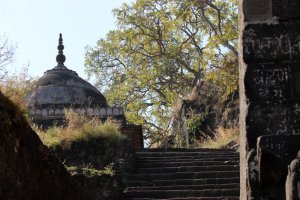
Daullatabad FortWhen I spot a dome as I negotiate yet another set of steps (see photo on the left), I think I have reached the summit. I am so happy and relieved that I run up the “last” few steps.
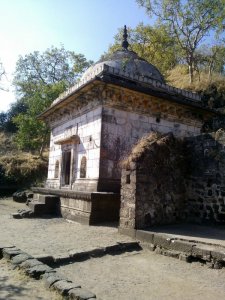
But no ! Another set of stairs looms ahead ! I am so breathless and winded by then that I can’t even cuss in frustration.

Ganesh Temple, Daulatabad FortI decide to take a longer break before resuming with the climb and move to the shade of some trees. I notice a middle-aged woman sweeping the area outside the domed structure.
Before I can ask her about the structure, I get distracted by the antics of a squirrel, and then by the requests of a group of school children who want their photographs taken, when they see my camera.

“Would you like some water? It is from a spring close by and very refreshing, ” a soft voice asks.

It is the woman who had been sweeping earlier and she is holding a bottle of water. Even though I have water, I don’t want to offend her by saying no. The water is as refreshing as the woman promised and surprisingly sweet as well.

“What is this?” I ask, pointing towards the domed structure.

“It’s a Ganesha Temple.”

“I saw you cleaning the temple and its premises. Are you the caretaker?”

“I guess you could call me that. But locally, I am known as this temple’s priest.” Continue reading “The woman priest at Daulatabad Fort”

Aurangzeb’s tomb at Khuldabad

Fanatic, religious zealot, intolerant, temple destroyer, orthodox, ruthless, insecure, unscrupulous, treacherous, impetuous, brother killer… are just some of the words that come to my mind for Abul Muzaffar Muhi-ud-Din Mohammad Aurangzeb, better known as Aurangzeb Alamgir, the 6th Mughal emperor, or just Aurangzeb.

As the Emperor of Mughal India, Aurangzeb ruled for nearly 50 years, much of it with public opinion against him due to many discriminatory measures against the Hindus, like imposition of the jizyah, differential taxation for Hindus, etc.. In fact, such display of Islāmic orthodoxy by Aurangzeb gave strength and purpose to the resistance movements of the Marathas, the Jats, the Bundelas and the Sikhs. His constant wars to consolidate or expand territory nearly bankrupted the royal treasuries. When he died in 1707, he left a crumbling empire, a corrupt and inefficient administration, a demoralised army, and alienated subjects.

And yet…

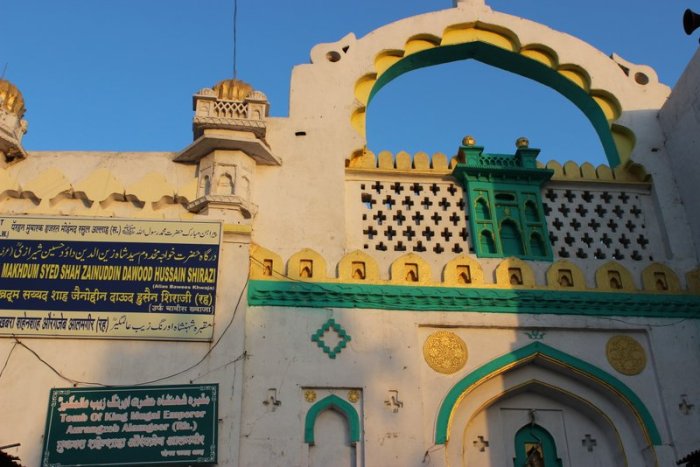
Aurangzeb never used the Royal Treasury for his personal expenses. Instead, he used the money he earned from making caps (sold anonymously in the market) and copying the Quran. He saved the money earned from this to pay for an open-air grave at Khuldabad, located about 27 km from Aurangabad.

The grave I’m standing before on that December evening in 2013 with all these thoughts running around in my mind, and some more.

Aurangzeb, Tomb, Grave, Khuldabad, Mughal Emperor
Aurangzeb’s open-air grave

Continue reading “Aurangzeb’s tomb at Khuldabad”