Forts of Rajasthan — 6: Gagron Fort of Jhalawar

It is about half past three in the afternoon and my friend Niti and I have been walking through and exploring the UNESCO World Heritage Site of Gagron Fort at Jhalawar, Rajasthan. We have been at the Fort for the last 2 hours or so and leisurely exploration has been all about trying to understand the Fort’s layout, extent and get a feel of its past.

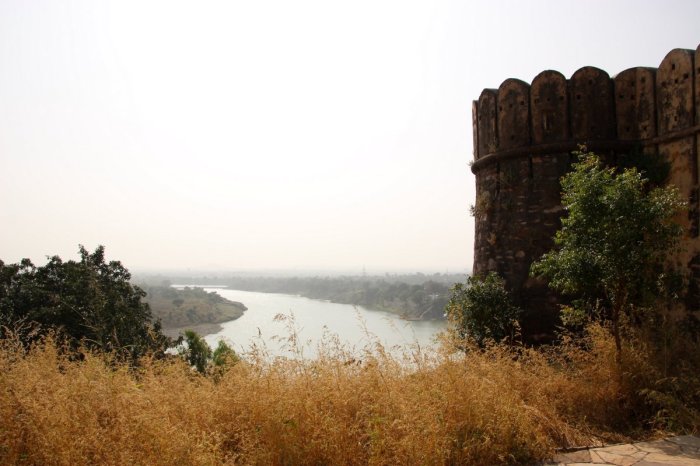
We take paths leading off tantalisingly into various parts of the Fort. We stop regularly to peer into what looks like half-finished structures, but realise that they are attempts to ‘renovate/restore’ them. We peer over the massive fort walls and rear back in alarm at the sheer drop. We also notice the fascinating rock formations around and see the river flowing silently by.

All through this, we have no clue as to what we are seeing for there are no signboards to indicate where we are within the Fort or what we are seeing. Niti and I have fun speculating what each building could have been — armoury, palace, stables, public hall, temple, etc. But the November afternoon sun is harsh and we are beginning to tire.

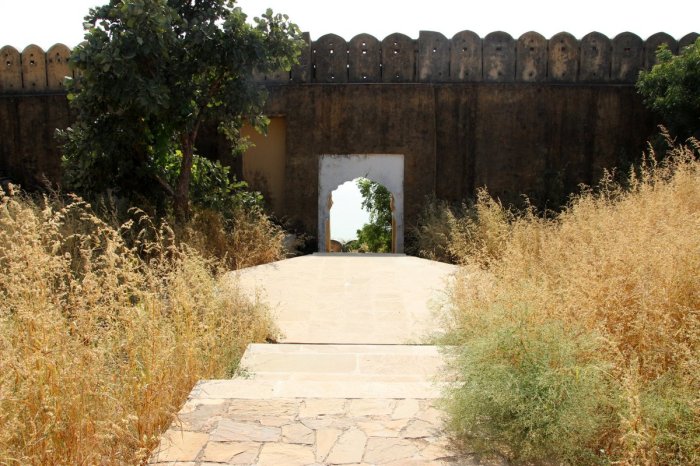
We almost decide to turn back when we see steps leading to a doorway in the fort wall and decide to explore that and before heading back.
Gagron Fort, Travel, Rajasthan, Hadoti, Jhalawar, Hadoti Trip, Hill Fort, Water Fort, UNESCO World Heritage Site, Forts of Rajasthan, Forts of India

Continue reading “Forts of Rajasthan — 6: Gagron Fort of Jhalawar”

7 years, 512 posts, 4,61,996 words…

Click on the picture for the source

…later, it’s that time of the year again. That time when I write the annual blog anniversary post, a report card of the blogging year gone by. Every anniversary post is as much about acknowledging a personal milestone, as it is about taking stock and the 7th blog anniversary post is going to be no different.

Every blogging year has been unique with its own set of highs and lows, challenges and surprises, achievements and lessons learnt, etc. The 7th year of blogging has been no different and yet, it stands apart from the previous years of blogging.

I know, I tell that every blog anniversary post. But, believe me, the 7th year of blogging has been different in a very unique way. It has brought me back to the beginning of the blogging journey I embarked on this day in 2010.

In other words, I have come a full circle, back to where I began 7 years later. Let me elaborate.

Continue reading “7 years, 512 posts, 4,61,996 words…”

The Buddhist caves at Kolvi

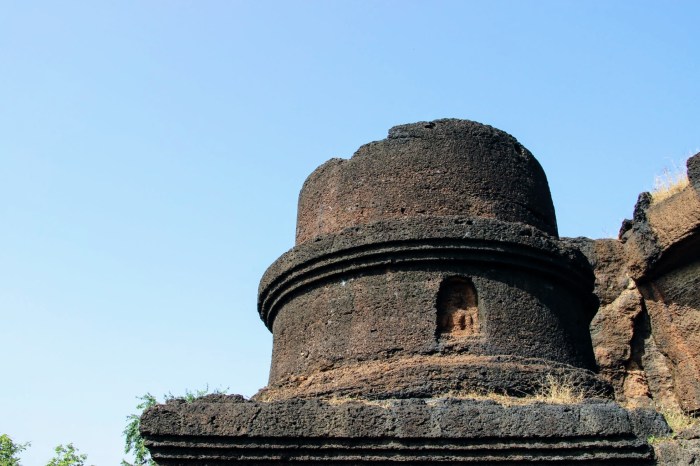
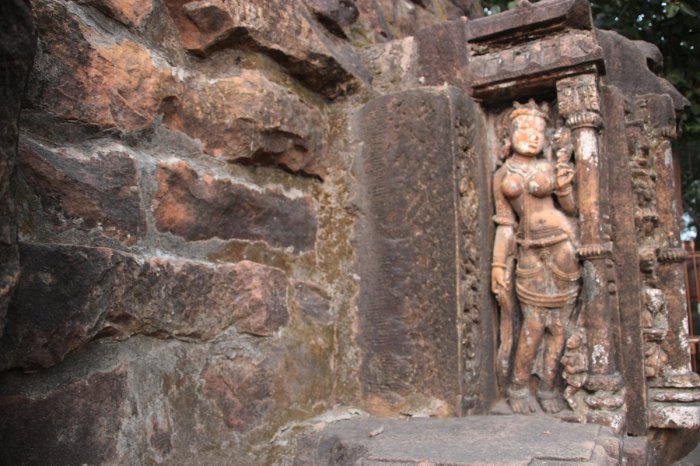
It is a little after 10 am on a November morning in 2016 when we arrive at the base of the hillock that houses the Kolvi Caves, one of the three Buddhist rock-cut cave sites in Rajasthan. A board displaying some rather sketchy information about the caves reassure us that we are in the right place.

It says that the Kolvi Caves was a monastic complex of about 50 rock-cut caves, most of which have collapsed today and details have disappeared due to natural weathering. The presence of a big rock-cut stupa in the shape of a structural stupa, as we know it today, is considered to be an important and notable feature of the Kolvi Caves. It has been suggested that the absence of Bodhisattva figures at the site indicates that this was a site of Buddhist monks of the Hinayana (or Theravada) sect. The board doesn’t mention an important detail — the age of the Caves.

Apart from my friend Niti, our car driver and me, there is no one else around at the site. I take a minute to appreciate the surroundings and the location. The blackish red Kolvi hillock, which is entirely composed of laterite, rises quite suddenly and dramatically from a flat landscape.

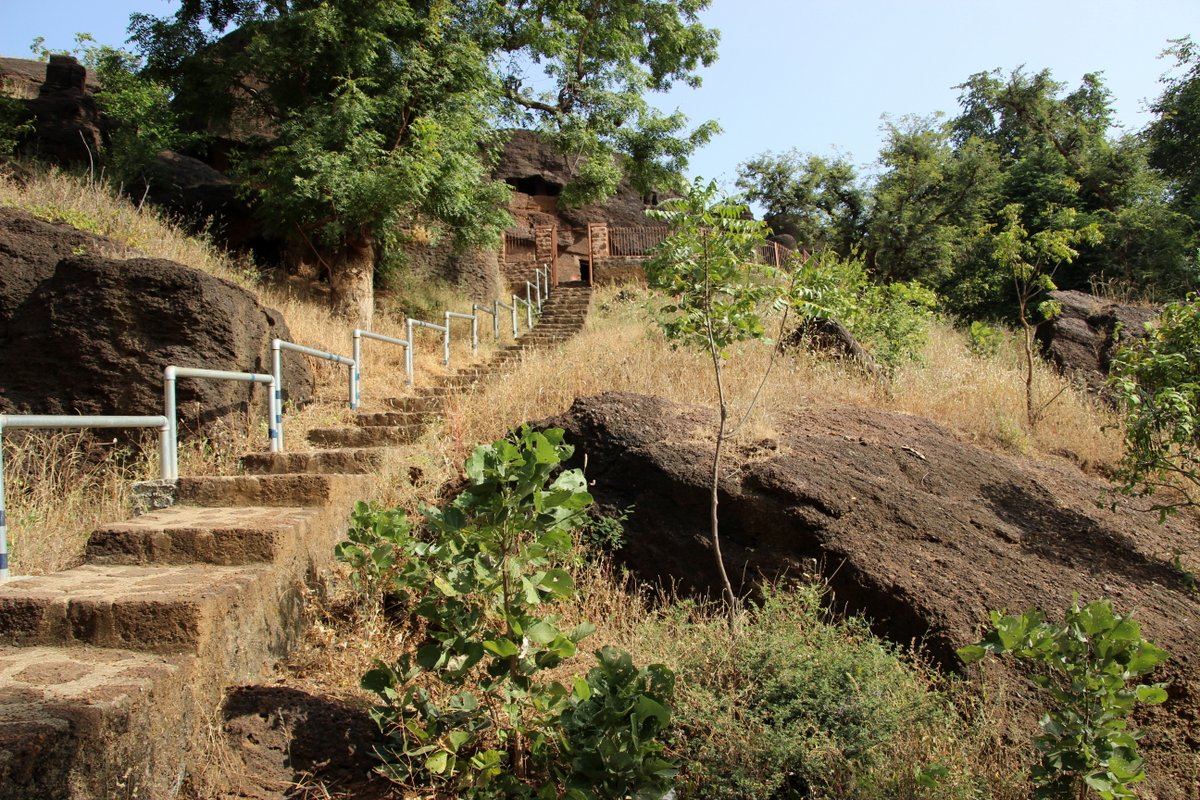
A flight of steps, probably built over a pre-existing path, leads to the top of the hill where the Caves are located. A short climb later, Niti and I are opening the gate that leads into the cave complex.

Kolvi Caves, Buddhist Caves, Indian Art, Indian Aesthetics, Mahayana, Rajasthan. Travel, Hadoti Trip, Hadoti, Laterite
The approach to the Kolvi Caves – steps and a railing have been provided for easier access.

Continue reading “The Buddhist caves at Kolvi”

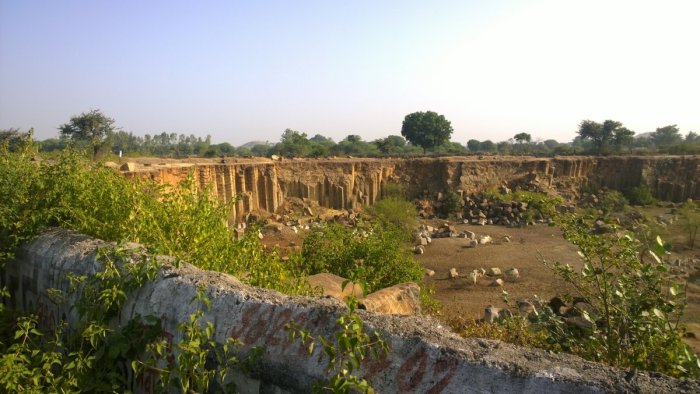
Travel, Kolvi, Rajasthan State Highway no. 19 A, Columna Basalts, Columnar jointing, Travelling Geologists, Igneous rock, Geological Structure, Igneous structure. Deccan Basalts, Magma Chamber

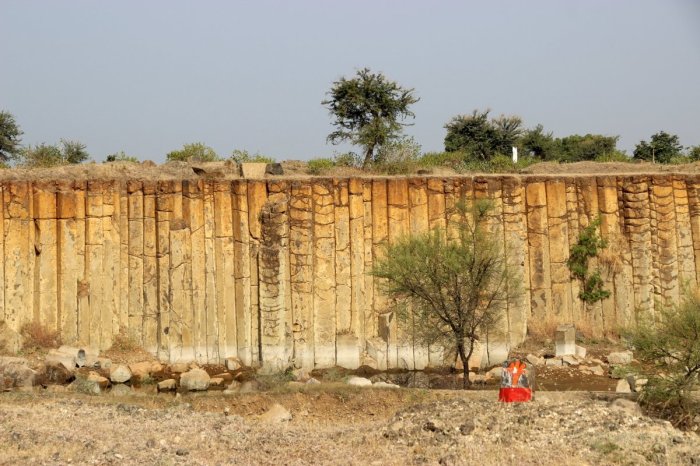
Travel Shot: Columnar basalts on Rajasthan State Highway 19A

It is about a quarter past 9 on that November morning of 2016, and we (my friend Niti and I) are on our way to visit the Buddhist rock-cut caves at Kolvi from Jhalawar, Rajasthan. A brief halt at Bhawani Mandi for a breakfast of poha, jalebi and tea later, we are more that half way into the 2 hour drive to the caves on Rajasthan State Highway 19A.

The view from the car window is of a largely flat countryside lit up in the wintry sunlight. We pass village settlements, farmlands, a river crossing… all in all very peaceful and idyllic.

Suddenly Niti asks, “What’s that?”

I’m seated behind the driver and have to twist to look at what she is pointing at on her side of the road.

And as soon as see it, I tell the driver, “Stop. The. Car. NOW.”

Manoj, our driver, not only stops the car, but reverses it so that we can get a better look. At any other time, I would have chided him for reversing on a highway, but at that point in time all I could do was to wait impatiently for him to stop and the jump out of the car to get a better look.

“What are we looking at?” asks Niti.

“This, my friend, is what is known as columnar jointing in rocks,” I say. And add with a touch of drama, “There aren’t many sites like this; I know of only two in India.”

Travel, Kolvi, Rajasthan State Highway no. 19 A, Columna Basalts, Columnar jointing, Travelling Geologists, Igneous rock, Geological Structure, Igneous structure. Deccan Basalts, Magma Chamber
The view from Rajasthan State Highway 19A

Continue reading “Travel Shot: Columnar basalts on Rajasthan State Highway 19A”

An evening in Jhalrapatan

The modern history of Jhalrapatan town in the Hadoti region of Rajasthan is about 200 years old. It began in 1838, when the rulers of the newly formed princely state of Jhalawar chose Jhalrapatan as their base till a new capital city (present day Jhalawar) could be built. Before the arrival of the Jhalawar royals, Jhalrapatan was known as Patan; the word ‘Jhala’ was prefixed to it in recognition and in honour of its new rulers, who belonged to the community of Jhala Rajputs as in “Jhala ra Patan” or the Patan of the Jhalas. But even today, almost two centuries later, locals still refer to the town as Patan; it is the tourists who refer to the town as Jhalrapatan!

Jhalrapatan’s history extends back to centuries before the creation of Jhalawar state, when it was known as a temple town as well as a major trading centre. In its former avatar, the walled town was supposed to have been home to 108 temples. Imagine the sound of the bells of all 108 temples ringing at the same time — one legend says that this is how ‘Jhalrapatan got its name. As a trading centre, Jhalrapatan used was known for its opium and spices.

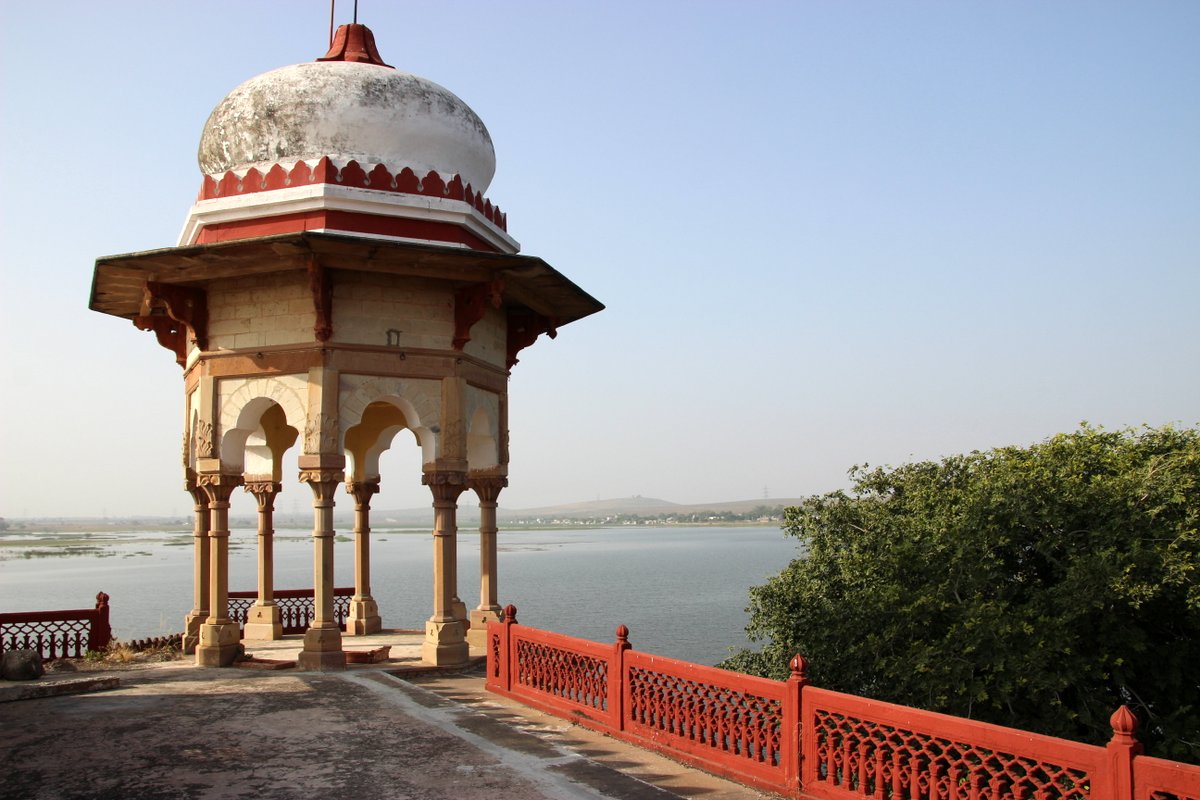
I spent one evening in Jhalrapatan exploring its various sights beginning with Madan Vilas, the erstwhile holiday home for the royal family, now owned by the Rajasthan state government, and then moved on to the temples of the town.

Jhalrapatan, Jhalawar, Travel, Rajastha, Hadoti, Madan Vilas

Continue reading “An evening in Jhalrapatan”

Jhalawar, Gadh Mahal, Gadh Palace, Government Museum, Sculpture Gallery, Chamunda

Stories in Stone: The Chamunda of Chandrabhaga

Stories in Stone is all about sculptures — either standalone or entire narrative panels. Each post in this series showcase one such sculpture, look beyond its iconography and deconstruct the details in an attempt to understand the idea and/or the story it conveys.


Jhalawar, Gadh Mahal, Gadh Palace, Government Museum, Sculpture Gallery, ChamundaThe Government Museum at Jhalawar has a stunning collection of sculptures on display. With a few exceptions, most sculptures are in a good condition and easily recognisable for what/who they represent.

One large room/gallery is crammed with sculptures found from the nearby areas of Chandrabhaga, Jhalrapatan, Kakuni, etc.; more sculptures are exhibited in the corridor outside. Knowing how museums function, I’m pretty sure that only a fraction of the Museum’s collection is actually exhibited; there would be many more sculptures in storage.

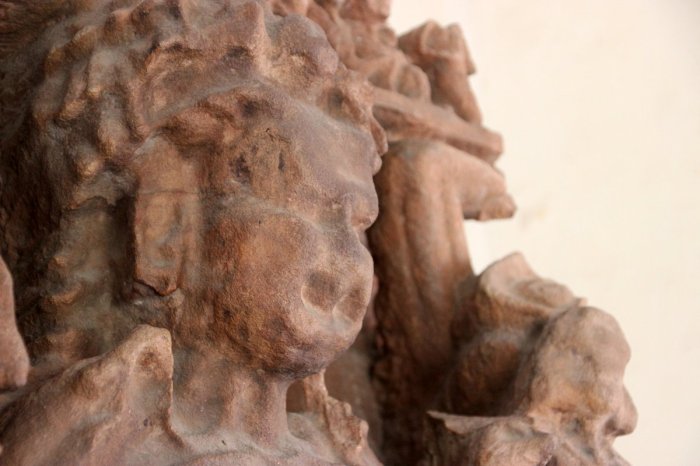
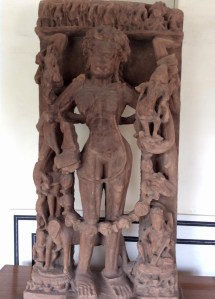
There are dikpalas (or guardians of the directions), various forms of Shiva, Vishnu, and Devi, and some very interesting composite sculptures. But the sculpture which stood out for me, and is the topic of today’s post, was a poorly preserved, but recognisable sculpture of Chamunda (see photo on the left) placed in the corridor.

Before we get into the details of this sculpture, let us place Chamunda in context through her creation myth, associated stories and standard iconography.

Continue reading “Stories in Stone: The Chamunda of Chandrabhaga”