Discovering Roman Britain

I was introduced to Roman Britain quite unexpectedly on a cold, windy day in October 2008 in London. I had been in London for about 3 weeks then and was already head over heels in love with this beautiful city. Each day was a new day of exploration and between settling into a new city and classes at the university, there was always something wonderful to discover and delight over.

That afternoon, I took a path leading off from Tower Bridge Tube station, a path that led me past a hotel and then, quite suddenly into a walled dead-end. I was about to turn back, when I saw an information board there and walked over to read it. Good thing I did that as this turned out to be the most interesting dead-end !
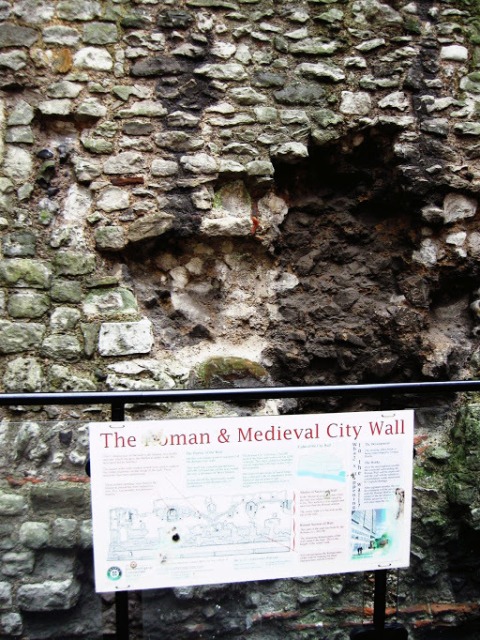
Part of the original wall surrounding the Roman city of Londinium or London

The information board announced that this was no ordinary wall, but a slice of London’s history. Built by the Romans in 190–220 AD, this wall used to run around the city of Londinium, the Roman name for London. About 9 ft thick at the base and about 20 ft. in height, it was one of the most important and expensive developments in the city at that time. (By medieval times, the height of the wall was increased and though it is not evident in the photograph, the colour of the mortar distinguishes the two sections of the wall.)

My first reaction was, “Wow! So Asterix and Obelix wasn’t an exaggeration; the Romans were really here. Dear old Julius Caesar was really here !” For the rest of the day, I walked around in a kind of daze as the Roman fever took hold. It was a fever that refused to go away and one that I had great pleasure in indulging when I visited erstwhile Roman cities in the UK and explored a part of history that I thought only existed in comic books ! 🙂

So join me on my journey of discovering Roman Britain through visits to Camulodunum (present day Colchester), Aquae Sulis (present day Bath), and Verulamium (present day St. Albans) in England. (Strangely, the wall remained my only encounter with Roman Britain in London.) It was a journey that left me breathless, awestruck, and delighted in turn, but always richer in having gained knowledge of something new, and of having discovered a whole new world.

Continue reading “Discovering Roman Britain”

Let’s have some humour, please

The Guest Post Series onMy Favourite Thingshas contributions by those sharing my interests in travel, books, music, and on issues that I am passionate about. These posts are not always by fellow bloggers, and the guest authors are always those who have interesting experiences to share.

Today’s guest post is by Srinayan, the infrequent blogger of The Random Walkaround. An engineer by profession, he took up blogging a little over a year ago and writes on many topics, but always with sensitive insight and understated humour. Srinayan, however, prefers to be known as a lethargic blogger who is long on intent, but somehow falls short on delivery. That is probably why I have given up on waiting for an original guest post from him and, instead, am re-posting one of his old posts. A post that I liked very much, and a post that is quite relevant for our times.

We are living in a terrible world and doomsday is just around the corner; or so we are led to believe by television, newspapers, the internet and all other oracles of wisdom. Nothing seems to going to right for humanity—Greece, the Euro crisis, Wall Street, US debt, climate change, rogue states, etc. Closer home we have inflation, falling stock markets, the Lokpal Bill, 2G and scams of every kind and size. The list is ever growing; you only have to add your pet angst to it.

Whatever happened to that wonderful therapeutic called humour? I don’t mean the stand up comic type which is in vogue today; rather, the sly poke in the ribs that reminds us that, even if all is not well with the world, we are doing fine and having a good laugh about it.

Welcome to The Little World of Don Camillo.

In the context of its time, post-World War II Europe was just as insecure and dangerous as the world is today. While the common folk grappled with economic hardship, their political leadership was preoccupied with ideological realignments or preventing them. As a farcical consequence, depending on your leanings, all problems owed their roots to communism or opposition to it. Black couldn’t get blacker and white, whiter.

The absurdity of the situation was too much for an Italian called Giovanni Guareschi. He reacted by creating two characters, a priest named Don Camillo and his communist adversary, Peppone, in a village in the Po river valley in Northern Italy. The battle between the proletariat and the bourgeoisie was truly joined and the several comic confrontation between the two reflected the pointlessness of the discourse of the time.

Continue reading “Let’s have some humour, please”

The temple ruins of Hampi – 3: The Krishna, Ugranarasimha and Ganagitti temples

The temples and other monuments of Hampi were built over 3 centuries, destroyed over a period of 6 months, and “seen” by our group over two, half-day sessions. Obviously, we could not do justice to all the monuments.

This meant that while we spent more time at the Hazara Rama Temple, the Vittala Temple, as well as the monuments of the royal family, we breezed through the Krishna Temple, the Badavilinga Temple, the Ugranarasimha or Lakshmi Narasimha Temple, and Kadalekalu Ganesha and Sasivekalu Ganesha Temples. We could not visit some monuments at all—the Hemakuta group of monuments, the Ganagatti Jain Temple, the octagonal water tank, Bhima’s Gate, etc., were pointed out to us by our guide in passing.

So, while I cannot write a detailed post on these quick visits here, I will compensate that with some photographic impressions of those “breeze in, breeze out” visits here.

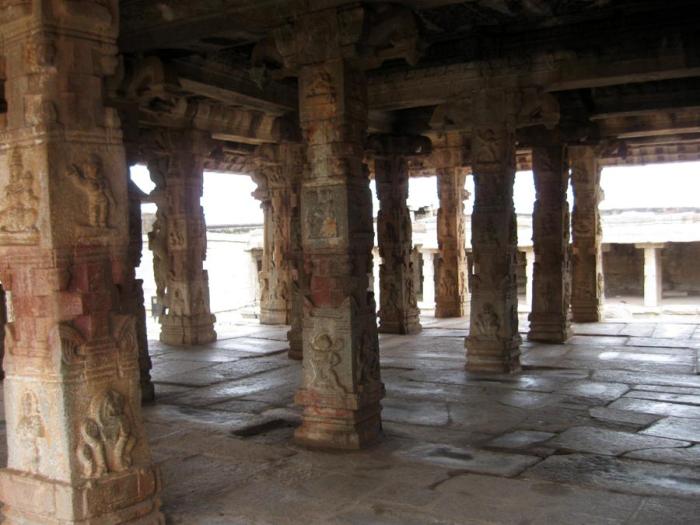
Carved pillars at the Krishna Temple, depicting stories from the Bhagavatham. The Krishna Temple was consecrated in 1513 and is a complex with many sub-shrines and halls.

Continue reading “The temple ruins of Hampi – 3: The Krishna, Ugranarasimha and Ganagitti temples”

A sepia-toned history of my family

Sometime back, I came across a fantastic blog titled The Indian Memory Project and instantly fell in love with the blog’s aim—to “trace the history of India, its people, professions, development, traditions, cultures, settlements and cities through pictures found in personal family albums and archives”. So, recently, when I came across some old family photographs, I thought, why not create my own family’s memory project and share them with you on this blog. So read on…

But first a little geographical background of my family to set the context—we are originally from Tirunelveli district in Tamil Nadu, a southern Indian state. My father’s side of the family is from Tharuvai, and my mother’s side of the family is from Narasinganallur—both villages in Tirunelveli district.

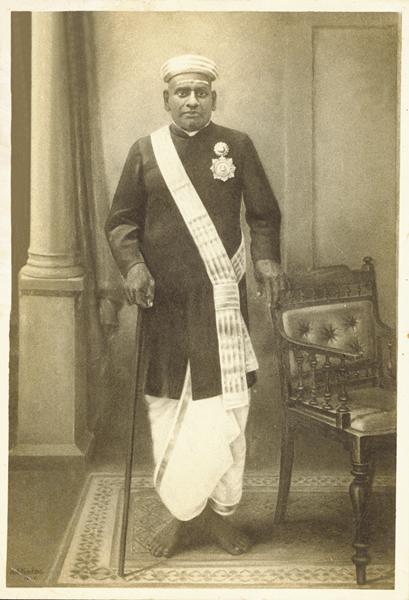
This family memory project begins with the story of my great-grandfather (my father’s paternal grandfather), T. Ganapati Sastri (1860–1926), a renowned Sanskrit scholar. Ganapati Sastri had very humble beginnings in Tharuvai—a place he left for Trivandrum (now Thiruvananthapuram) in his 16th year for economic reasons.

Trivandrum, c. 1915: My great-grandfather, Mahamahopadhyaya Dr. T. Ganapati Sastri

Continue reading “A sepia-toned history of my family”

Pataleshwar caves: A hidden heritage of Pune

I mentioned in my previous post that I had gone ‘site’-seeing when I was in Pune last week. One of the places I went to was the 8th century, rock-cut Pataleshwar Caves.

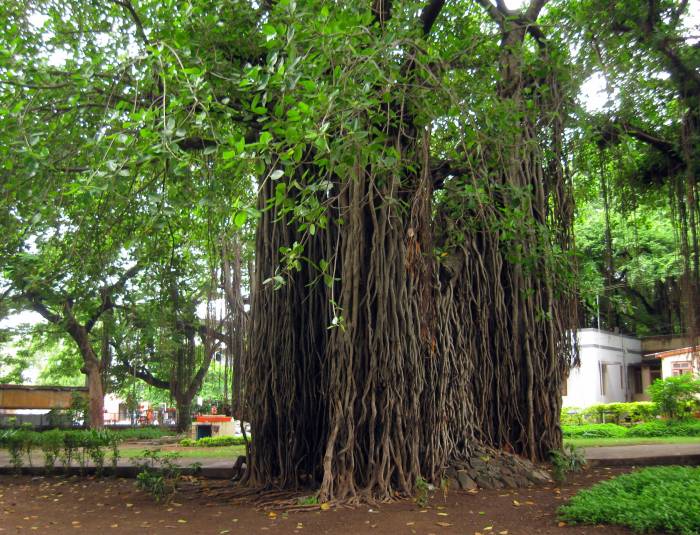
Situated on Jungli Maharaj Road, the entrance to the Caves is through a small garden with this magnificent banyan tree.

The beautiful banyan tree

In spite of its size, the banyan tree was homely, if you know what I mean. If the grounds had not been wet from the rain, I would have snuggled up to the tree with a book. I had to be content with just hugging the tree and moving on to the Caves.

Continue reading “Pataleshwar caves: A hidden heritage of Pune”

Should the Kohinoor Diamond be returned to India?

“India wants UK to return Kohinoor”. When I read this headline in The Times of India (ToI) yesterday, my first reaction was “not again!”

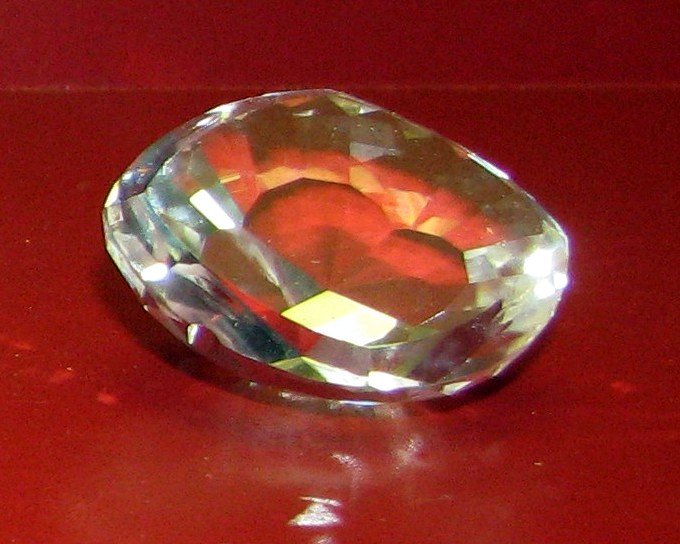
The Kohinoor Diamond has been in the popular emotional discourse of the country for as long as I can remember. Though the demand for the Kohinoor never makes front page or breaking news, it pops up with unfailing regularity every now and then. And each time it does, there are reactions from people asserting their self-righteous national pride, indignation, anger, cynicism, etc. Last time I checked, the ToI article had got 280 comments!

Source: Wikipedia

Continue reading “Should the Kohinoor Diamond be returned to India?”