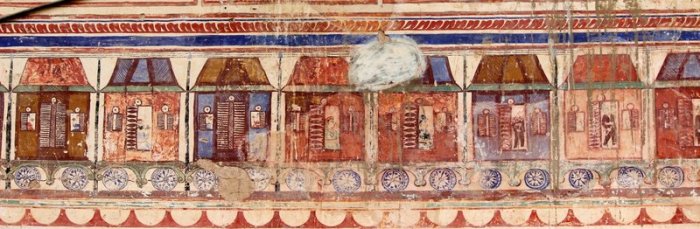
The painted towns of Shekhawati-1: Nawalgarh

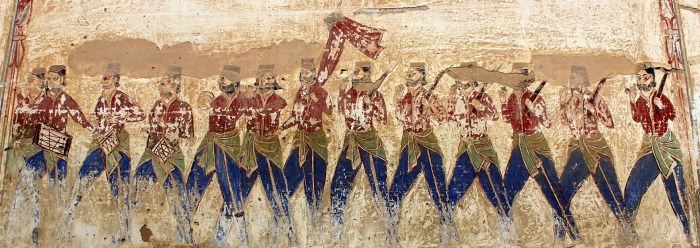
Ilay Cooper’s book on Shekhawati set me off on an extraordinary trip to an extraordinary place, and I had to wait for nearly six months before I felt ready to write about it — so overwhelming were my thoughts and emotions. This post on Nawalgarh is the second of eight posts in the series on “The Painted Towns of Shekhawati”. If you haven’t read this introduction to Shekhawati’s history (and the series), I recommend that you do so now, before proceeding further.


Nawalgarh was my base for exploring the Shekhawati region and also the first of the towns I visited. Named after Nawal Singh, its founder, Nawalgarh was built in 1737 on the site of an earlier settlement.

Nawal Singh followed an active policy of encouraging traders and merchants from Jaipur to settle down in Nawalgarh. The Patodia and Murarka families were the first to arrive on his invitation and seeing them grow and prosper, other merchants soon followed. By the mid-1800s, Nawalgarh had become a large and prosperous town with three forts, city walls, bastions and four gates to protect it.

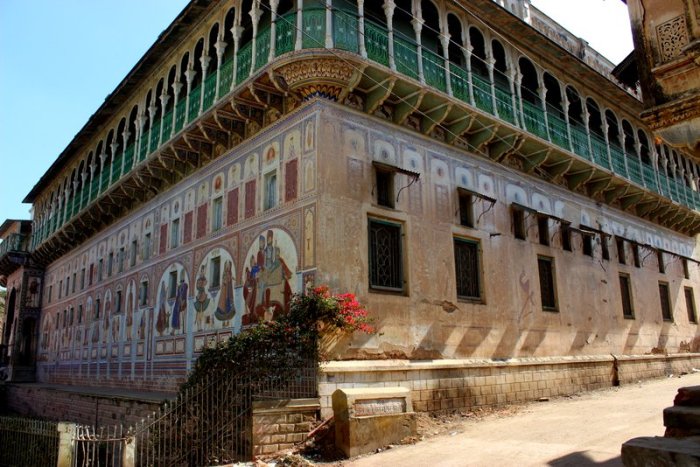
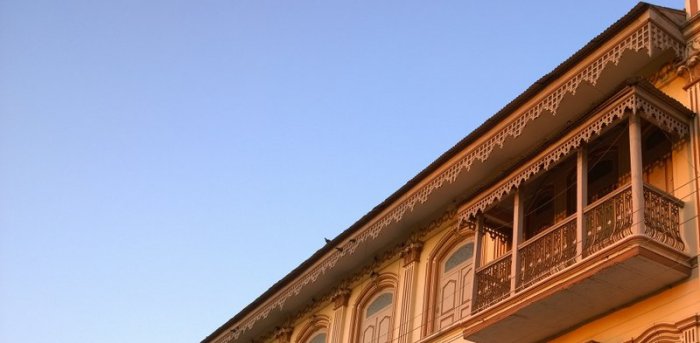
I arrived in Nawalgarh on a cold and rainy winter’s day in January, in time for a late lunch at my hotel before heading off to explore the town. It was a leisurely stroll through the town’s markets, lanes and bylanes with the purpose to get a feel of what had brought me to Nawalgarh (and for that matter the Shekhawati region) in the first place — the painted havelis or mansions.
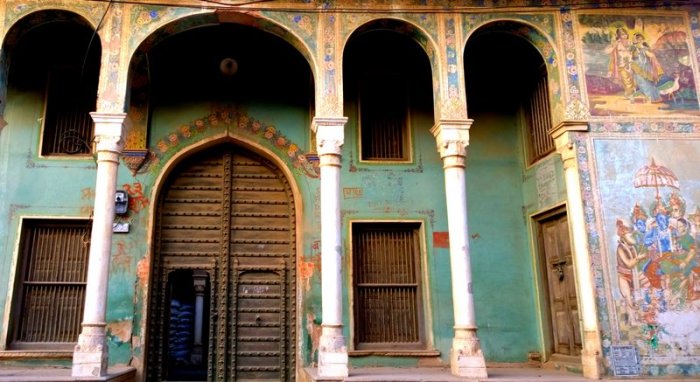
Nawalgarh, Painted Towns of Shekhawati, Fresco, Art Gallery, Painting, Heritage, Travel, Rajasthan
Entrance to the Sheth Anandram Jaipuria Haveli. Unlike other havelis where the background colour is beige, the walls of this haveli are green

Continue reading “The painted towns of Shekhawati-1: Nawalgarh”

The painted towns of Shekhawati: Past and present

Ilay Cooper’s book on Shekhawati set me off on an extraordinary trip to an extraordinary place, and I had to wait for nearly six months before I felt ready to write about it — so overwhelming were my thoughts and emotions.

Presenting the first of eight posts on the painted towns of Shekhawati. It is a brief account of the region’s history (an introduction to the series really), in order to understand the region’s past and present, in the context of the Shekhawati Series.


Shekhawati is one of the four regions of Rajasthan, the others being Mewar, Marwar and Hadoti). Spread over Sikar, Jhunjhunu and Churu districts of Rajasthan, it is best known for its grand and palatial havelis (mansions). It is also known for being home to many of India’s well-known business families — Birla, Poddar, Bajaj, Jhunjhunwala, Khaitan, Oswal, Piramal, Ruia, Singhania, and Goenka, among others are from this region.

One would think that this would automatically mean a lot of visibility and tourist footfall in the region, but this is not the case — compared to the other regions of Rajasthan, Shekhawati is less visible. Which, in my opinion, is really surprising as the history of the region is quite unique and distinct from the rest of the State (at least in the context of the series that I’m writing).

Take the famous painted havelis of Shekhawati, for example, and how they came to be built. Painted Towns of Shekhawati, Nawalgarh, Poddar Haveli, Continue reading “The painted towns of Shekhawati: Past and present”

Travel, travellers and travel blogging… Some thoughts

We live in a super-specialised world and the world of travel and travellers is no different. It’s not enough to just say that “I like to travel” or that “I am a traveller”. One has to qualify what kind of travel you like or what kind of traveller you are. You’d be considered boring otherwise !

Don’t believe me? Well then, just see some of the words I picked up from the Twitter and Facebook bios of travel bloggers on my TL, which describes the kind of travel they do or the type of travellers they are.

Solo. Couple. Family. LGBT. Gay. Luxury. Heritage. Road. Backpacker (you can add variations in spelling here like backpakker, bacpacker, bakpakker). Nomadic. Wandering. Itinerant. International. Different. Newly wed (I kid you not!). Budget. Flashback. Mountain. Himalayan. Beach. Food. Frugal. Happy-Go-Lucky. Culture. Nature. Environmental. Rural. Eco. Weekend. Slow. Lazy. Grumpy. Happy. Lost. Spiritual. Religious. Ethical. Independent (really wonder what this means). Immersive. Adventure. Long-term…

One would think that the “variety” in travel / travellers would have automatically translated into variety in travel writing or blogging as well. Surprisingly, I have found that this is not the case. Sure, a lot of destinations get written about, but they are usually in the form of listicles, guides, travel tips, sponsored articles or articles espousing the cause of a particular type of travel (read the above para for examples). First-person accounts of travel experiences — which in my opinion is what any travel writing/blogging should be about — are comparatively few.

And therein lies my problem with travel blogging. As someone who blogs about travel (among other things), I know how important it is to read well in order to write well. The operative word here is ‘to read well’. Unfortunately, more often that not, whenever I read a travel blog post, I’m left with a feeling of “this is not about travel / this is not what I want to read in a post on travel”.

Let me elaborate with some examples the reason I’m peeved with the state of travel writing / blogging today.

Continue reading “Travel, travellers and travel blogging… Some thoughts”

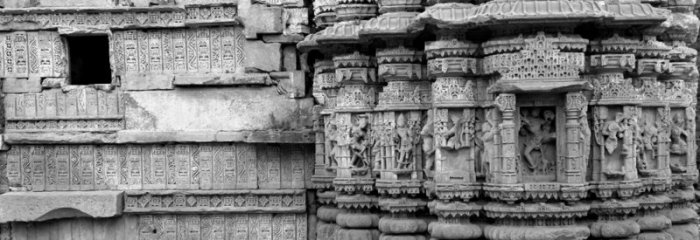
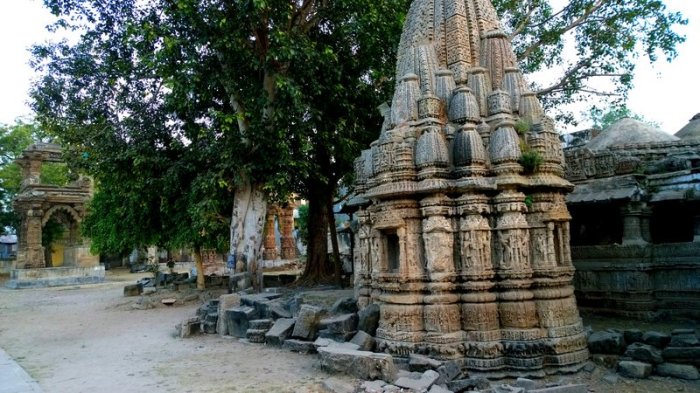
Rudra Mahalaya Temple, Shiva Temple, Sidhpur, Siddhraj Jaisinh, 12th Century, Gujarat

The Rudra Mahalaya Temple at Sidhpur

The gates to the Rudra Mahalaya Temple at Sidhpur are locked when I arrive just before 6 pm that December evening in 2014. Surrounded by modern-day residential houses, the centuries-old temple is deserted and looks like it is holding out against a seige.The twilight makes the temple, which is maintained by the Archaeological Survey of India, look lifeless as well. As I’m wondering what to do, a passerby stops to say, “Call out for the watchman. He’ll come and open the gate.”

I call out for the watchman and the driver of the auto-rickshaw I have hired also adds to my calls. Soon, I can see someone coming out of the temple and walking towards us.

‘Yes?”, he asks.

“I want to see the temple,” I say, prepared to argue it out with him if he says something about closing times or anything else.

“Okay,” he says simply, pulling out a key bunch and deflating my ready arguments immediately. “Put your camera away. No photography allowed here.”

“Why not?” I ask, getting ready to argue again.

“Rules,” is the simple and frustrating answer.

I realise I have no choice in this matter and put away my camera. Only when I put away the camera and close my bag does the watchman open the gates and allow me inside. “You can take pictures from outside the gate, if you want to.”

Rudra Mahalaya Temple, Shiva Temple, Sidhpur, Siddhraj Jaisinh, 12th Century, GujaratI just shrug and follow him inside and stop when I reach the temple. And stare at the sight in front of me. Continue reading “The Rudra Mahalaya Temple at Sidhpur”

The grand and empty Vohrawads of Sidhpur

I first heard of Sidhpur about 6 months back when I shamelessly eavesdropped on a conversation while commuting to work by bus. In my defence, the conversation, which was between two women from the Dawoodi Bohra community (as was evident from the colourful ridas they wore) in Gujarati and English, was really loud.

It was an animated conversation in which they spoke about their ancestral homes in Sidhpur and the holidays spent there. They spoke of chandeliers, Belgian glass windows, wooden antique furniture, fine linen, tableware, feasts, parties, and antiques among other things. There was gossip, as well as an element of ‘my-ancestral-house-is-grander-than-your-ancestral-house”, but it seemed to be in good fun.

The “conversation” on ancestral homes in Sidhpur intrigued me to look for more information on the Internet. Thanks to my good friend Google, I found in Sidhpur mansions with distinctive European style architecture, each one grander than the other. This information was enough for me to include a visit to Sidhpur when I toured North Gujarat in December 2014.

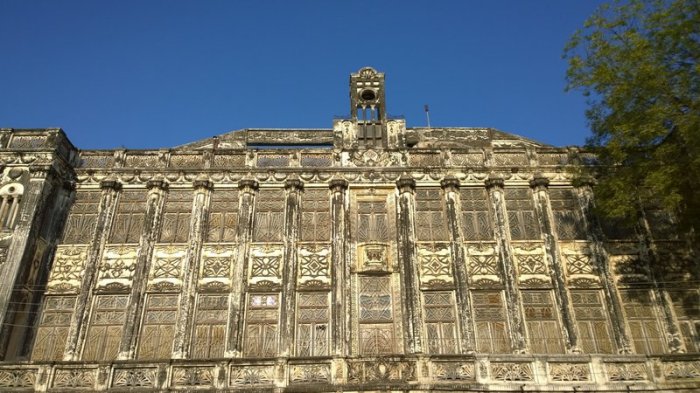
It was a little after 4 pm when I arrived at Sidhpur. While asking for directions from a local tea stall, I learnt that the Bohra houses were called Vohrawads and also that I needed to go to the Najampura area, which had the best and maximum number of such houses. A short rickshaw ride later, I was standing in front of the house that you see in the photograph below.

Sidhpur, Vohrawad, Comminity housing, Gujarat
Locally, this mansion is called the “house with 365 windows”

Continue reading “The grand and empty Vohrawads of Sidhpur”

Rani ni Vav: The queen of stepwells

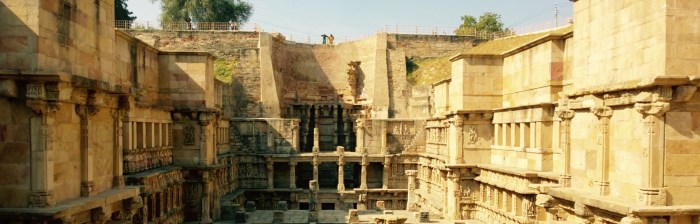
Rani ni Vav, Rani ki Vav, Queen's stepwell, UNESCO World Heritage Site, Incredible India, Gujarat, PatanIt is around 10.30 in the morning when I enter the Rani ni Vav (or the Queen’s Stepwell) complex at Patan. It’s a sunny day with bright blue and cloudless skies.
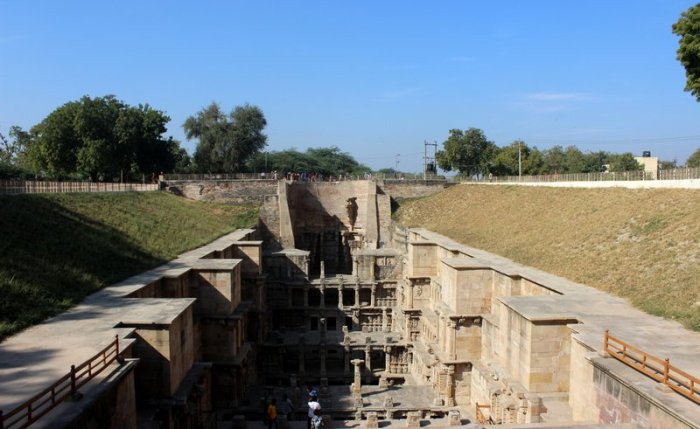
I take this as an auspicious sign for I have been rather unlucky when it comes to viewing stepwells. Be it at Hampi, Champaner or Lonar, the wells were full of water when I visited them, and I was unable to see the step-like feature of the wells. So keenly aware I am of my ‘luck’ with stepwells that I cannot help asking the person selling entry tickets to the monument, if there is water in the stepwell.

I get the reassuring reply that the water supply dried up a long time back and the step well is completely dry. So it is with a spring in my steps and a smile on my face that I enter the complex. Manicured lawns and well laid out pathways welcome me, and I pass a photo shoot, as well as coy couples hiding behind bushes on my way to the stepwell, which is a short walk from the entrance.

Soon the stepwell is visible or rather a fenced off rise and depression is visible and it is only when I am almost upon it that I see steps descending into the stepwell. I have picked up a booklet from the ticket office on the Rani ni Vav and settle down on the topmost step to read and familiarise myself with the history of the stepwell.

Rani ni Vav, Rani ki Vav, Queen's stepwell, UNESCO World Heritage Site, Incredible India, Gujarat, Patan Continue reading “Rani ni Vav: The queen of stepwells”