The Lord’s Tour: A visit to the home of cricket

If you had been anywhere near the Lord’s Cricket Ground on 4th September 2009, at around 9.50 am, you might have seen a woman running around trying to find a way into the grounds. It is also possible that you might have heard some loud cursing in at least 3 languages from her. That woman was me.

In case you thought that I was trying to break in to see some cricketer, perish the thought. I was running (and cursing) as I was late for a pre-booked 10.00 am Lord’s Tour, which meant that if I didn’t find the correct gate in the next 5 minutes or so, I was going to miss the start of the Tour. And my experience of guided tours in England was that They. Started. On. Time. Period.

Now I am not a cricket fan. Never was, and never will be. If India is on a winning spree, I might just listen to the talk around me, but that’s about it. So then why was I going to Lord’s then? It was because of my sports fanatic brother’s parting words at Mumbai airport before I boarded my flight for London in September 2008.

Don’t come back to India without having watched a cricket match at the Lords.

Continue reading “The Lord’s Tour: A visit to the home of cricket”

Rains and ruins: A visit to Tintern Abbey

One morning in early July of 2009, I was contemplating ways and means to avoid thinking and writing out my dissertation, a dissertation which would culminate a year’s worth of stay and study in London. It was a year in which I studied a bit and travelled a bit (though not necessarily in that order). So when I received a mail about a day trip to Wales for a very affordable sum from the travel club I was a member of, I immediately signed up for it. So desperate I was to escape my dissertation that I didn’t even look at the details of where we would be travelling to in Wales.

It was only when I got into the tour bus that I got to know that we were headed for Tintern Abbey and Chepstow Castle via Gloucester. Now while neither Chepstow not Gloucester sounded familiar, Tintern seemed very very familiar. Literarily familiar. English school book familiar. But I just couldn’t place it nor get it out of my head. Even the heavy rain, which followed us all the way to Tintern and beyond and back to London, couldn’t distract me from trying place Tintern Abbey. By the time we reached Gloucester, I could take the uncertainty no more and sent a text message to my brother back home in India, asking him why Tintern sounded so familiar.

His reply took a long time coming. The route to Tintern from Gloucester took us through the ancient and beautiful Forest of the Dean, where upon Tintern vanished from my mind to be replaced by Harry Potter ! Tintern returned to my thoughts only after we left the Forest and passed through some of the most beautiful villages imaginable.

Just as I noticed the signboard for Tintern, my cell phone beeped. It was a one word text message from my brother, which said “Wordsworth”. A single word was all that it took me to place Tintern in context.

Continue reading “Rains and ruins: A visit to Tintern Abbey”

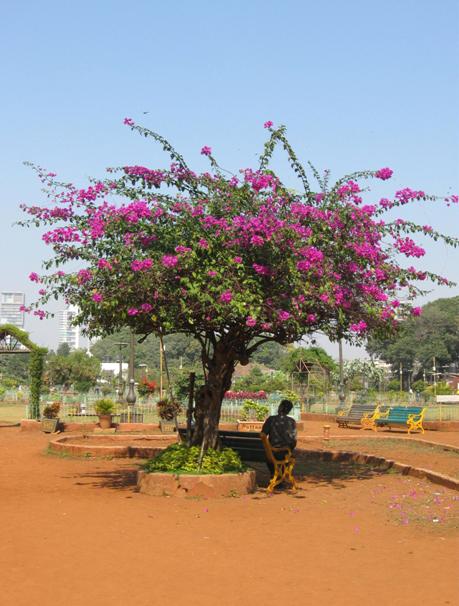
Mumbai Lens: Bougainvillea and love poetry

One may have seen love between two people, experienced love, given love, received it in turn, etc.. But have you heard love? Sorry for the rather corny question, but this is what I experienced when I visited the Phirozeshah Mehta Gardens, a.k.a. known as the Hanging Gardens of Mumbai. I arrived there a little after 2 one afternoon to find the gardens blessedly quiet and fairly empty except for some people sleeping off their lunch or reading something. As I was walking along one of the pathways, I heard someone reciting Marathi poetry. Marathi love poetry to be precise.

Bougainvillea and love poetry 🙂

Continue reading “Mumbai Lens: Bougainvillea and love poetry”

Conversations and encounters in a hospital

It is almost 7.00 pm when I enter the hospital. Appa (father) is in hospital once again (the third time in as many months) and I am hurrying to relieve my eldest brother who has done the “day shift”; I will be doing the “night shift”. The huge lobby is packed with people and the place actually looks and sounds like a railway station sans luggage. There is a group of about 30-40 people waiting to meet a patient and from their looks and body language, I presume that this is a happy occassion—probably the birth of a baby. The  harassed security guards are having a tough time turning away the rush of visitors as visiting hours are long over.

One of the security guards, who by now recognises me from my numerous visits to the hospital, mutters to me in an exasperated undertone, “Visitors!” I smile sympathetically at him, while recalling a conversation I had many years ago about hospitals and visitors.

“Madam, I want to leave early today.”

I look up from my work to see my department peon, Purushottam, standing at my desk.

“I have to go to the hospital, madam, ” he continues.

“Is everything all right?” I ask.

“I am fine. My cousin’s father-in-law’s sister’s husband has been admitted to the hospital and I have to go there.”

“Purushottam, the patient is not even related to you. Why do you want to go to the hospital? If it is that important, you could visit him once he has been discharged.”

Purushottam is shocked. “It doesn’t matter that the patient is not a close relative. He is from our biradari (clan), and everybody from our biradari will visit the hospital. If I don’t go, it will not be taken well. And anyway, I will also visit him after he is discharged.”

I change my tactic. “Won’t the patient need rest? He is hospitalised, after all, and with your entire biradari visiting, he’ll end up getting tired.”

“Oh I may not actually see him per se; I don’t even need to. I will meet his son or wife and give my best wishes for a speedy recovery. What is important is to show solidarity and support at this time.”

Continue reading “Conversations and encounters in a hospital”

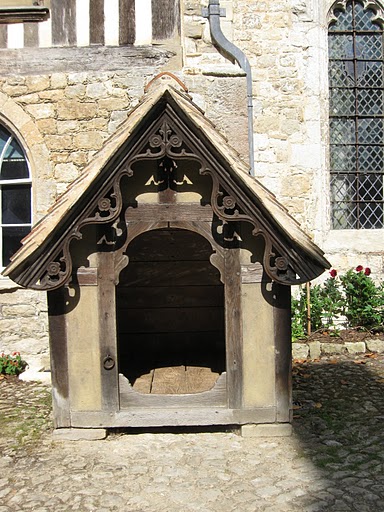
Travel Shot: Heritage Kennel

27 June 2009: Dido's Kennel

It is no secret that the British are very particular and serious about their heritage structures, which are graded according to their importance. During my year-long stay in London and travels in England, I lost count of the number of heritage structures I saw and visited. In fact, I even lived in one !

But even this did not prepare me for seeing a kennel which has been accorded a heritage. Reportedly the only Grade 1 heritage structure of a kennel in the world, it used to house a St. Bernard, named Dido ! The kennel is taller than me (I’m 5’4″) and looked quite roomy, though I did not test it out. 🙂

The heritage kennel is on the grounds of Ightam Mote, another heritage structure, dating back to about 700 years, in the Kent region of England.

Steps and stairs

I have to admit that when I held a camera in my hands for the first time in the summer of 1992, it wasn’t an earth-shattering moment. In fact, it felt very awkward to hold one. At that time, if I didn’t need one for my dissertation, I would probably never have picked up a camera. It was only later, in 2008, when I got a digital camera, that I really got interested in photography. A digital camera gave me the chance to experiment.

Within a month of sharing the first results of my experiments with a digital camera with friends and family, the feedback started rolling in. Predictably, some of it had to do with the quality of my photographs and suggestions for improving the same. But most of the feedback was on the choice of the subject of my photographs. Till the feedback came in, I did not even realise that the subject of most of my photographs were that inanimate objects like doorscars, stations, public transport, etc.

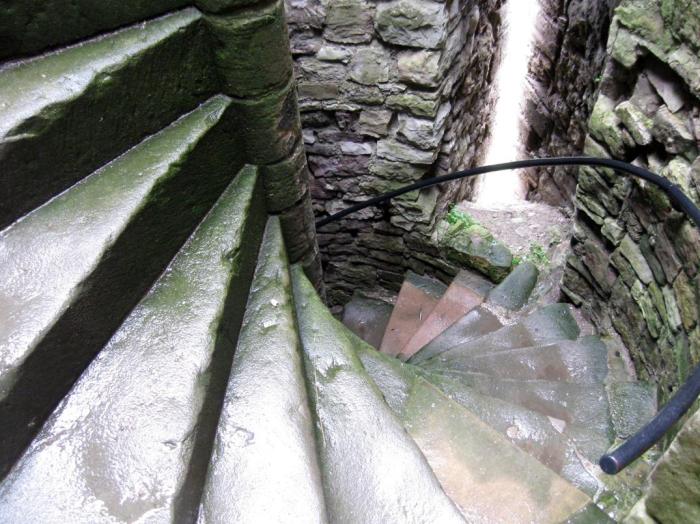
I periodically try to make sense of the vast collection of photographs that I have by ordering them into collections. Not only does this help in streamlining my photo library, it is also a great stress buster. This time around, I was able to identify and tag a trend of photographing steps, stairs and escalators. Presenting some of the interesting ones from my collection 😀

Chepstow Castle

Continue reading “Steps and stairs”