My ‘now’ song: Jithe sagara

 Do you ever have a song, an idea, a storyline, or an image stuck in your head? And it just refuses to go away? For some time at least. I have this with music—it could be a song, an instrumental piece, a jingle, etc. This becomes my ‘now’ song, and the ‘nowness’   (pardon my English here) could be for any length of time.

My now song is “Jithe sagara”, a Marathi film song based on Raga Yaman.

I am in the mood for Raga Yaman—though not something from either Hindustani or Karnatic repertoire. I want it to be mellow and frothy and simple and nuanced at the same time. In other words, I want to listen to a film song.

My “now” song, which is a Marathi film song, illustrates this evergreen raga and my requirements beautifully. Jithe sagara dharani milte, which can be loosely translated as ‘the place where the sea and the earth meet’ or in other words the horizon, was composed by Vasant Prabhu and sung by Suman Kalyanpur.

In my opinion, this is one of the best examples of Yaman from Indian film music. Enjoy 🙂 

Mumbai Lens: Tiger, tiger !

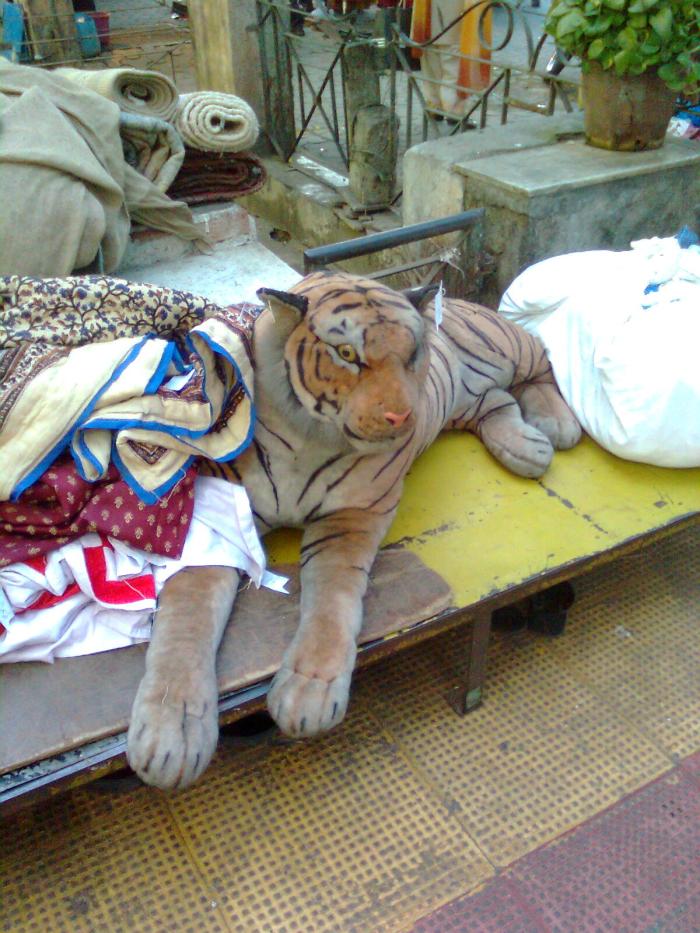
Last Sunday, I saw a tiger near Chembur station, glaring balefully at the passers-by. Don’t believe me? See for yourself !

Continue reading “Mumbai Lens: Tiger, tiger !”

Retirement blues and a thank you!

Akkinimuthu Krishnan, the 8th child of his parents, was born in 1952 into a well-to-do, landed family in Panchalingapuram village of Kanyakumari district in Tamil Nadu. From a very young age, he had a burning desire to study and nothing came in his way in fulfilling that desire—not the various back-breaking chores he had to do on his family farm, not the indifference to education his family showed, not the disheartening sight of his older siblings dropping out of school, one by one. Krishnan persevered in his goal to attain a college education.

The first graduate in his family, Krishnan studied in the Tamil medium in the village school, and then moved to study in the English medium in college where he read Economics at the Aringar Anna College in Kanyakumari. In fact, his was the first batch to pass out from that college. While studying in college, he also enrolled for shorthand and typing lessons as any good, self-respecting South Indian at that time did.

Krishnan wasn’t very sure as to where he wanted to work or what he wanted to do—all he was sure about was that he wanted to put his education to use and not be dependent on his family. He also did not want to manage his share of the family’s farmlands until he had a chance to work elsewhere. During this time, a friend of his asked him to come to Bombay (it was still Bombay then) and try his luck in the city of dreams.

Continue reading “Retirement blues and a thank you!”

A walk in the sky – 3: Cotton Green Skywalk

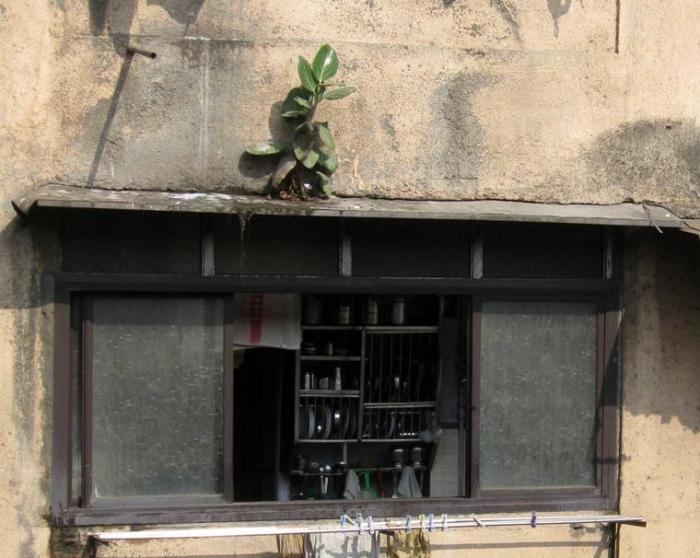
An article titled “Walking all over locals’ lives” in today’s The Times of India talks about how the construction of (some) skywalks in Mumbai has led to the loss of privacy for residents who live along the skywalks as passers-by on the skywalk can look into the houses level with the skywalk. My recent visit to the Cotton Green Skywalk underscores this observation. Take a look at the picture below.

Looking in, not looking out

Now, the Cotton Green Skywalk does not really pass within handshaking distance of the houses like the ones mentioned in the article, but it is still uncomfortably close. Without any effort whatsoever, I was able to hear every cuss word hurled between two neighbours quarreling over something (over and above the traffic din); and saw a man tying his pajamas, and another one reading his morning newspaper. And no, tempting as it was, I didn’t photograph any of these. I felt guilty enough witnessing this!

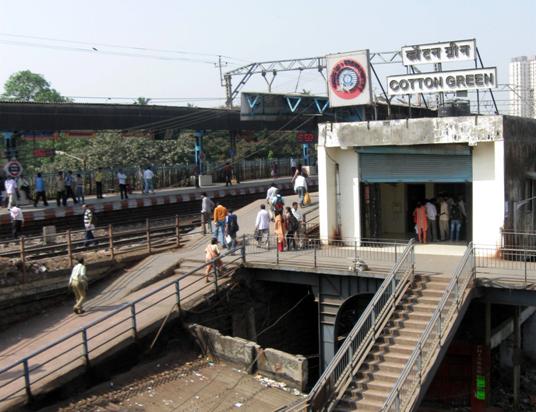
Last Saturday I went skywalking at Cotton Green. Till very recently what I knew about Cotton Green could actually fall within the 140 characters of a Twitter update—it is an eastern suburb of Mumbai, a station on Central Railway’s suburban Harbour line, and home to the stunning art noveau Cotton Exchange Building, that I would always look out for whenever I crossed the station. That’s it. It was not really interesting enough to get off and go exploring.

Cotton Green Station

Continue reading “A walk in the sky – 3: Cotton Green Skywalk”

Shakespeare in doubt !

William Shakespeare at Madam Tussaud’s

Willm Shaksp. William Shakespe. Wm Shakspe. Willm Shakspere. William Shakspeare.

These are the different ways in which the world’s (arguably) best known dramatist’s name has been spelt in documents dating from the 16th and 17th centuries. Funnily, the one spelling that has not been used is the one currently used today — William Shakespeare (1564–1616). One can also not be reasonably sure as to how the name was pronounced either. In fact, one cannot be reasonably sure about many things about William Shakespeare — what he looked like, what was the order in which his plays were written, did he ever travel outside England, his sexuality, his likes or dislikes… or even when he was born. It is quite ironical that while most of Shakespeare’s own works have survived, nothing about Shakespeare himself survives. It is almost as if he did not exist !

Although he left nearly a million words of text, we have just 14 words in his own hand… Not a single note or letter or page of manuscript survives… We can only know what came out of his work, not what went into it… It is because we have so much of Shakespeare’s work that we can appreciate how little we know of him as a person.

All this information and more form the basis of a biography on William Shakespeare by Bill Bryson. Simply titled Shakespeare, this book is based on information gathered from many sources, as well as previously published work and is presented in trademark Bill Bryson style. The book is not just about Shakespeare, his life and works, but is also about Elizabethan England, Protestantism, 16th century London and more.

Continue reading “Shakespeare in doubt !”

Just wondering… What do restrictions achieve?

I was about 9 when I first experienced the claustrophobia associated with restrictions. We had recently moved to Ahmedabad from Mumbai and were still in the process of settling down in a new city, getting to know our neighbours and expanding our social circle through contacts and extended family members already living in Ahmedabad. One such family we met were the Iyers, who were introduced to us by an uncle of mine.

One Saturday afternoon, the Iyers came visiting. I was listening to Vividh Bharati and singing along with the old Hindi film songs being played when they arrived. The collective looks of disapproval on the faces of the Iyers—Mr. Iyer, Mrs. Iyer and Two Miss Iyers—was enough to make me stop singing mid line.

Mrs. Iyer said, “Please turn off the radio. We do not listen to the corrupting influence of Hindi film music.” Even today, after so many years, I can still hear the stiff, cold voice ordering me to switch off the radio. This opening comment set the tone for the surreal visit that followed.

After, the initial “how nice it is to meet another Tamil family” and “which part of Tamil Nadu are you from” and other similar “pleasantries”, a lesson on the Iyer family’s restrictions philosophy of life began, which can be summarised in one sentence—Tamil culture is the best and anything detrimental to its growth was banned in their household.

Continue reading “Just wondering… What do restrictions achieve?”